
South America
Unprecedented initiative begins at the world’s Parks of Study and Reflection
On March 6, mass gatherings were held at the world’s Parks of Study and Reflection. This unprecedented new initiative hopes to contribute to the evolution of the human process. Twenty parks located in America, Europe, Asia and Africa have become the sacred places where thousands of people gathered to begin their practices for accessing the Profound.
The Malvinas again
Journalist Luis Ammann points out that 2010 may be the tensest year in Argentine-British relations since the 1982 war and the Argentine government must demonstrate the temper necessary to place its actions in a non-violent framework. Recently, the United Kingdom unilaterally authorized the search for petroleum in the islands’ undersea platform.
Humanist Party launches campaign for ‘Direct election of judges and commissioners’
Base teams of the Buenos Aires Humanist Party are setting in motion a mass dissemination campaign in favour of ‘Direct election of judges and commissioners’. The humanists assert that the only way to have judges and commissioners who are concerned with meting out justice and ensuring compliance with the law to the benefit of the people, is with the mechanisms of Real Democracy.
The Government of Bolivia calls a World Conference on Climate Change
This Monday the Bolivian foreign secretary invited representatives from all of the world’s countries and governments to the Climate Change Summit to be held in Cochabamba from April 20 to 22. It is hoped that 11,000 people will take part to encourage the proposal of substantive measures “aimed at improving the well-being of all humankind in harmony with nature”.
Haiti’s sins
Not even Simón Bolívar, as brave as he was known to be, had the courage to sign diplomatic recognition of the country of African descendants. Bolívar was able to re-launch his struggle for American independence, when Spain had already defeated him, thanks to Haiti’s support. The government of Haiti had supported him with the sole condition that Bolivar free the slaves.
Victoria Manno: Bringing Peace to the heights
Victoria Manno is an actor, journalist and pentathlete, among many other interests. Since 2000, she has started the year by performing a challenge for Peace in one of the 6 continents. She joined the organisation World without Wars and began by climbing mount Aconcagua, carrying the World March for Peace and Non Violence flag to the highest point in the Western World.
Bolivia will soon have its own Park for Study and Reflection
Montecillo Park for Study and Reflection, which will be located in the surroundings of Cochabamba, will be an addition to other such parks that are located in Argentina, Chile, Colombia, the United States, Brazil, and countries in Europe and Asia. It will be a new place to help ‘unveil that which is Sacred’ in human beings and to promote non-violence and non-discrimination.
The World Social Forum celebrates its tenth birthday
The subject of how to approach this “other world” that’s possible is being debated in Porto Alegre. The capital of the Brazilian state of Rio Grande do Sul is celebrating ten years of the WSF and is welcoming 30,000 delegates from different organisations that have come to participate in the opening inaugurated by Lula da Silvia, President of Brazil.
Morales: Today in Tiwanaku, a new ray of hope is born for humanity and a new Bolivian State
In three languages, Aymara, Quechua, and Spanish, Evo Morales proclaimed that in Tiwanaku, a new ray of hope was born for humanity and a new Bolivian State, after receiving the ceremonial staff of the indigenous peoples, who anointed him as a spiritual guide in the ruins of a thousand-year-old civilization, to mark the beginning of his second presidential term.
Bolivia points the way to emancipation for the world’s indigenous peoples: Menchú
Bolivia points the way to emancipation for the world’s indigenous peoples with the consolidation of the process of change and the indigenous leader Evo Morales’ second presidential term. This was affirmed on Wednesday by the Guatemalan Rigoberta Menchú, a well known human rights activist and a Nobel Peace Prize winner.
Book catalogue
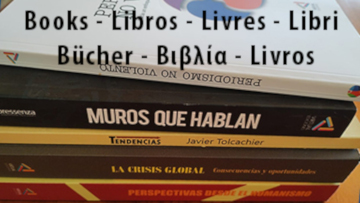
Training in Nonviolent Journalism
Documentary Catalogue

Every Sunday