

By Rita Bhowmick (Dhaka Bureau)
In anticipation of the upcoming 2026 national budget, leading economists and women’s rights activists have emphasized the critical need for effective gender budgeting and a transparent understanding of gender-related issues to ensure women’s economic empowerment.
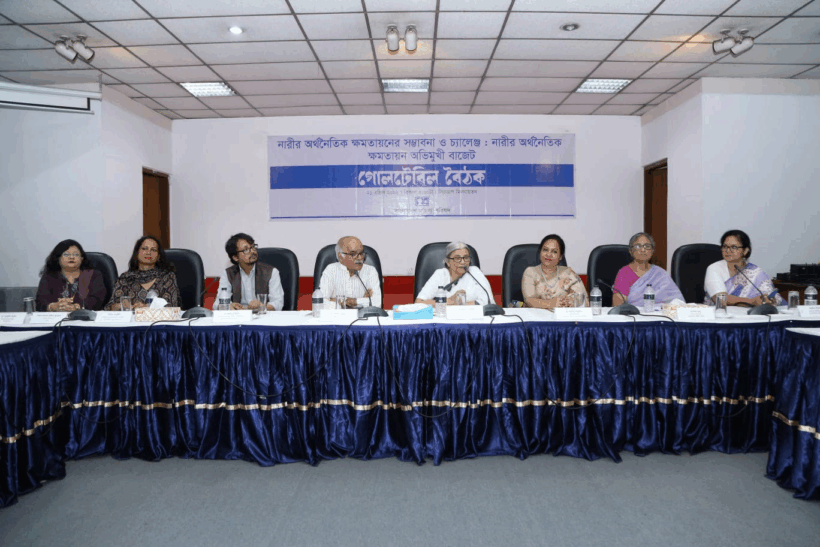
The call was made during a roundtable discussion titled ‘Opportunities and Challenges of Women’s Economic Empowerment: A Budget Oriented Towards Women’s Economic Empowerment,’ organized by the Bangladesh Mahila Parishad on Tuesday (April 21) at the CIRDAP auditorium.
Focus on Result-Based Evaluation, Not Just Allocation
Speakers at the meeting highlighted that gender budgeting is not merely about allocating funds; rather, a Result-based Evaluation is essential to determine whether those funds are reaching women and how effectively they are improving their quality of life. Representatives from the World Bank also stressed the importance of prioritizing human development through gender budgeting.
Expert Opinions and Proposals
Renowned economist Dr. Selim Jahan focused on three fundamental pillars of women’s empowerment:
- Enabling Environment: The family, society, and the state must create an environment conducive to empowerment.
- Autonomy: Women must have the freedom to influence, manage, and control important life decisions and resources.
- Security: True economic empowerment is impossible without personal security, protection from violence, and economic stability.
Dr. Sadia Sharmin, Additional Secretary of the Planning Division (Ministry of Planning), stated that infrastructure development must prioritize the practical needs of women. She also emphasized identifying barriers to progress through research and data.
Priority Demands for the Upcoming Budget
The speakers presented several specific recommendations for the upcoming budget to advance women’s development:
1. Productive Education: Transforming traditional education into a production-oriented system and increasing investment in technology.
2. Resource Rights: Ensuring women’s inheritance and control over both movable and immovable assets.
3. Labor Market Reform: Ensuring dignified wages, fixed working hours, and a safe, inclusive working environment for women.
4. Care Economy: Recognizing and redistributing domestic chores and bringing them under economic evaluation.
5. Climate and Gender Equality: Formulating the budget by considering the disproportionate impact of climate change on women.
Challenges and Obstacles
Maleka Banu, General Secretary of the Bangladesh Mahila Parishad, identified several key barriers to empowerment:
* Lack of technical skills and a digital divide.
* The social mindset of treating women’s income as ‘secondary.’
* The burden of child marriage and informal domestic labor.
* A lack of control over personal earnings and assets.
In her presidential address, Dr. Fauzia Moslem noted that despite the challenges of LDC graduation, marginalized women in Bangladesh continue to strive for progress. She urged the government to keep essential services like One-Stop Crisis Centers (OCC) operational even after specific projects conclude, to combat violence against women.
The speakers reached a consensus that gender budgeting should not just be a tool for risk mitigation but a primary engine for sustainable economic security. They called for Gender Impact Assessments and the public disclosure of budget tracking to ensure accountability.
##########
The Author:
 Rita Bhowmick: Senior journalist and Staff Correspondent Pressenza- Dhaka Bureau.


