

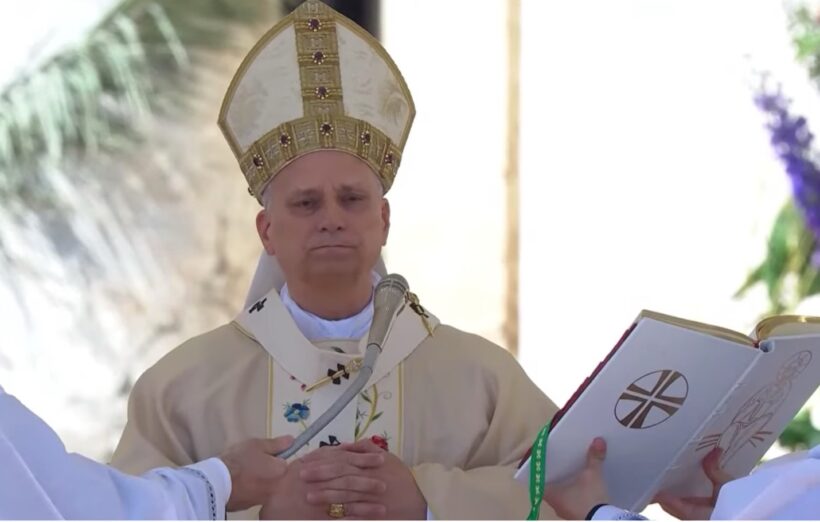
In April 13-15, 2026, Pope Leo XIV will visit Algeria in what is expected to be a historic and symbolic moment. This visit is not simply part of a diplomatic tour or a religious ceremony. It carries political, cultural, and social meaning for many Algerians. The presence of the head of the Catholic Church in a Muslim majority country opens an important conversation about coexistence, tolerance, and the place of religious minorities in modern Algeria. It also places Algeria at the center of international attention as a country capable of dialogue between civilizations.
Algeria is often described internationally as an Islamic nation, and Islam is deeply rooted in its history, culture, and legal framework. Mosques, religious traditions, and Islamic values are central to everyday life for the majority of citizens. However, reducing Algeria to a single religious identity overlooks the depth of its historical experience. Algerian identity has been shaped by centuries of interaction between different peoples and beliefs. Before Islam, the region was home to Amazigh spiritual traditions. During the Roman period, Christianity flourished in North Africa, producing influential thinkers who shaped global religious thought. Algeria’s past is layered and complex, and this complexity continues to influence its present.
One of the most important Christian figures born in what is now Algeria was Saint Augustine of Hippo, who lived in Hippo Regius, today’s Annaba. His theological writings influenced both Western Christianity and global philosophy. His legacy reminds the world that North Africa was once a vibrant center of Christian scholarship. Recognizing this history shows that Algerian identity cannot be reduced to a solely Islamic dimension. It has been shaped through a diversity of heritages that make this territory a true crossroads of civilizations. The Pope’s visit to Annaba thus carries strong symbolic value, linking the present to a rich and plural past.
Modern Algerian history also includes a painful chapter. During the 1990s, the country experienced a violent civil conflict after political instability and the rise of armed Islamist groups. Extremist movements attempted to impose a rigid ideological vision on society through violence and fear. Intellectuals, journalists, artists, and civilians were targeted. The goal was not only political power but also social transformation based on an exclusive interpretation of religion. This period left thousands of victims and deep psychological scars across the nation.
Despite this tragedy, Algeria did not collapse into a theocratic state. Many citizens resisted extremism, defending a vision of society based on coexistence and national unity. Civil institutions, cultural actors, and ordinary families rejected the idea that religion should be used as a tool of violence. The resilience of Algerian society during that decade demonstrated that national identity could not be reduced to radical ideology. The memory of that resistance remains an important part of Algeria’s modern consciousness.
Among the voices that emphasized cultural identity and pluralism were the Kabyle people of the Kabylia region. Kabyle communities have historically defended the Amazigh language, secular education, and civil freedoms. Their activism has often focused on preserving cultural heritage while promoting democratic values. While Algeria is united as one nation, regional movements such as those in Kabylia have contributed to broader debates about identity, governance, and diversity. Their resistance to ideological extremism reinforced the idea that Algerian identity is multidimensional.
In this context, the visit of Pope Leo XIV takes on deeper meaning. It signals international recognition that Algeria is more than a single narrative. It shows that a Muslim majority nation can welcome a global Christian leader in a spirit of respect. Such gestures strengthen diplomatic ties and encourage interreligious dialogue. They also send a message to the world that coexistence is possible in a region often portrayed through the lens of conflict.
Religious freedom does not mean weakening Islam in Algerian society. Rather, it means ensuring that all citizens can live according to their beliefs without fear or discrimination. True confidence in a national identity allows space for minorities, historical memory, and cultural diversity. Algeria’s strength lies in its ability to balance tradition with openness. Its Islamic roots remain central, yet its history reminds us that diversity has always been part of its story.
With the arrival of Pope Leo XIV, Algeria stands at an important symbolic moment. This visit invites reflection on its past, a deeper understanding of its present, and hope for its future. It encourages Algerians to see their country not as divided by its various identities, but united by a shared heritage rich in multiple legacies. Unity does not mean uniformity. Algeria’s future may lie in its ability to fully embrace its Amazigh, African, Mediterranean roots, as well as its religious and cultural diversity, turning them into a unifying strength rather than a source of division



