

When a power that occupies a territory decides to register the land of the occupied as its own, this is no longer administration: it is appropriation. Israel’s new law on land in the West Bank confirms that the so-called “two-state solution” has become empty rhetoric while, on the ground, an irreversible transformation is being consolidated.
There are moments when technical language betrays the moral truth of events. To speak of “registration,” “cadastre,” or “regularization” when dealing with land under prolonged occupation is a form of anesthesia. What the Israeli government approved by reactivating the formal registration of land in Area C of the West Bank — halted since 1967 — is not an administrative procedure. It is the formalization of a mechanism of appropriation.
In my opinion and analysis, the reading is unequivocal. When the authority that exercises military control over a territory imposes its own evidentiary standards on the population living under occupation, knowing that decades of war, displacement and documentary disruption make it difficult to prove title, the outcome is not neutral. It is foreseeable. And what is foreseeable, in this case, is that extensive areas of Palestinian land will be declared “state property” of Israel.
International humanitarian law is clear: occupation does not transfer sovereignty. Occupied territory does not become the property of the occupier. The Fourth Geneva Convention prohibits permanently altering the legal status of the territory and prohibits the transfer of the occupying power’s civilian population into that territory. Yet for years, settlements have expanded. Now, the systematic registration of land adds another layer: it transforms the reality of military control into consolidated civil structure.
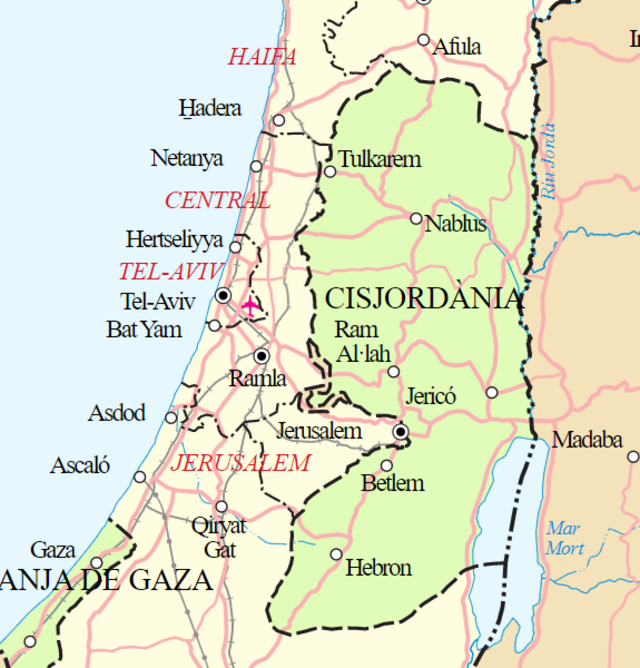
This is not an isolated episode. The new law adds to a documented pattern of demolitions of Palestinian homes, destruction of agricultural infrastructure, construction restrictions and systematic denial of permits in Area C, which constitutes roughly 60 percent of the West Bank. Demolition figures in recent years show a persistent trend: homes reduced to rubble, schools funded by international cooperation dismantled, water systems confiscated or rendered unusable.
Each demolition is not merely an urban planning infraction. It is slow expulsion. It is the message that permanence is provisional. It is the fragmentation of social and economic fabric. When a home is demolished, the farmer loses his land, the child loses her school, and the community loses continuity.
The land registration law operates in the same direction. If a Palestinian owner fails to prove title before the Israeli administration, the parcel may be reclassified as state land. Historically, that category has been used to expand settlements and consolidate territorial control. The operation appears clean on paper. Devastating in reality.
In my analysis, insisting that these measures do not determine the political destiny of the territory is a fiction. The two-state solution requires territorial continuity, access to resources, legal security over land and planning capacity. If the very soil can be progressively absorbed by the state that occupies it, that solution ceases to be a real possibility and becomes a diplomatic formula without substance.
This is not an abstract conflict. It is about control over land, water, livelihood. It is about the possibility of existing with dignity in one’s own territory. When the material bases of that existence are systematically eroded, the outcome is not merely inequality. It is structural dispossession.
Many governments and international bodies have condemned this measure as a step toward de facto annexation. Without effective consequences, however, condemnations remain suspended in the air. International law loses force not when it is attacked frontally, but when it is emptied of content through cumulative administrative decisions that transform realities on the ground until they become irreversible.
In my opinion, what is being executed is neither improvisation nor error. It is coherence. It is a policy that consolidates permanent control and gradually reduces the material space of Palestinian self-determination. To read these facts as mere administrative controversies is to ignore their structural logic.
Land is not a procedure. It is identity, rootedness, survival. When registration becomes a tool of dispossession, the conflict ceases to be negotiable and becomes existential. And when the international community accepts that transformation as a fait accompli, it is not being neutral. It is witnessing, in silence, the consolidation of a reality it will later claim to regret.