

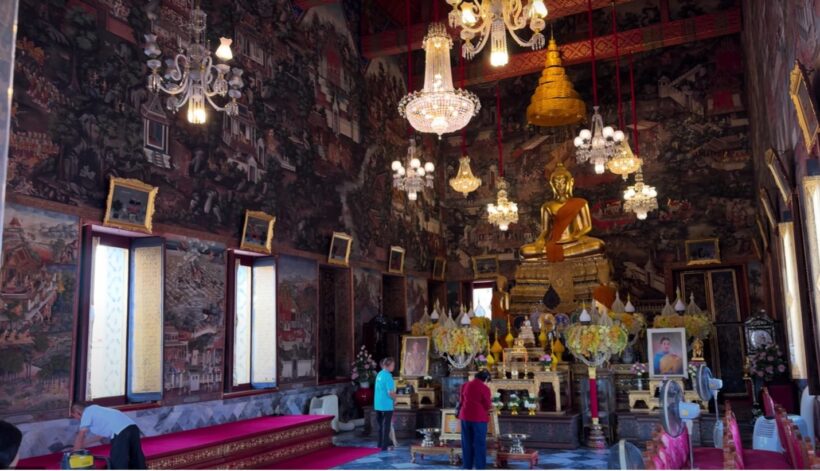
In a world marked by globalization and cultural standardization, some people continue to preserve a strong and ancient spirituality. Bangkok, the capital of Thailand, and Kabylia, an Amazigh region in Algeria, are two examples. Despite the distance and religious differences, these territories show the same ability to welcome outside influences while protecting their spiritual roots.
Bangkok is often seen as a modern and bustling city. Yet spirituality is very present there. Buddhism shapes daily life through temples, called wats, which play a religious, social, and cultural role. Theravāda Buddhism coexists with older beliefs linked to spirits, ancestors, and invisible forces. Spirit houses, placed in front of homes and businesses, show the continuity of these ancient beliefs. Monks are respected for their moral authority, and religious festivals such as Songkran emphasize purification and renewal. In Bangkok, tradition does not oppose modernity; it is part of everyday life.

“Azrou N’thor, the Kabyle mountain believed to grant prayers – Algeria (Image by A. Ali)”
In Kabylia, spirituality goes far beyond a single religion. Although Islam is still present in daily life, the region maintains a much older spiritual heritage that dates back thousands of years, long before the arrival of Islam and even Christianity. This ancestral heritage is expressed through beliefs connected to nature, mountains, water sources, respect for ancestors, and the cycles of life. These ancient traditions continue to influence Kabyle culture, reflecting a deep historical continuity that nourishes the identity and collective memory of the people.
Christianity, present in North Africa since antiquity, left some spiritual and symbolic traces. Later, Islam, particularly through Sufism and zaouias, transformed religious life but could not erase the ancient spiritual foundations, which continue to endure and influence local beliefs and practices. Throughout history, efforts have sought to suppress these traditions, notably through Arabization and rigid interpretations of religion. The aim was often to impose a single culture and spirituality, at the expense of local traditions.
Despite this, Kabyle spirituality has endured. It has adapted and been passed down through generations. It has sometimes blended with dominant religions while preserving its core structures and ancestral markers. This resistance is not a rejection of other religions, but a desire to protect a unique spiritual identity rooted in history, collective memory, and connection to the land. This particularity has fostered a culture of respect and tolerance. In Kabylia, faith is often seen as a personal matter. This allows for peaceful coexistence among different beliefs and strengthens communal harmony.
In Bangkok, spirituality is expressed predominantly within an organized urban framework. Buddhist temples, or wats, punctuate the bustling cityscape, offering both spiritual refuge and a space for ritual practice amidst the constant movement of urban life. Spirit houses (san phra phum), miniature shrines placed outside homes and businesses, reflect a deep-seated belief in maintaining harmony with unseen forces. In this context, spirituality is structured, codified, and intertwined with the rhythms of city living. In contrast, in Kabylia, a mountainous region of northern Algeria, spirituality is more communal, rooted in the rhythms of village life and a profound connection to the land. Traditional Kabyle ceremonies, rites of passage, and collective rituals tie individuals not only to their ancestors but also to the territory that sustains them. Despite these differing contexts, in both Bangkok and Kabylia, the sacred plays a central role in preserving identity, providing a sense of continuity, belonging, and moral grounding.
Bangkok and Kabylia together demonstrate that spirituality is neither static nor uniform. It adapts to its environment, transforms across generations, and protects itself against forces of change or erosion. Whether expressed through the serene devotion within a Buddhist temple, the quiet reverence of a spirit house, or the age-old Kabyle rituals performed in village squares or mountain groves, spirituality conveys a profound truth: the act of preserving one’s spiritual practices is inseparable from the act of preserving one’s identity, dignity, and humanity. In a rapidly changing world, these practices are more than religious expressions; they are living testimonies of cultural resilience, grounding communities in shared memory, ethical values, and the sacredness of daily life.



