

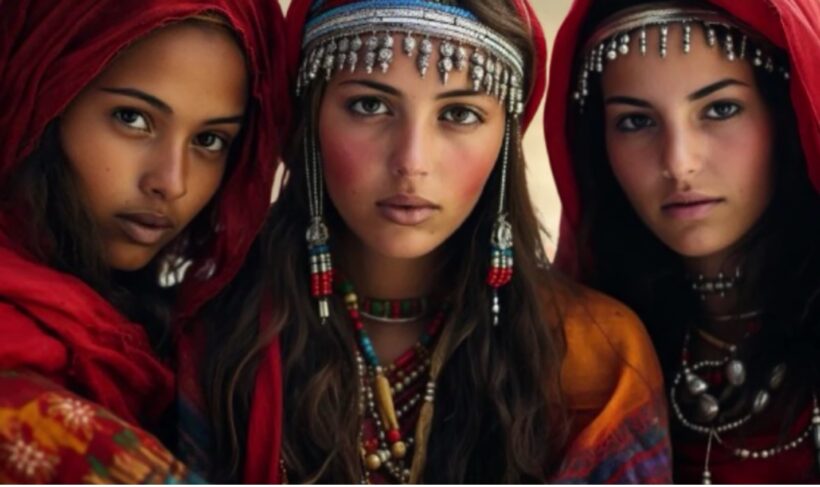
North Africa holds a distinctive place in the history of both the Mediterranean and African worlds. Commonly known as the ‘Maghreb,’ this region has a far richer and older history than the term implies. In-depth academic research reveals that North Africa is primarily built upon an ancient Amazigh foundation, whose recognition is crucial for understanding the region’s complex historical and identity-related dynamics.
Archaeological and historical evidence attests to a continuous human presence in North Africa since prehistoric times. The indigenous populations, known in ancient sources as Libyans, Numidians, Moors, or Gaetulians, are the direct ancestors of today’s Amazighs. These societies developed autonomous political, economic, and cultural structures, giving rise to organized kingdoms such as Numidia and Mauretania. The Tamazight language, belonging to the Afro-Asiatic family, is part of this continuity and represents one of the major foundations of North African identity. The term Tamazgha is thus used to designate the Amazigh historical and cultural space that extends across all of North Africa.
The arrival of the Arabs in North Africa in the 7th century marked a conquest carried out in the name of Islam, but this expansion faced strong resistance from the Amazigh people. Despite attempts to impose Arab domination, the Amazighs fiercely defended their land, particularly under the reigns of kings like Kahina (Dihya) and Sifax. These leaders led vigorous campaigns to repel the Arab invaders and preserve their territories.These leaders led vigorous campaigns to repel the Arab invaders and preserve their territories. While Islam eventually spread over time, the Amazigh resistance significantly influenced the process of Islamization and Arabization, which occurred gradually and not without tensions. Despite their resistance, the Amazighs played a central role in the rise of major regional dynasties and left a lasting imprint on the identity of North Africa.
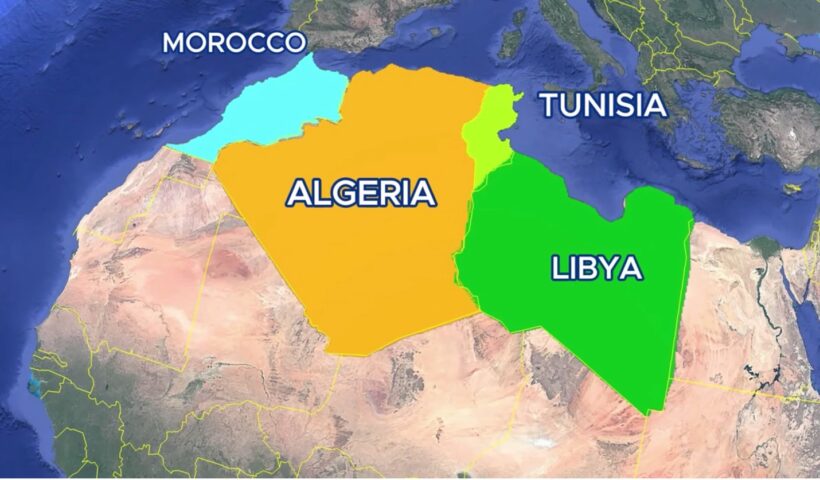
Despite repeated attempts to falsify history through an instrumentalized Islamization and a forced Arabization carried out by certain North African regimes, aimed at transforming Amazigh society into an exclusively Arab one, this project has largely failed. These policies, often implemented within an ideological and state-driven framework, did not succeed in erasing Amazigh historical, linguistic, and cultural foundations. On the contrary, the persistence of Amazigh identity, the Tamazight language, and ongoing cultural and historical claims attests to the depth and resilience of this millennia-old substratum in the face of attempts at identity homogenization.
In this context, the term “Maghreb” deserves critical analysis. Derived from the Arabic word al-Maghrib, meaning “the West,” it is a relative designation conceived from the perspective of the center of the medieval Arab-Muslim world. Although widely used today, this concept corresponds neither to an indigenous name nor to a homogeneous historical reality. Its exclusive use can lead to a reductive interpretation of North African history, privileging the Arab-Islamic period at the expense of the millennia of Amazigh history that preceded it. During the colonial and postcolonial periods, this vision was sometimes reinforced by state policies favoring a uniform Arab-Maghrebi identity. This orientation led to the marginalization of the Tamazight language and to a limited place for Amazigh history in school curricula and national narratives. In response, the concept of Tamazgha has gained importance in academic and cultural circles as an attempt to restore a historical continuity more faithful to the anthropological and linguistic realities of North Africa.



