

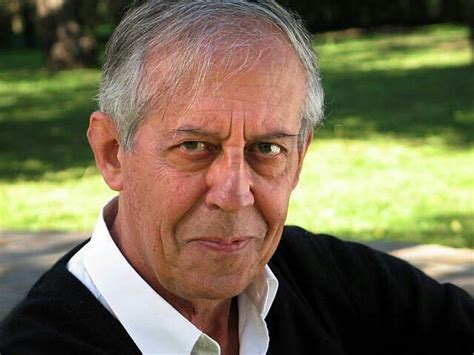
September 16 marks the 15th anniversary of the physical departure from this plane of existence of Mario Luis Rodríguez Cobos, better known as Silo.
Hundreds of thousands of people learned his teachings and contributed to the enormous and significant project he proposed: Humanizing the Earth. This purpose remains alive today, growing in the hearts of people of all cultures on Earth.
Perhaps current circumstances show aspects that have nothing to do with the humanization of the world. The genocide against the Palestinian people, the endless wars in the Democratic Republic of Congo, Sudan, and Ukraine, and the threatening military deployment of the United States in the Caribbean Sea are proof of this.
The accumulation of wealth in the hands of financial corporations, which with their economic violence generate hunger and poverty for vast groups of people, the continued destruction of the environment, the irrational rise of hate speech, but also the pandemic increase in mental health problems are evidence of the failure of an anachronistic system that no longer serves human development.
The political models that emerged in the industrial era as a rebellion against outdated monarchies are now a degraded caricature of democracy. Hypocrisy and insensitivity are rampant in the sphere of international relations, undermining the possibility of understanding and cooperation between peoples.
Given this scenario, has the courageous proclamation to humanize the world become a flagrant naivety? Moreover, is the Siloist proposal to advance toward a human being who is supportive and aware of the power of their intentionality to transform external and internal realities an unattainable chimera?
Those who are discouraged or confused, observing history through the lens of a particular moment in time, may believe this and devote themselves to licking the wounds of a non-existent defeat of their best ideals and aspirations.
But the view may well be different, or it may simply be necessary to change the lens to clarify the vision. Today it is possible to glimpse that, as Silo stated at the celebration of the thirtieth anniversary of the Humanist Movement, “a new civilization is being born, the first planetary civilization in human history. And therefore, those crises that are occurring and will still occur in the near future will serve, despite their misfortune, to overcome this last stage of human prehistory…”
The humanist teacher did not make overly optimistic statements, but rather understood in depth the inexorable process of interconnection among peoples, far beyond the pettiness of capitalist globalization.
Human beings have grown, Silo repeated on countless occasions, and that is why the old suit is too tight for them. That suit is the allegory of a social organization and a value system based on violence and sustained by exploitation and discrimination. That suit also represents a mental landscape in which the individual psyche has become disconnected from the rest of the social fabric, believing itself to be and strengthening itself as a watertight compartment impervious to what happens to others.
The growth of the species is reflected in numerous clear indicators, especially in reference to external living conditions. This makes it possible for us today to foresee the need and urgency for a new qualitative leap, similar to what it was at the time to produce fire, engrave memories on cave walls, transmit knowledge through the alphabet and the printing press, or fly into space. These transformations were ignited and accompanied by a rebellion of the spirit, the indomitable and imperishable driving force behind gigantic feats.
What is the leap that corresponds to this time? What is the cry that pulses from the depths of our Being? What horizons does the human spirit demand in order to continue its eternal journey, overcoming the obstacles and resistance of the present?
Undoubtedly, a meaning in life that recognizes the Human Being in their creative and transformative capacity. A meaning that promotes the unlimited growth of freedom for all human beings on Earth, a growth that is not even exhausted by the absurdity of death. A meaning that allows us to unite the earthly and the eternal, the everyday with the sacred, a meaning in which faith is a companion to reason and science, a meaning that values diversity as wealth in a framework of convergence towards a Universal Human Nation.
The proposals that have characterized Siloism in its development have always been an indisputable expression of this meaning. Ideas and actions that, beyond temporary success or failure, have been based on considering the human being as a central value, promoting equal opportunities for all, recognizing diversity by opposing all discrimination, sponsoring freedom of thought, and fighting against all forms of violence. These ideas, together with the commitment to shape a lifestyle and a way of relating to others marked by the phrase, “Treat others as you would like to be treated,” are the seeds of the world of the future.
To advance toward its longed-for utopias, siloism not only equipped itself with transformative concepts in the field of social and political action, generating multiple organizations at the same time, but also developed foundations and practices for personal change that accompany and give consistency to revolutionary behavior and militancy. Two central elements underlie this work: on the one hand, the certainty of the human capacity to modify one’s own nature and, on the other, the affirmation of the intimate connection that exists between human interiority and the social landscape in which it unfolds.
The great contribution of Universalist Humanism at this historic moment is precisely its complementary and simultaneous approach to both aspects of the most worthy of causes, whose mission is to overcome pain and suffering.
Today, as New Humanism and Silo’s Message continue their unstoppable advance toward all cultures on Earth, we affirm that there will be no external change in the world if we do not strive to accompany it with transformations within ourselves. And with equal certainty, we proclaim that there will be no internal transformation if we do not strive to modify the external circumstances in which our existence unfolds.
The immensity of the triple revolution—social, cultural, and psychic—proposed by Silo cannot be contained in a very brief note, limited to a few glimpses of the great work he set in motion. This note merely fulfills the humble objective of bearing witness to the moving experience of participating in this ongoing revolutionary humanist process.
In this way, we commemorate with deep and heartfelt gratitude Silo’s free flight to immortality, celebrating with joy the legacy of a pioneer. For all, Peace, Strength, and Joy!