

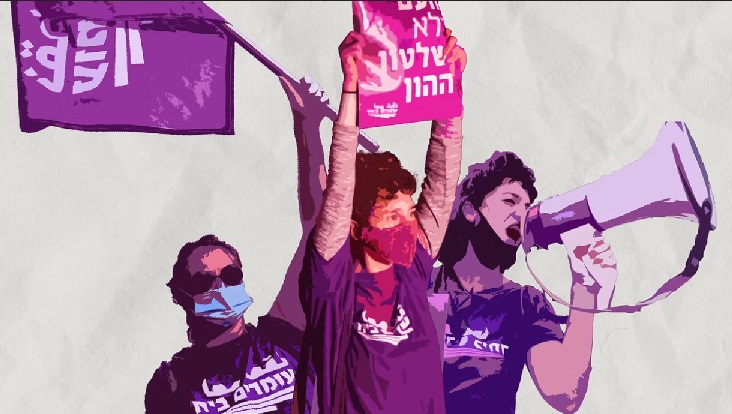
In contrast to the hypocrisy and inaction of many governments, the peoples of the world have reacted unanimously by denouncing the ongoing genocide against the population of Gaza.
Every day, scenes of atrocity unfold in this narrow strip of land that is home to nearly 2 million people, trapped between almost daily bombings, lack of food and water, the destruction of all basic services, and the walls that turn it into an open-air concentration camp.
Faced with such monstrosity and despite the difficulty of an analysis that goes beyond the urgent need to immediately end this cruel attempt at ethnic cleansing, we must ask ourselves what the solutions to this situation are.
At this juncture, there is no doubt that the recognition of a Palestinian state as a full member of the United Nations would provide formal diplomatic leverage to demand the complete withdrawal of Israeli troops from the territories of the new state, as well as its inviolability.
Such recognition would allow the return of the population expelled for more than eight decades and would make possible a multinational solidarity program to rebuild the infrastructure destroyed by the occupation. Likewise, repatriation would begin to restore, at least partially, the family and social fabric that has been devastated, as much or more than the buildings now in ruins.
The end of armed aggression, together with state recognition and the prosecution of those responsible for war crimes, as happened in post-war Germany, are a minimum requirement which, however, does not repair the loss of thousands of lives and the catastrophic consequences for the physical and mental health of the defenseless Palestinian civilian population.
But beyond the horror caused and the imperative to stop the massacre, what is the alternative that can bring lasting peace to the Palestinian and Israeli populations? What is the path to ending this infamous present and opening up a promising future?
The great enemies
The great enemy of the Palestinian people is not the Israeli people, nor are the Palestinian people the great enemy of the Jews who live alongside them. Both peoples are hostages to two great enemies: fear and the thirst for revenge.
From a very young age, Jews living in Israel (and all those related to that faith in the diaspora) are confronted with a misleading map.
They are shown that, being only a few million strong, they are surrounded by a hostile environment of hundreds of millions of adversaries. They are told nothing about the objective fact that their ancestors, undoubtedly motivated by the need to escape persecution and extermination or by a desire to find a home of their own, invaded a territory that was foreign to them. Justifying appropriation with distant and historically dubious biblical sources, or asserting rights of possession on the grounds of having migrated forcibly or voluntarily to other places, does not in the least authorize repeating the same immoral procedures with other peoples.
Every Israeli school-age child visits Yad Vashem, the memorial that revives the terrible experience of Jewish victims of the Holocaust at the hands of the Nazis, one or more times. Their education emphasizes the ongoing persecution their people have suffered, engraving in their minds from an early age the danger they are exposed to if they are unable to defend themselves adequately. An example of this is the glorification of one of their legendary heroes, Judas Maccabeus, who led the revolt of the same name against the Seleucid Empire in the 2nd century. This story is commemorated in the festival of Hanukkah, which also celebrates the rebuilding of the Second Temple in Jerusalem.
There is no doubt that in the minds of the vast majority of Jewish Israelis, the main enemy is fear.
In the Palestinian case, the great enemy is the thirst for revenge. Every Palestinian suffers the constant and daily opprobrium of being a second-class citizen in their own land. The control, discrimination, and permanent rejection to which they are subjected throughout their lives by the Israeli state allow the shadow of revenge to easily creep into their souls. This feeling is reinforced by the objective fact of their strong family ties to victims of repression or exile.
In both peoples, those who do not adhere to fear or resentment are repudiated and considered traitors. Both peoples are thus trapped in a vicious spiral of violence, which is exploited by extremist factions who, as in other places, take over the government with inflammatory proclamations of hatred and revenge.
The external geopolitical influence motivated by factors totally unrelated to the welfare of the populations should not be overlooked in the analysis. Israeli apartheid against the Palestinian people has the support of US imperialism, the same imperialism that supported the racist South African regime, but also the complicit silence of dictatorial governments, including those in the Arab and Islamic world, which feign adherence to the Palestinian cause.
Likewise, the refusal of European governments to openly condemn this flagrant violation of human rights and the disappearance of international law clearly speaks to their commercial interests and absolute submission to the dictates of the Atlanticist military bloc, which sees Israel as an allied enclave, charged with guarding and keeping the oil-producing nations of the Middle East in check.
Going to the heart of the matter, in order to amend and repair the long history of plunder, it will be necessary for the cultures that today continue to claim to be the greatest exponents of human civilization to abandon the supremacism that underlies the surrounding violence.
Palestinian emancipation thus seems to fit into a late and painful chapter of decolonization, accompanying the emergence of new relationships and paradigms on the international stage.
The only possible way out
While global public condemnation, widespread protests, and nonviolent resistance actions are essential to counteract war propaganda and pave the symbolic path to peace, this will not be achieved by external pressure alone.
The way out of this seemingly intractable conflict lies in the implosion of the mental structures that generate it. To this end, the decisive factor is the transformations that must be driven by the younger generations, rebelling against the fanatical criminals who seek to lead them in both nations.
This change, which today seems distant and perhaps impossible, may find its footing in the internal contradiction experienced by the majority of young Israelis and Palestinians, who are weary of violence and perpetual insecurity. The peoples vehemently yearn for peace, and as has been demonstrated in other parts of the world, they must make determined efforts to consolidate organizations and movements that demand it.
For both Palestinians and Israelis, the only possible way out is to raise the banner of peace and nonviolence together.



