

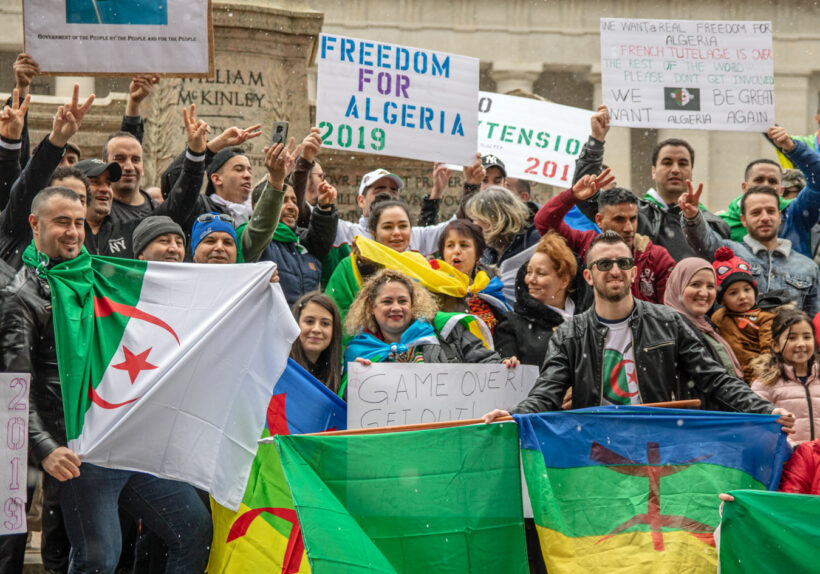
In the face of cultural, political, and identity-based tensions, Algeria is being called to redefine its national foundation. Between its diverse heritage and democratic aspirations, a new form of Algerian identity may emerge; one that embraces inclusiveness, respects the rule of law, and offers a path toward unity without uniformity.
Since gaining independence in 1962, Algeria has been on a continuous quest to define its national identity. However, instead of embracing the richness of its diverse cultures, languages, and religious traditions, the ruling regime has long sought to impose a uniform vision of “Algerianness.” This centralized and often authoritarian approach has marginalized large segments of society, fueling frustrations, regional tensions, and crises of trust.
Today, in a rapidly changing world and facing a youth eager for meaning and freedom, it is urgent to rebuild the Algerian social contract. This renewal must be based on full recognition of diversity, the establishment of a true rule of law, and decentralized governance.
Postcolonial Algeria was built around the triad of Arabism, Islam, and unity. Yet, this centralized reading marginalized essential historical components: Amazigh languages and cultures, regional identities, religious minorities, and alternative political movements. This rigid vision created an official identity largely disconnected from on-the-ground realities and stifled any differing expressions, viewing diversity as a threat rather than a strength.
In this context, cultural demands; such as those from Kabylia and other Berber-speaking regions; critical voices, and minority religious expressions are often seen as threats to “national unity.” The regime, heavily centralized around an opaque politico-military core, inherited partly from the Jacobin model and reinforced by single-party rule, blocks any real autonomy for regions and local authorities.
By refusing decentralization, the state denies local populations the power to manage their own development, culture, and governance. A strong nation is one where all its components feel recognized, respected, and empowered to shape their own destiny.
Breaking out of this deadlock requires a profound change of direction. It is not about “dividing the country,” as uniformity’s defenders fear, but about recognizing that unity cannot be decreed; it is built through diversity and mutual respect.
At a time when societies worldwide seek more justice, representation, and cohesion, Algeria stands at a crossroads. Reconciling the state with its people demands more than superficial reform; it requires addressing the very roots of historical obstacles.
First, the official recognition of Tamazight as a national and official language is a significant step, but it will remain symbolic without concrete measures: widespread teaching in schools, greater presence in public media, and use in institutions. More broadly, Algeria’s entire cultural heritage—including Mozabite, Tuareg, Chaoui, and other often overlooked communities—must be valued. A strong nation celebrates its plurality rather than fearing it.
Second, a true rule of law rests on guaranteeing fundamental freedoms. The repression of dissenting opinions, political trials, and attacks on freedom of expression must end. Releasing political prisoners should mark the start of a paradigm shift based on independent justice and absolute respect for human rights.
Third, governance must be deeply reconsidered. Local institutions should be strengthened, more power granted to territorial authorities, and regions allowed to manage resources according to their specific needs; all within a national framework ensuring fairness and solidarity.
Finally, rebuilding trust between the state and citizens requires a renewed political pact. This means organizing a truly inclusive national dialogue, free from ideological exclusion and censorship. Political parties, associations, unions, youth, women, and the diaspora must all contribute to shaping a shared future.
Democracy cannot be reduced to periodic elections. It requires a representative, transparent, and above all participatory political system that reflects the people’s will rather than suppressing it.
The Algerian people do not reject their identity; they reject an imposed, closed, authoritarian identity. What Algerians seek is an open Algerian identity, rooted in history yet decisively forward-looking. An identity that speaks multiple languages, embraces multiple cultures, and accepts multiple voices; without denying itself.
Algeria has the human, cultural, and historical resources to become a model of a plural and peaceful nation. But this will only be possible if the regime relinquishes its monopoly over defining national identity and places its trust in the people.
For every citizen to find their place within the nation, the state must recognize all its components. Only within a framework of embraced diversity, guaranteed rights, and genuine decentralization can Algeria finally live up to its promises.