
By: Angel de Castro III
April 12, 2026. A Sunday like so many others.
The day began the way resistance often does—not loudly, but quietly. A heaviness in the body. A reluctance not to the work itself, but to the cost of it. At forty-four, the body keeps its own ledger. It remembers the nights without sleep, the meals taken too late, the emotions swallowed whole and filed away for a later that never comes.
Still, the door opens.
Outside, the day has already settled into heat—the kind that clings to skin and slows everything down. Water is never simply water here; it is carried, stored, and rationed. Electricity comes and goes as it pleases. And for most who will walk through that door, getting here has already cost something—time, distance, a day’s wages, sometimes more.
Rounds begin.
Each patient is a world unto themselves. Bedside conversations drift between the profound and the ordinary—updates on lab values, reminders on medications, laughter over small stories that have nothing to do with illness and everything to do with staying human. Questions are asked, answered, and sometimes repeated. Time stretches where it needs to, compresses where it must. The elderly are given more than medicine—they are given presence, humor, dignity.
Many come from the shoreline or the fields, from homes where illness waits longer than it should because leaving means choosing between health and hunger. Here, twenty-one kilometers to the nearest city might as well be a different country.
By ten in the morning, the outpatient department is already full. A line that seems endless, but never truly is. One by one, they come. One by one, they are seen.
Fevers that linger too long. Infections that begin in water that was never clean to begin with. Bodies that endure first, seek help later.
Time disappears in this rhythm.
It always does.
When the last patient leaves, there is that brief, fragile moment—the pause before eating, before resetting, before the next unknown walks through the door.
Then fate, as it often does, refuses the pause.
A teenage girl is brought in by her mother. The air between them is tight, stretched thin by something unspoken but deeply felt. Pain is the presenting complaint—hypogastric, severe. On examination, the body begins to speak more clearly than words ever could.
Possibilities are raised. Pregnancy. Infection.
Denial fills the room like a sudden fog. Not aggressive, not loud—just present. Thick. Heavy. Unyielding.
Labs are ordered. Steps are set in motion.
And then everything changes.
The pain sharpens, deepens—becomes something else entirely. The body, again, tells the truth no one is ready to hear. In a matter of moments, the room shifts from uncertainty to inevitability.
A delivery begins.
At four months.
Too early for survival.
Too sudden for preparation.
Too real to deny.
In the span of minutes, a life enters the world.
Small. Fragile. Impossibly complete in its incompleteness.
He is placed in waiting hands.
There is a moment—a brief, suspended fragment of time—where instinct and awareness collide. The doctor knows what must be done. The body prepares to move, to act, to complete the process and save the mother.
But something interrupts.
A question.
Simple. Human. Necessary.
“Do you want to hold him?”
The answer comes quickly.
“No.”
The grandmother echoes it.
“No.”
Not out of cruelty. Not out of indifference. But out of something harder to name—fear, perhaps. Or the unbearable weight of acknowledgment. To hold him would make him real. To see him would make the loss undeniable.
So they refuse.
And in that refusal, the burden shifts.
The child remains—still connected, still alive. Suspended between two worlds.
He finds a place against the palm that holds him, as if guided by something older than memory. He settles. His tiny chest rises and falls in quiet defiance of what is already known.
Then, a movement.
A yawn.
So small, so ordinary, it feels almost impossible.
And then his hand—no larger than a whisper—wraps itself around a finger far too big for it.
A reflex, perhaps.
Or something more.
In that grasp, time fractures.
There is no hospital. No protocols. No next steps. Only a connection that lasts seconds but stretches into something immeasurable.
A request is made. A bottle of water.
Not all water is equal here. But in moments like this, it becomes enough.
There are no ceremonies here. No witnesses who will remember. Only a small room in a hospital that stands alone for an entire town, doing what it can with what it has.
Water touches skin. Words are spoken softly, carried more by meaning than by sound.
A baptism.
Not because it was required.
But because it was right.
Tears come, uninvited and unstoppable, though hands remain steady. There is still work to be done. There is always work to be done.
Time resumes its forward march.
Delay is no longer kindness—it becomes risk. One life is already slipping beyond reach. The other can still be held.
A choice must be made.
And so, gently, finally, the goodbye is spoken.
A whisper meant for both the child and the one who must let him go.
“It will be okay.”
“I’ll see you again.”
The cord is clamped.
Cut.
Separation made real.
The child is placed in a bassinet, warmth offered in the only way still possible. The focus shifts fully to the mother—her body, her safety, her survival.
The delivery is completed.
The bleeding is controlled.
The reassurances given.
“You will be okay.”
And she will be.
The room settles. The crisis passes. The world, indifferent as ever, continues.
Outside, the same problems wait—unreliable light, uncertain water, distances that stretch longer for those with less. Inside, the work simply moves on to the next name.
But something has changed.
It always does.
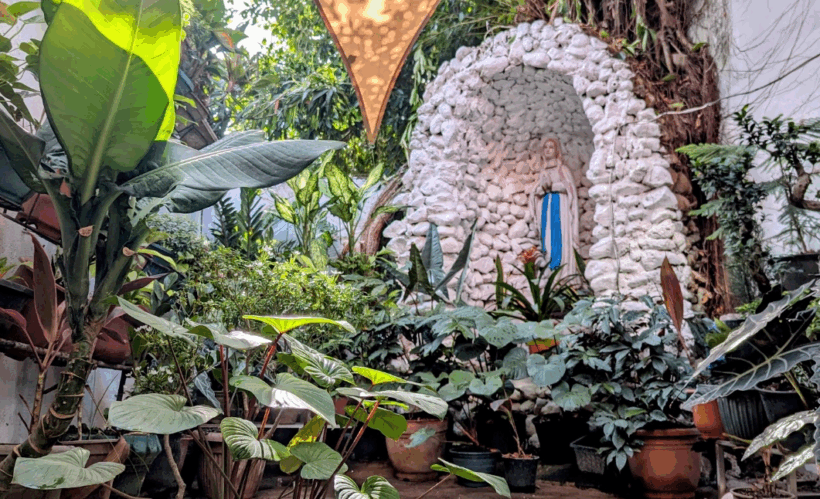
There is a place between the hospital and the house—a small garden, a quiet space where plants grow and prayers have been said more times than can be counted. It is here that the weight finally finds release.
No audience.
No expectations.
No need to be composed.
Only breath.
And grief.
Beyond the walls, life continues in its familiar austerity—the hum of generators when they work, the quiet when they don’t, the steady negotiation of daily needs most never have to think about.
It comes all at once—the moment replaying not as memory, but as feeling. The small hand. The yawn. The refusal. The whisper.
Tears that could not fall in the room now fall freely.
Not for long. Never for long.
Because there is always the next thing.
Lunch is shared with family. Conversation is careful, measured. The weight of the morning is kept at a distance—not out of dishonesty, but out of protection. There is love at the table, and it deserves its own space, untouched by what has just transpired.
The body sits.
The mind rests—briefly.
The heart remains elsewhere.
An hour passes.
Then it is time to return.
The afternoon brings its own responsibilities… A debriefing. Words must be found for others—for nurses, for staff, for those who witnessed but do not carry the same framework to understand.
Meaning must be constructed where none is obvious.
Explanations are given. Context is provided. Questions are answered.
But beneath it all lies a truth that cannot be fully spoken:
Some days are not meant to be understood.
Only endured.
And yet, even in this, there is something that remains.
A life that lasted only minutes still left an imprint.
He was held.
He was seen.
He was named in the quiet language of care.
He was not alone.
Sometimes, that is all that can be given.
And sometimes…
That is everything.
About the Author:
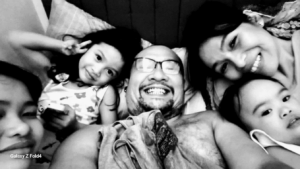
Dr Angel Emil C de Castro III MD RPh MHA. He writes from years of firsthand experience with both the fragility and resilience of life. As the third-generation “Angel” of the De Castro Hospital in Milagros, Masbate, he carries forward a legacy shaped by his father and grandfather—all three recognized among the town’s early historically significant personalities.
For nearly two decades, his work has been rooted in a community with limited access to care. What began under his father’s guidance came fully into his care after his father’s passing in 2019, and for almost a decade now has been a largely solitary practice—managing inpatients while seeing outpatients daily, in the only hospital serving the municipality of Milagros.
His work reflects the dignity of life, moments of laughter, and the quiet importance of being seen.