

By Rita Bhowmick (Dhaka Bureau)
Aiming to bring transformative changes to the labor market and advance women’s empowerment, the ‘National Care Conclave 2026’ was held in Dhaka. Organized jointly by the International Labour Organization (ILO), UN Women, and the Asian Development Bank (ADB), the conference saw policymakers, human rights activists, and development partners reach a consensus: granting state recognition to ‘Care Work’ is now a demand of the time.
Recognizing Invisible Labor: A Tool to Eliminate Inequality
Currently, women’s labor force participation in Bangladesh stands at 42.6%. However, a vast invisible segment remains hidden beneath this figure. Approximately 85% of women in the country work in the informal sector, spending a significant portion of their day on unpaid care work. This ‘time poverty’ remains the primary obstacle to women becoming economically self-reliant.
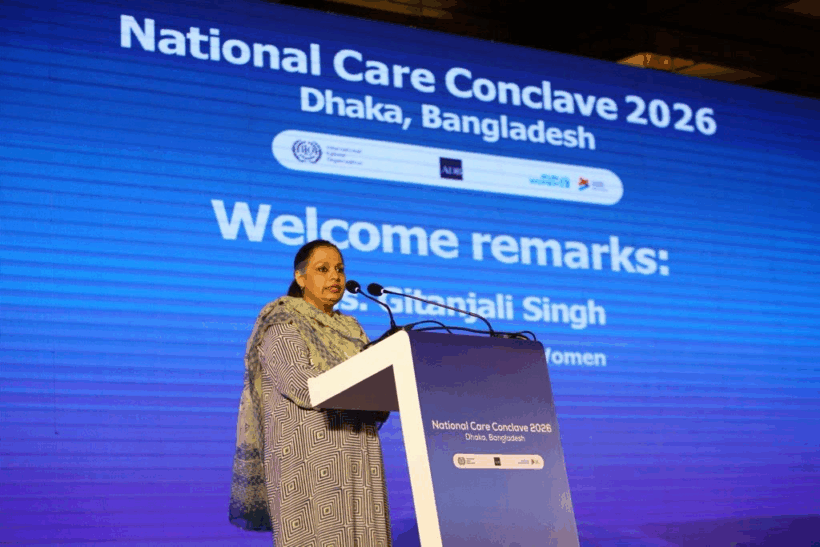
At the conclave, Gitanjali Singh, Country Representative of UN Women Bangladesh, stated emphatically- The undervaluing and gendered division of care work is one of the biggest drivers of gender inequality. Investing in care systems will reduce women’s time poverty, benefiting both society and the economy.’
A New Equation for Economic Prosperity
Projections presented by the ILO at the conference revealed a striking statistic: if universal investment is made in childcare and long-term care sectors in Bangladesh, it is possible to create over 7 million new decent jobs by 2035. This would not only boost employment but also play a critical role in narrowing the gender pay gap.
Abu Zafar Md. Zahid Hossain, MP, Minister for Women and Children Affairs and Social Welfare, clarified in his speech that empowering women is no longer just a humanitarian issue but a ‘macroeconomic necessity.’
From Policy to Implementation: Challenges and Prospects
The conclave featured three specialized technical sessions emphasizing the professionalization of care work. The key discussion points included- Professionalism: Enhancing the skills of care workers to integrate them with dignity into both domestic and international markets.
State Responsibility: Shifting care work from being a private household responsibility to being governed by national policy frameworks.
Labor Protection: Ensuring rights such as breastfeeding breaks and paid leave in the workplace.
Aspirations for a Humane and Inclusive Future
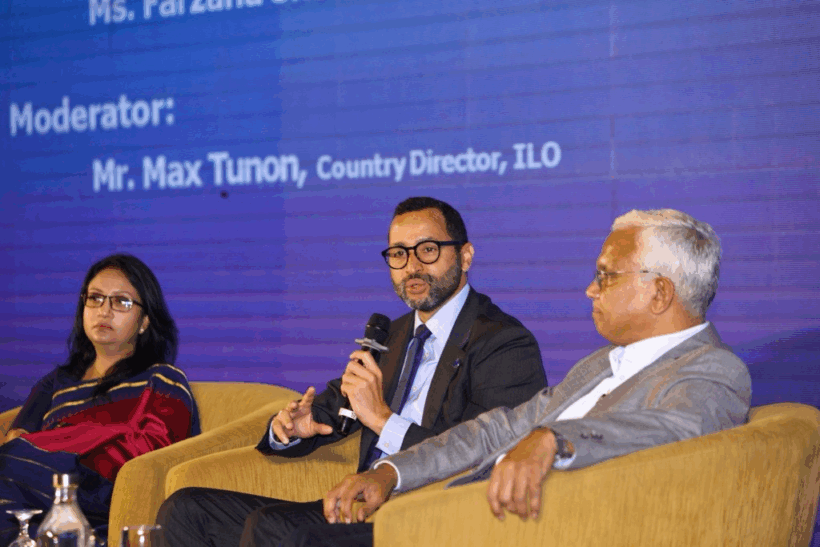
At the conclave, Hoe Yun Jeong, Country Director of the Asian Development Bank (ADB), stated that the ADB will provide necessary policy support to Bangladesh to bring the care sector into a well-organized framework. Photo: ILO Bangladesh.
Hoe Yun Jeong, Country Director of the Asian Development Bank (ADB), gave a strong commitment to stand by Bangladesh in this transformation process. He noted that the ADB would provide necessary policy support to bring the care sector into a well-organized structure.
The ‘National Care Conclave 2026’ was not merely a conference; it served as a roadmap for restructuring the economic and social fabric of Bangladesh. True social justice and gender equality can only be achieved when the state and society accept care work as a collective responsibility. Bangladesh is now moving steadily toward that goal.
##########
The Author:
 Rita Bhowmick: Senior Journalist and Staff Correspondent, Pressenza- Dhaka Bureau.


