

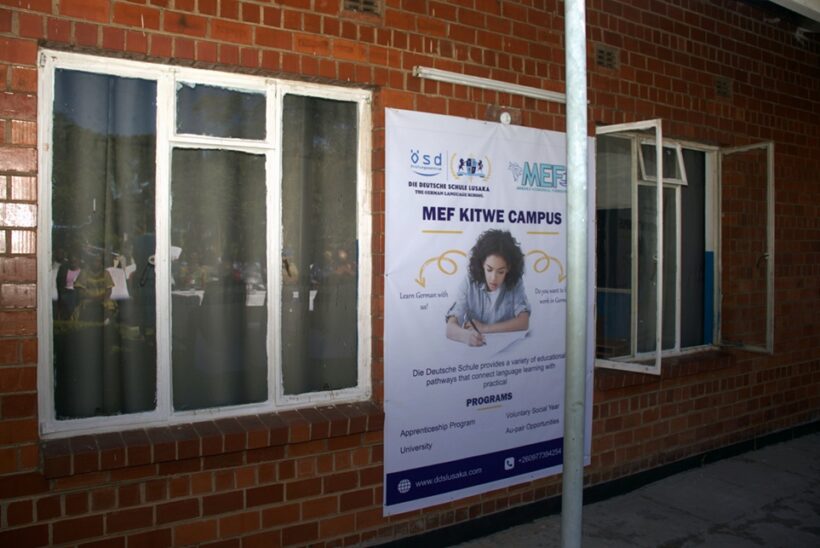
The Mindolo Ecumenical Foundation has launched a German language programme in Kitwe, adding a new dimension to its long-established work in education and human resource development. The initiative is designed to equip learners with practical language skills while creating access to opportunities in both local and international contexts.
Founded in 1958, the institution has developed into a recognized center for training, reflection, and intercultural engagement, serving participants from Zambia and across Africa. Language training has remained a consistent focus, with English and French offered over the years to support communication across the continent.
The introduction of German reflects a strategic effort to respond to changing global demands. The programme has been developed in partnership with Die Deutsche Schule a German language institution based in Lusaka, following a period of engagement with German organizations and development partners. These relationships have included collaboration with international agencies, volunteer exchanges, and institutional support, which together created a foundation for the new programme.
Executive Director Rev. Prof. Hoyce Jacob Lyimo Mbowe said the expansion of language training is aligned with the institution’s mission to connect communities and strengthen skills that are relevant in today’s environment. Drawing from experience in academic work in Germany, the Director noted that access to language training can play a key role in opening pathways for education, employment, and professional growth.
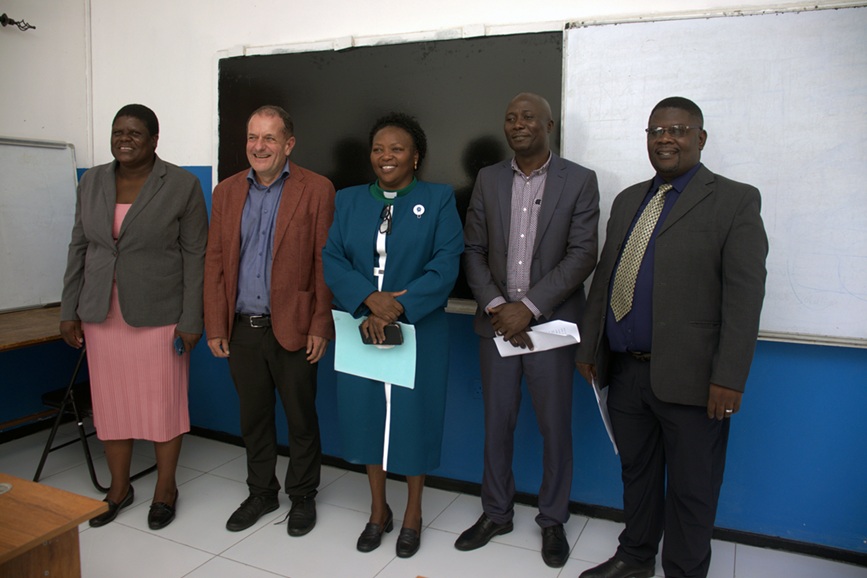
The Executive Director of MEF and staff pose with Mr. Claws, Director of Die Deutsche Schule, alongside the newly appointed German language teacher.
The programme is structured to provide both accessibility and progression. It currently offers levels A1, A2, and B1, each completed within ten weeks. Flexible learning options, including evening classes, have been introduced to accommodate working individuals and a wider group of participants.
Beyond classroom learning, the programme is linked to practical outcomes. Participants who complete the required levels and demonstrate basic language proficiency may be connected to opportunities in Germany. These include volunteer placements, employment options, and further studies. The programme also provides support with essential processes such as travel arrangements, work permits, and documentation.
This approach responds to a common challenge faced by many young people who complete training but struggle to secure employment or access capital. By linking language skills with existing professional abilities in areas such as construction, agriculture, and technical trades, the programme aims to create a pathway from training to income generation.
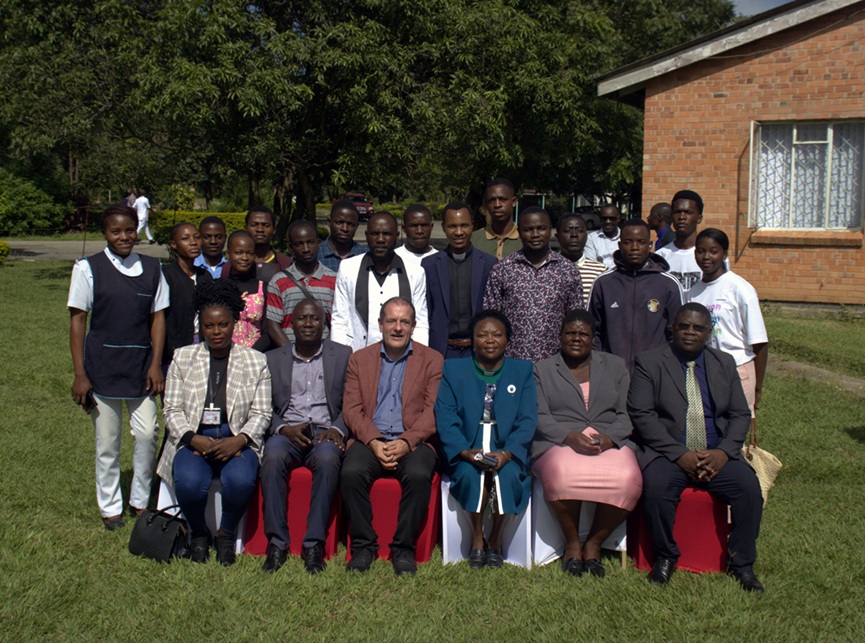
The Executive Director of MEF and staff pose with Mr. Claws, Director of Die Deutsche Schule, alongside the newly appointed German language teacher.
The Director explained that some German companies are already seeking workers and are open to candidates with basic language skills and practical experience. These placements are supported through structured arrangements that include accommodation, health insurance, and allowances, making the transition manageable for participants.
At the same time, the programme creates opportunities within Zambia and the region. German language skills can be applied in sectors such as tourism, where effective communication with international visitors is important. It also supports career paths in teaching and translation, particularly as demand for language instruction continues to grow.
The launch forms part of a broader plan to expand language offerings at the institution. Future additions are expected to include Chinese, Kiswahili, and Bemba, with the aim of supporting both local learners and international participants seeking to engage with communities in the Copperbelt.
The German language programme represents a continuation of the foundation’s focus on relevant and practical education. By combining language training with clear pathways to opportunity, the initiative contributes to ongoing efforts to strengthen skills development and improve access to employment for young people in Zambia and across Africa.



