

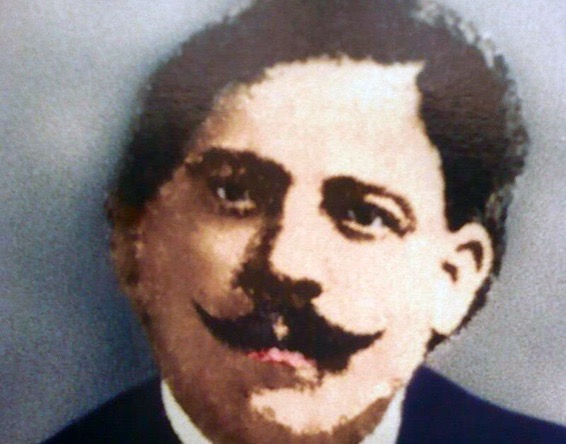
Official Algerian historiography has elevated certain figures of the national movement while relegating other major actors to relative marginalization. Among these forgotten figures is Amar Imache (Ɛmer Imac), a Kabyle leading political activist during the colonial period, a committed intellectual, and an early advocate of an Algerian project grounded in democracy, social justice, and cultural pluralism. Born on 7 July 1895 in Aït Mesbah, Kabylia (present-day Aït Douala municipality), and deceased on 7 February 1960, Amar Imache nevertheless played a decisive role in the emergence of modern Algerian nationalism. His erasure from national memory raises questions about the ideological choices made after independence.
Born into a modest family, Amar Imache was exposed at an early age to the social and economic realities of the colonial system. Forced to work from childhood to support his family, he emigrated to France during the First World War. There, he worked successively as a laborer in Michelin factories, in naval arsenals, and later as an underground coal miner in the Pas-de-Calais basin. Like many North African workers, he endured harsh living conditions, exploitation, and racial discrimination, experiences that profoundly shaped his political and social consciousness.
Settling in Paris in the 1920s, Amar Imache became actively involved in the political organization of North African workers. He was one of the founders of the North African Star (Étoile Nord-Africaine, ENA), widely regarded as the first structured Algerian nationalist movement. In 1933, he was elected Secretary General of the organization and became editor-in-chief of the newspaper El Ouma, the party’s central organ. Contrary to certain later interpretations, the ENA explicitly advocated national independence, social progress, and the political dignity of the Algerian people.
Deeply attached to his cultural heritage, Amar Imache promoted the integration of traditional Kabyle political institutions, notably the tajmaât (elected village assembly) and the âarch (communal land organization), into the national project. In his view, these institutions represented authentic forms of democratic governance, demonstrating the existence in Kabylia of participatory political practices long before colonization. This pluralistic conception of national identity stood in contrast to homogenizing visions based exclusively on political Arab-Islamism.
Arrested on several occasions, sentenced, and later deported to Germany as a political prisoner during the Second World War, Amar Imache remained steadfast in his convictions. In 1946, in his pamphlet The Hour of the Elite (L’Heure de l’Élite), he denounced the massacres of 8 May 1945, the severe social and health conditions endured by the Algerian population, and the attitude of segments of the elite whom he regarded as complicit with the colonial order.
Upon returning to Kabylia (Algeria), weakened by illness, he distanced himself from struggles for power but nonetheless continued to advise militants of the National Liberation Army (ALN) at the outset of the war of independence, without seeking official recognition.
Amar Imache died on 7 February 1960, during a food blockade imposed by the French colonial army on his village. He left behind a destitute family and a political legacy largely ignored by the independent Algerian state.
The marginalization of Amar Imache cannot be attributed to chance. His commitment to democratic principles, his rejection of authoritarianism, his explicit defense of Amazigh identity, and his opposition to hegemonic figures within Algerian nationalism contributed to his exclusion from an official memory built upon ideological uniformity and centralized historical narratives.
Rehabilitating Amar Imache does not mean setting Algerians against one another, nor does it imply privileging one regional or cultural component over others. On the contrary, it requires a lucid recognition of the true historical identity of Algeria as a plural nation, shaped over centuries by Amazigh foundations. Acknowledging this reality is not a threat to national unity; it is a condition for its consolidation. By restoring figures such as Amar Imache to their rightful place, Algeria affirms that its liberation was not the product of a single ideology, language, or political current, but the result of multiple trajectories, sensibilities, and forms of resistance rooted in the lived experiences of its people.
To forget Amar Imache is to amputate the national history of one of its most lucid consciences.