

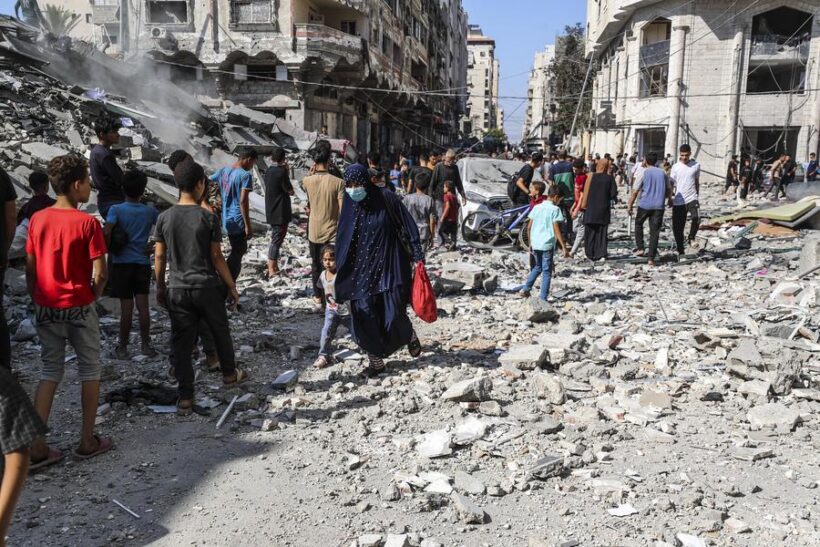
In the past two days, the so-called ceasefire in the Gaza Strip has turned into a disguise for calm while new victims keep falling. On October 16, 2025, in the Zeitoun neighborhood of Gaza City, a civilian vehicle carrying the Abu Shaaban family was struck by Israeli military fire as they returned to inspect their home. Eleven people were killed, among them seven children and two adult women. Gaza authorities have described the attack as the most serious violation of the ceasefire so far.
The Israeli side claims the vehicle crossed what it called the “yellow line,” a military control demarcation that supposedly marks areas where its troops still operate. Gaza rejects that version, asserting there was no visible signage or effective warning for civilians.
Since the ceasefire agreement took effect on October 10, 2025, Gaza officials accuse Israel of carrying out forty-seven documented violations, leaving at least thirty-eight dead and more than one hundred forty injured.
This pattern shows that the truce—presented as a respite for a devastated population—is turning into a new phase of violence disguised as normality. When children die driving a minibus back to their home, the white flag of diplomacy becomes a gray handkerchief of mourning.
The contrast is brutal: while mediators speak of reconstruction and aid, the bombs keep falling, the Rafah border remains closed, and the displaced return to the skeletons of their houses, with hope reduced to rubble.
The international community that endorsed this agreement must demand not only the opening of border crossings and humanitarian access, but also the genuine fulfillment of commitments, effective protection of civilians, and verifiable accountability mechanisms. Because if the truce endures only to record statistics while bombs keep killing entire families, then that truce is just another name for complicit silence.