

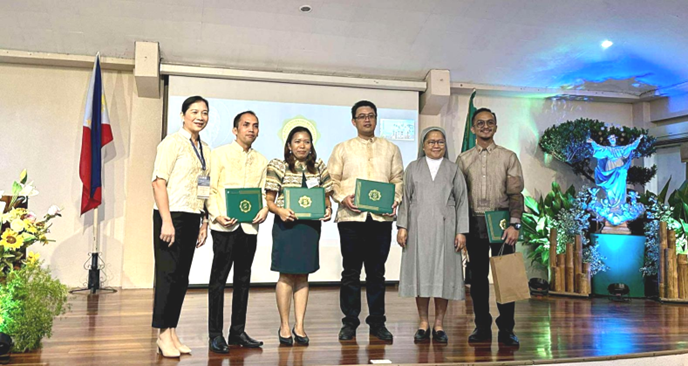
This is the 5th series of the 5th Hanseatic League of Universities Conference
By Genevieve Balance Kupang, Dumaguete City, Philippines
Thank you for reading the first four series which was not only published in Pressenza but also re-published in Philippine Times: 1) https://www.philippinetimes.com/news/278459400/wuri-a-transformative-force-in-global-university-rankings; 2) https://www.philippinetimes.com/news/278470308/empowering-change-beyond-conference-halls-the-5th-hlu-immersive-naturalclassroom-experience-in-siquijor-island-part-2.
One of the core objectives of the Hanseatic League of Universities (HLU) conference is to facilitate meaningful exchange and mutual learning among member universities. This collaborative platform enables institutions to elevate the impact of their initiatives by sharing best practices and fostering a willingness to replicate successful programs across different contexts, thereby amplifying their positive influence on higher education and communities.
The breakout session, expertly moderated by Sir Carl Joel Tilos, Full-Time Faculty of the Basic Education Department at St. Paul University Dumaguete, showcased a dynamic influx of ideas and inspiring examples from five innovative Philippine universities. The event highlighted how academic excellence, innovative spirit, and community-centered leadership are shaping a sustainable future.
Catalyzing Change through Entrepreneurial Ecosystems
The session opened with Dr. Franch Maverick A. Lorilla of the University of Science and Technology of Southern Philippines (USTP), who delivered on “Empowering Sustainable Innovation: Catalyzing Change through Entrepreneurial Ecosystems and Startup Incubation.” He emphasized that purposeful innovation thrives when universities break out of silos to forge lasting collaborations— illustrating how academic institutions can become breeding grounds for real-world problem-solving and economic growth. The concrete strategies and examples provided left participants inspired to drive innovation on their own campuses.
Research for Regional Impact: Sustaining the Native Chicken Industry
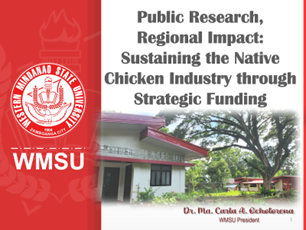 Snippets from the slide presentation of Assoc. Prof. Ma. Jocelyn Cuadra, highlighting innovative research and development efforts in sustaining the ZamPen native chicken industry.
From Western Mindanao State University (WMSU), Assoc. Prof. Ma. Jocelyn E. Cuadra spotlighted the crucial intersection of animal research and regional development with her talk, “Public Research, Regional Impact: Sustaining the Native Chicken Industry through Strategic Funding.” She shared evidence of how targeted research and financial support are sustaining the unique ZamPen native chicken, particularly the Joloano variety. Prof. Cuadra’s presentation served as a powerful reminder that sustainability encompasses not only ecological preservation but also the empowerment of rural livelihoods and the safeguarding of cultural heritage.
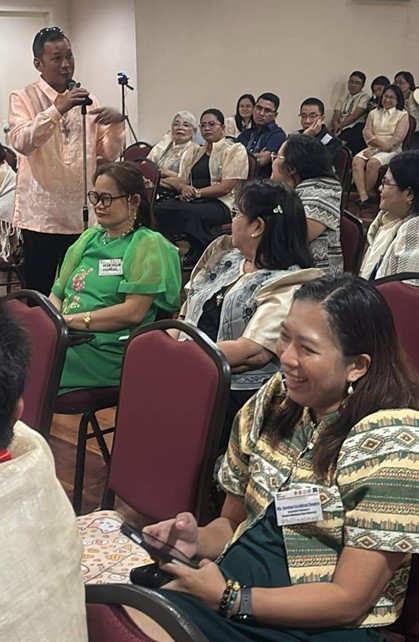 This is what a great Q&A looks like. Foreground: our resource speaker’s Ma. Jocelyn E. Cuadra’s radiant smile and demeanor beautifully illustrates a conference environment that encourages participants to share their insights with uninhibited candor.
Collaboration in Education: BISOG for Sustainable Development
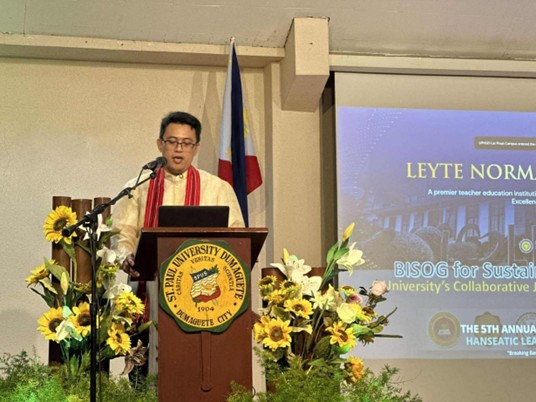 Dr. Las Johansen Caluza of Leyte Normal University explains that sustainable funding begins with internal readiness, not just external money. He highlights that collaboration with agencies like Department of Science and Technology (DOST)-National Research Council of the Philippines, DOST-Philippine Council for Industry, Energy, and Emerging Technology Research and Development (PCIEERD), Grassroots Innovation for Inclusive Development (GRIND), Commission on Higher Education (CHED), and Local Government Units (LGUs), is the foundation of their success.
Representing Leyte Normal University (LNU), a premier teacher education institution in Eastern Visayas exemplifying integrity, excellence, and service, Dr. Las Johansen Caluza (presenting for Dr. Gil Nicetas Villarino) drew applause for discussing “BISOG for Sustainable Development: A University’s Collaborative Journey to Innovation and Impact.” The BISOG program, as described by Dr. Caluza, is a model of how universities can pool resources, foster broad partnerships, and align with community needs to spark impactful change well beyond campus boundaries. The central message: true transformation happens when education leaders unite vision with practical, inclusive action.
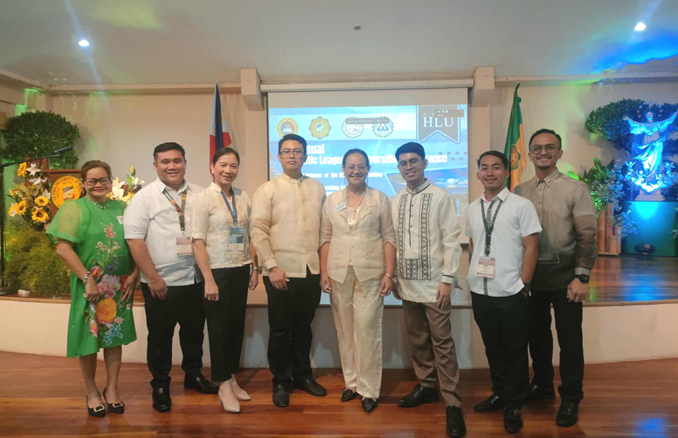 Advancing innovative and sustainable initiatives, the SPUD organizers, moderator, technical personnel, HLU resource speakers, and WURI Historian convene for a photo following the successful breakout session: Dr. Marianne P. Villaruel, Mr. John Aldwin Abalos, Dr. Mary Francis Laquinon; Dr. Las Johansen Caluza; Dr. Genevieve B. Kupang; Mr. Carl Joel Tilos, Mr. Mark Tinaytina, and Engr. Emir Lenard S.F. Sicangco.
Southern Leyte State University’s Impactful Projects: Funding for Sustainability
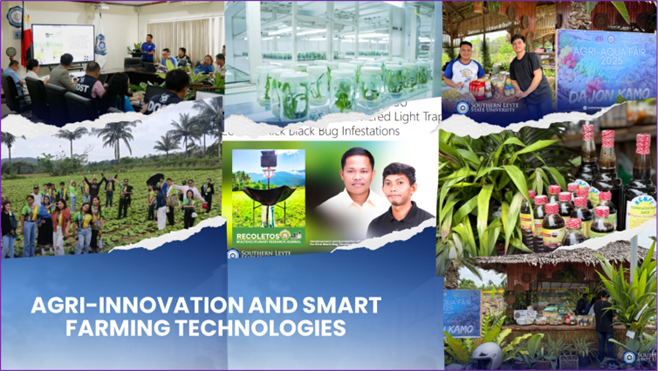 SLSU Cultivates Resilience: Agri-Innovation Breaking Barriers for Farmers in the Eastern Visayas Region.
During a compelling session at the 5th Hanseatic League of Universities (HLU) conference, held on July 10, 2025, at St. Paul University Dumaguete, Dr. James Brian Flores, Quality Assurance Director of Southern Leyte State University (SLSU), illuminated his institution’s transformative journey under the theme, ‘Breaking Barriers, Empowering Change. Representing University President Dr. Jude A. Duarte, Dr. Flores underscored SLSU’s strategic pivot from a compliance-driven model to one deeply rooted in genuine societal impact. He elucidated how quality assurance at SLSU transcends a mere tick-box exercise, evolving into a pervasive culture that breathes life into every facet of the university’s mission— from instruction and research to extension and production.
This philosophical shift, he explained, has been instrumental in designing initiatives that are academically rigorous, financially and socially sustainable, thus fostering independence from sole reliance on government appropriations and paving the way for self-generating resources that fund innovation. Dr. Flores highlighted three initiatives showcasing SLSU’s vision for funding sustainability and community empowerment. He detailed the Bioresource Production Technology Center (BioProTeC), where advanced research on aquaculture and bio-processing transforms local resources into high-value products, creating alternative livelihoods and promoting environmental sustainability.
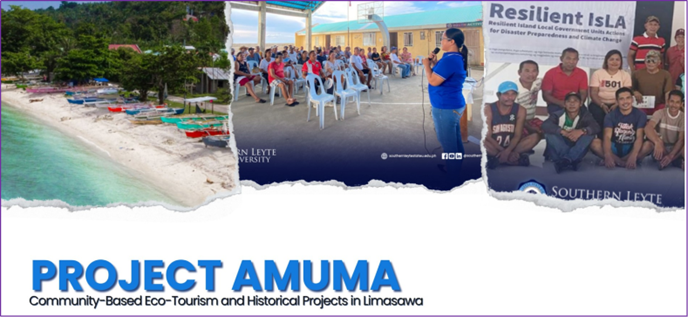 SLSU’s Project Amuma, a community-based eco-tourism and historical projects in Limasawa.
Next, he presented Project AMUMA in Limasawa, a collaborative eco-tourism and historical project that empowers local communities through capacity-building, financial literacy, and sustainable tourism management, reinvesting revenues directly into local development. Finally, he elaborated on Agri-Innovation and Smart Farming Technologies at the Hinunangan campus, showcasing the university’s leadership in producing high-yield plantlets and developing solar-powered pest control, improving farmers’ yields and incomes. Dr. Flores’s sharing illustrated that for SLSU, funding sustainability is about generating revenue, sustaining hope and building resilient communities, embodying the spirit of breaking barriers and empowering change that resonated with the HLU’s mission.
Turning Compassion into Impact: The Tarlac State University’s SARAP Tumulong Program
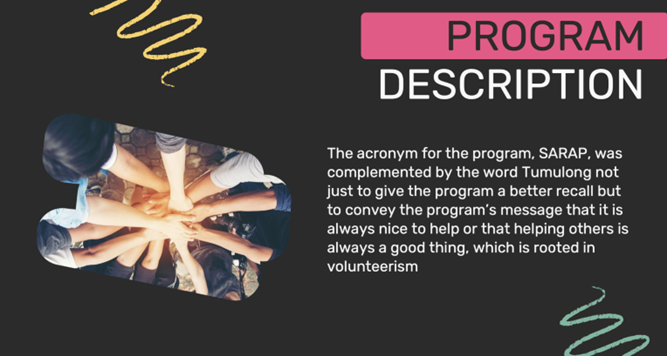
Engr. Emir Lenard S.F. Sicangco, Director of the Office of University Extension Services at Tarlac State University (TSU), offered an insight into his institution’s commitment to funding sustainability and social impact. He illuminated TSU’s flagship outreach program, SARAP Tumulong (Social Action on Relief and Assistance Program), a testament to how universities can institutionalize aid for calamity victims and underprivileged sectors while ingeniously addressing resource challenges. What distinguished TSU’s approach, as articulated by Engr. Sicangco, was its innovative funding mechanism rooted in volunteerism: a unique annual pledge of 1% of gross monthly salary from faculty and staff.
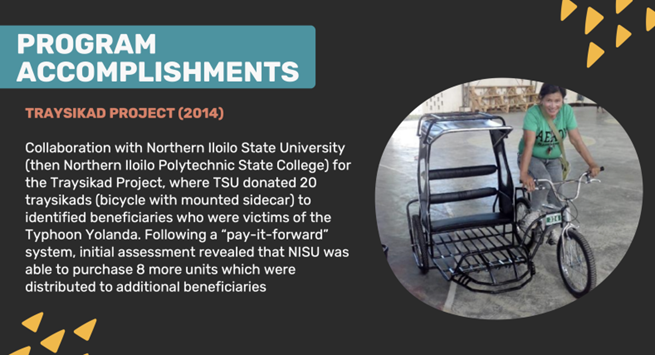
This pooled resource underpins outreach initiatives and fortifies existing university programs, showcasing a commitment to self-reliance and sustained community engagement. Our resource speaker Engr. Sicangco elaborated on SARAP Tumulong’s expansive reach, highlighting its inclusive design that transcends the university’s internal community. Beyond monetary contributions, the program actively facilitates non-monetary donations and a broad volunteer sign-up process open to students, alumni, and external stakeholders.
This model has enabled TSU to extend vital relief and rehabilitation efforts across various provinces in Luzon and Visayas, proving instrumental during the challenging period of the Covid-19 pandemic. Through SARAP Tumulong, Tarlac State University exemplifies how a commitment to innovative resource mobilization and collective volunteerism can effectively “break barriers” to traditional funding, thereby “empowering change” and fostering enduring resilience within communities, a powerful narrative that resonated deeply with the HLU conference’s spirit.
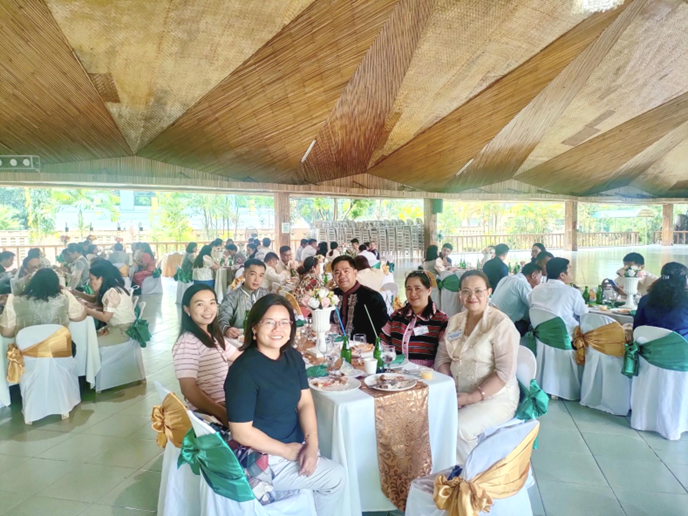 A feast for both the mind and the palate! A warm atmosphere fills the SPUD Mere Maria Hall as delegates from Cordillera HEIs (foreground)-Ifugao State University, Easter College, Baguio Central University, King’s College) and other Philippine HEI participants enjoy a meal prepared by our generous host, St. Paul University Dumaguete.
In closing, the breakout sessions at the 5th HLU conference served as a powerful testament to the transformative potential of higher education when driven by innovation and a profound commitment to community. The presentations from these exemplary Philippine universities provided a clear roadmap for how institutions can move beyond traditional roles to become catalysts for social, economic, and ecological change. By embracing creative funding models, fostering entrepreneurial ecosystems, and leveraging research for regional impact, these leaders demonstrated that breaking barriers is not merely a theme, but a call to action—one that unites us in the shared mission of empowering communities and building a more resilient, sustainable future for all.
About the Author:

Genevieve Balance Kupang is the WURI historian for 2024-2025. She is the Chair of the Special Interest Groups (SIG) and Peace Education Coordinator of the World Council for Curriculum and Instruction (WCCI). She is a leadership team member of the Exceptional Women of Peace (EWOP) of Pathways to Peace. She is the Dean, Graduate School, and International Relations Officer of Baguio Central University.



