

Kabylia is a mountainous region in northern Algeria, situated within the highlands of the Amazigh homeland along the Mediterranean coast. Known for its dramatic landscapes and independent spirit, it is home to the Kabyle people one of the largest Amazigh (Berber) ethnic groups in North Africa. With a rich cultural heritage rooted in millennia of history, Kabylia has long maintained a unique identity shaped by its language, traditions, and enduring resilience.
The Kabyle people speak Taqbaylit, one of the Tamazight (Berber) languages, which continues to thrive in daily life, media, and education. This linguistic heritage, coupled with a strong attachment to village life, democratic customs, and communal values, has allowed Kabyles to preserve a distinctive sense of self despite centuries of external influence. From Roman and Byzantine incursions to Arab conquests and French colonialism, Kabylia has historically resisted assimilation. During Algeria’s war of independence, the region played a central role, and to this day, it remains politically active, often leading calls for Amazigh rights and cultural recognition.
Kabyle culture is rich and expressive, with deep oral traditions, poetry, and music that convey identity, love, exile, and resistance. Artists such as Idir, Nouara, Sliman Azem, Lounès Matoub, Bahia Farah and Takfarinas have popularized Kabyle music far beyond Algeria’s borders. Craftsmanship in pottery, silver jewelry, and woven textiles is also central to the culture, often decorated with traditional Amazigh symbols passed down for generations. Social life in Kabylia is organized around the tajmaat, or village assembly, a long-standing communal institution that exemplifies participatory governance and collective responsibility.
One of the most distinctive features of Kabyle society is its approach to religion. Unlike many parts of the world where religious identity is a central and often divisive issue, in Kabylia, religion is widely regarded as a private matter. Families rarely discuss religious beliefs openly, not because of indifference, but out of deep respect for personal choice. Within the same family, one may find individuals who practice Islam, others who identify as agnostic or secular, and some who explore their Amazigh spiritual roots. This silent diversity reflects a broader cultural principle: belief is personal, and respect is paramount. The Kabyle sense of tolerance is not institutionalized in laws but embedded in everyday relationships. Rather than promoting uniformity, Kabyle communities have embraced difference in quiet, understated ways.
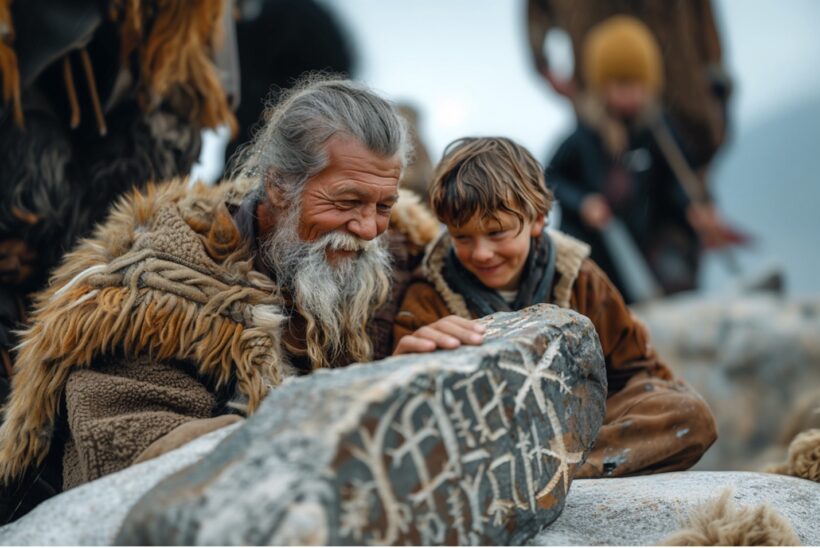
This openness may also help explain why some Kabyles are intrigued by unconventional theories about their origins one of the most curious being the idea that they may have distant ancestry linked to the Vikings. While this theory lacks concrete evidence, it continues to circulate in popular discussions and among diaspora communities. The idea is often based on scattered genetic studies that reveal small traces of European haplogroups in North African populations, as well as historical accounts of Viking incursions into the Mediterranean. In the year 859 AD, for example, a Norse fleet reportedly passed through the Strait of Gibraltar and raided parts of the Iberian Peninsula and North Africa. Some believe that brief contact may have occurred in or near Kabylia.
In addition to these historical footnotes, a few Kabyle oral legends mention mysterious visitors from the sea, described as having light skin or blue eyes. While these stories are typically symbolic or exaggerated, they add fuel to the Viking theory. Others have pointed to perceived similarities in social values such as clan-based structures, a strong warrior ethos, and reverence for freedom as possible parallels. However, professional historians and anthropologists remain highly skeptical. There is no archaeological, linguistic, or cultural evidence of any sustained Viking presence in Kabylia. Most experts agree that any Northern European influence in the region would be the result of centuries of trade, migration, or intermarriage, not colonization or settlement by Norse peoples.
Despite the imaginative appeal of the Viking connection, the real strength of Kabylia’s identity lies not in myth but in lived tradition. It is a region where language, land, and values come together to form a strong cultural backbone one that respects diversity, encourages thought, and embraces complexity. Kabyle people are not defined by a single religion, historical narrative, or political stance. Instead, they reflect a living mosaic of heritage and adaptation.
Kabylia remains, above all, a land of memory and meaning. Whether exploring its Amazigh roots, its quiet religious tolerance, or its fascination with distant ancestral legends, one finds a people profoundly connected to both their past and their freedom to shape their future. The Viking theory may remain just that a theory but the spirit of independence and pride that defines the Kabyle people is unmistakably real.



