

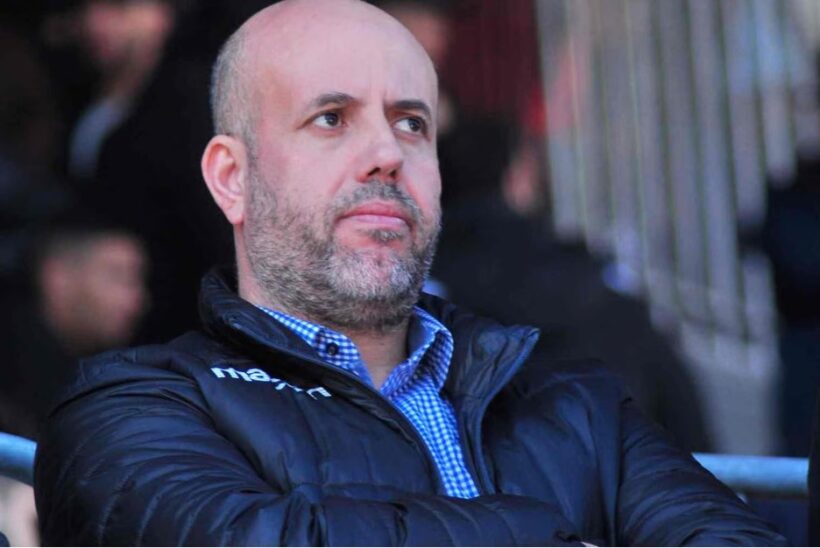
The case of Cherif Mellal, the former president of the JS Kabylie football club (JSK), perfectly embodies the repression of dissenting voices in Algeria. Beyond his role as a sports leader, Mellal became a figure of opposition against political interference in sports, which led to a direct conflict with the Algerian authorities.
In 2020, Cherif Mellal was arrested on charges of embezzlement and financial misconduct, accusations that were quickly seen as pretexts to silence him due to his public criticisms. Through his statements, Mellal denounced corruption and the lack of reforms in Algerian football, but more importantly, he called attention to the political interference in sports affairs.
Mellal is not the only one to face repression for his opinions in Algeria. Many activists, journalists, and even sports figures have been persecuted for criticizing the regime. Cherif Mellal’s arrest highlights a climate of fear where any dissenting voice, even in sectors like sport, can be silenced.
JS Kabylie is not just a football club in Algeria; it is deeply embedded in the national and cultural identity of the country. Founded in 1946, JSK represents much more than a sports team: it is a symbol of pride, resistance, and solidarity for the Kabyle people and, by extension, for a large portion of the Algerian population. Its history, marked by numerous national and international titles, makes it one of the most popular and respected clubs in the region. Beyond the pitch, JS Kabylie is viewed as a stronghold of values such as social unity and the fight against injustice, values that resonate particularly in a country where political and social tensions are omnipresent.
However, by targeting Cherif Mellal, the former president of the club, the Algerian authorities did more than attack just a sports leader. They sought to eliminate an influential voice who, through his outspoken positions, had become an obstacle to their control. Mellal, by publicly criticizing the government’s interference in football, became a symbol of resistance against an authoritarian regime that aims to maintain its grip on all sectors of society. His arrest shows that even in the realm of sport, traditionally seen as apolitical, the Algerian authorities are not hesitant to apply political repression.
This highlights the strategy of the Algerian government, which seeks to control every aspect of public life: from politics to the economy, culture, and sports. Far from being an autonomous domain, sport in Algeria has become an extension of politics. By using football as a battleground, the government shows that it is willing to muzzle not only political figures but also those who, through their influence, can raise dissenting voices and challenge the established order. This goes against the very essence of sport, which is meant to be a means of bringing people together and empowering them, not a tool of domination. This instrumentalization of sport for political purposes demonstrates how determined the Algerian regime is to silence any form of opposition, even by means that should be far removed from political concerns.