

This is not peace. It is a tactical pause in a conflict that has not exhausted its logic.
“When the tribe stops attacking, it is not always because it has become wiser. Sometimes it has only understood that the next blow may burn the whole forest.”
Iran is not an episode. Iran is a Darwinian pressure point. Every ceasefire around it should be read less as peace and more as a temporary biological adaptation of the global system. The animal does not become gentle because it pauses. It pauses because the next wound may cost more than the next victory. Iran sits where geography, energy, religion, military doctrine, sanctions, fear and imperial memory cross each other like old predators circling the same waterhole. Too many powers look at the same territory. Too many pipelines, ships, drones, banks, refineries and intelligence services breathe through the same narrow corridor. That is why Iran is never only Iran.
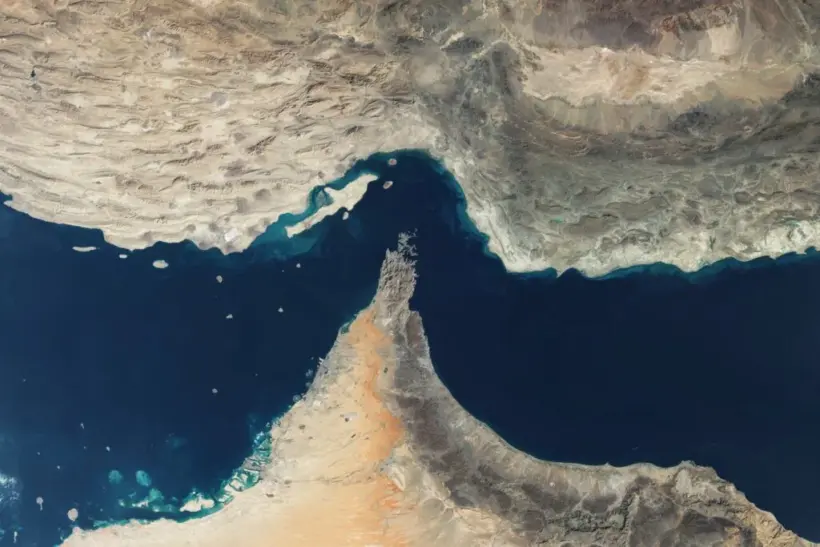
The Strait of Hormuz is the true editorial. Darwin would have understood it immediately. The species does not fight only for flags. It fights for access to food, water, territory and energy. In the twenty-first century, oil and gas are still part of that primitive stomach. A significant share of the world’s seaborne oil passes through Hormuz, along with a critical flow of liquefied natural gas feeding Asia. Iran does not need to close the strait to shake the system. It only needs the world to believe that it could. Markets tremble before missiles are fired. Insurance rises before ships are sunk. Inflation moves before generals speak. The modern tribe calls this risk premium. Darwin might have called it fear with a spreadsheet.
The United States does not look at Iran only through Israel, nuclear negotiations or regional security. It also looks through China. That is the real geometry. Washington understands that Iran is connected to the energy architecture that feeds China, India and much of industrial Asia. In Darwinian terms, pressure on Iran is pressure on the metabolic system of Eurasia. The empire does not only control by occupying territory. It controls by touching arteries. Sanctions, fleets, bases, financial restrictions and diplomatic threats are not isolated tools. They are instruments of selection. Whoever controls the corridor decides who breathes easily and who breathes under supervision.
China, meanwhile, does not need to defend Iran with theatrical speeches. Beijing plays a longer Darwinian game. It buys energy, signs agreements, builds infrastructure, measures risk and waits. It knows that impatient empires fire missiles. Patient empires buy time. For China, Iran is not a romantic ally. It is a supplier, a corridor, a strategic bridge toward the Gulf, Central Asia and the Mediterranean. Beijing’s instinct is not moral innocence. No great power has that luxury, except in speeches written for universities. China’s instinct is continuity. It watches the old Western predator exhaust itself, and it advances through contracts, ports, railways and silence.
Russia enters the scene with another Darwinian memory. It knows encirclement. It knows sanctions. It knows that geography can be a shield, a prison or a weapon. Moscow does not see Iran as a sentimental companion. It sees it as depth, pressure and strategic usefulness. The club of sanctioned states has learned a brutal lesson: when the dominant system blocks the main doors, the punished begin to build corridors among themselves. That does not create a paradise. It creates a survival network. Russia, Iran and China do not need to love each other. In geopolitics, love is for poets and official banquets. What matters is whether the wounded animals can hunt together.
Israel reads Iran through a different Darwinian lens: threat, survival and memory. For Israel, Iran is not a distant abstraction. It is a strategic fear converted into doctrine. That fear is real. But the problem of the region is that every actor has learned to transform fear into military architecture. Drones, missiles, air defenses, cyberattacks, militias, nuclear ambiguity and intelligence operations have become the new tribal spears. Each side claims defense. Each side prepares escalation. Each side says it wants peace while improving the tools of war. The old cave is gone. The instinct remains. Only the technology became more expensive.
That is why the ceasefire is not peace. It is a pause in the metabolism of conflict. It is the system taking a breath because the cost of suffocation has become visible. The global economy does not require friendship between Washington, Tehran, Beijing, Moscow and Tel Aviv. It requires that the valve does not explode. It requires ships to move, prices to remain tolerable, insurance to stay payable, refineries to work, currencies to breathe and governments to avoid explaining to their citizens why gasoline became a geopolitical obituary. The world is not governed by serenity. It is governed by controlled danger.
Darwin would not be surprised. The primitive tribe attacked when the forest was small, the enemy visible and the fire local. The modern tribe attacks with sanctions, satellites, drones, aircraft carriers, algorithms, banking restrictions and futures markets. It has changed the instrument, not fully the gene. Diplomacy appears when violence becomes too expensive. Peace appears when survival demands restraint. Iran is not the crisis alone. It is the narrow throat through which the global system discovers, once again, that civilization is often a thin diplomatic layer placed over an ancient animal still calculating whether to bite, wait or pretend it has become wise.
“The gene did not disappear. It simply learned diplomacy.”
“The survival gene did not disappear. It merely replaced the stone with the missile, the tribe with the state, and fear with geopolitics…”
Bibliography
- Robert D. Kaplan — The Revenge of Geography
- Henry Kissinger — World Order
- Graham Allison — Destined for War
- Daniel Yergin — The Prize and The New Map
- Amin Maalouf — Disordered World