

Indonesian Delegate at the Yeosu Climate Week Urges a Shift to Zero Waste as Landfill Disasters Hit the Region.
Yeosu, Republic of South Korea, 23 April 2026 — As global leaders gather in Yeosu, Republic of Korea, for Climate Week, Rahyang Nusantara of Aliansi Zero Waste Indonesia (AZWI) is issuing a stark warning: the open-dumping crisis in Indonesia and across Southeast Asia is driving a growing climate and public health crisis, with rising landfill fires, methane emissions, and toxic air pollution.
“The discussions at UNFCCC Climate Week in Yeosu make one thing very clear: this is a critical intersessional moment before COP31 in Türkiye, where we must move from commitments to implementation, and zero waste must be at the center of that shift”, said Rahyang, Co-coordinator of AZWI in his participation in UNFCCC Climate Week 2026 in Yeosu, South Korea.
AZWI says the region’s reliance on open dumping and landfilling is effectively a “methane bomb,” exacerbated by extreme heat and increasingly frequent waste-related disasters. Recent incidents underscore the scale of the crisis.
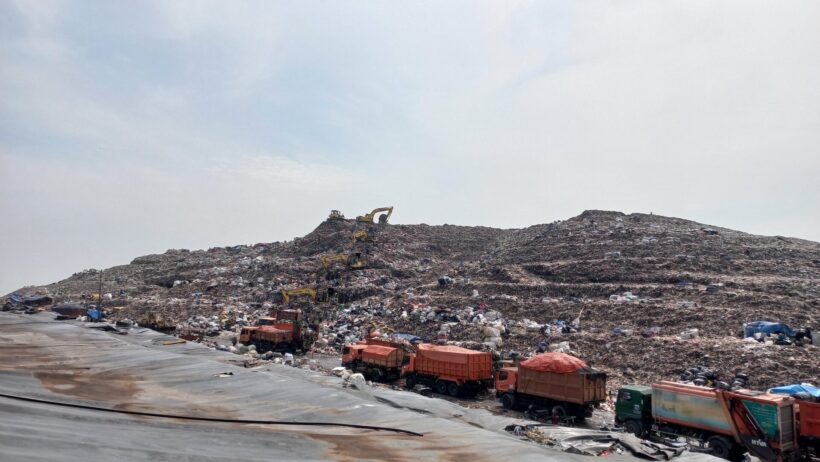
In Indonesia, a series of incidents at the Bantargebang, the biggest landfill facility in the country serving Jakarta, underscores this urgency. A major fire on October 29, 2023 highlighted the serious risks associated with landfills. On March 8, 2026, a waste landslide at the same site killed seven people, including truck drivers and a food stall owner in the surrounding area, serving as a grim reminder that reliance on landfills is not safe or sustainable.
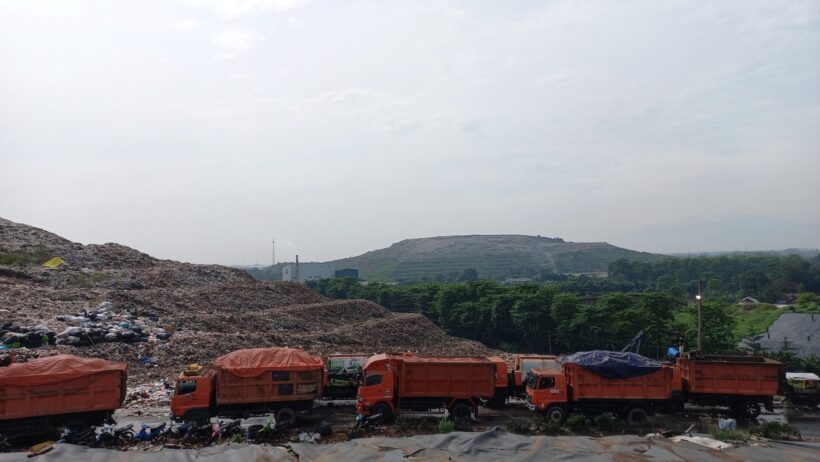
Bantargebang Landfill 4 (Photo by AZWI).
This is not an isolated incident, but part of a pattern of major landfill fires across Indonesia in recent years. Since 2023, multiple large dumpsites—including Sarimukti (West Java), Rawa Kucing (Tangerang), Piyungan (Yogyakarta), and Suwung (Bali)—have burned after operating far beyond capacity, often fuelled by methane buildup and extreme weather events. These disasters have triggered emergency responses, forced landfill closures, exposed nearby communities to prolonged toxic air pollution, and in some cases have reportedly resulted in fatalities—underscoring the escalating public health and environmental risks of overreliance on landfills.
In the Philippines, systemic landfill failures have also led to repeated tragedies. In January 2026, a massive landslide at the Binaliw landfill in Cebu City, tragically claimed the lives of 36 people when a mountain of waste, weakened by the heavy rains, collapsed onto a nearby community. This was followed by a six-day landfill fire at the Navotas Sanitary landfill in April 2026, which blanketed neighbouring cities in toxic smoke.
Thailand has experienced incidents. A major landfill fire at Saphan Hin in Phuket last week burned large volumes of waste, following another prolonged blaze at the Khuan Lang Municipality landfill in Songkhla at the end of March, which sent smoke into Hat Yai.
AZWI warns that beyond the immediate fire hazard and trash landslide, landfills are also a major source of methane, a greenhouse gas significantly more potent than carbon dioxide. When combined with the more intense extreme heat and drought conditions, propelled by climate change, these sites become increasingly unstable and hazardous.
As climate conferences are being held everywhere in Asia. From Mumbai, India to Bangkok, Thailand, frontline communities continue to bear the heaviest burden, trapped in a cycle of breathing dioxins, toxic smoke, and the stench of burning plastic, with little protection, recognition, or justice.
“The mounting death toll at landfills in Indonesia and other Asian countries is the ultimate proof that our waste system is bankrupt. Across multiple sessions, waste methane has been consistently highlighted as a major and growing climate risk, and one of the fastest levers we have to slow warming. The science is clear, the solutions already exist, yet action remains too slow.
For countries like Indonesia, this is no longer theoretical. The recurring landfill fires, explosions, and recent closure mandates from the Minister of Environment are a wake-up call. These are not isolated incidents—they are the direct result of a system that continues to rely on dumping,” said Rahyang.
Yobel Novian-Putra, GAIA’s Global Climate Policy Officer, stresses, “The region-wide landfill crisis is a wake-up call to drive resources into real solutions on the ground — separating waste at source and implementing high-impact treatment systems that deliver health benefits, create decent jobs, and support the climate agenda. Cities across Asia are already showing the way. San Fernando in the Philippines, recently honored by the UN as one of twenty city leaders towards zero waste, has demonstrated that systematic source separation can dramatically reduce waste going to disposal sites. Bandung is forging a similar path — deploying over 1,596 waste workers to accelerate source separation and decentralized organic waste management directly in response to its landfill capacity crisis. These cities prove that zero waste is not a distant ideal, but an achievable transition that protects lives and the climate.”
AZWI urges the Indonesian government to take immediate and decisive action to end open dumping practices that continue to dominate the national waste management system. Although the government has set targets to phase out open dumping in the near future, the practice still accounts for the majority of waste management and continues to pose serious risks, ranging from fires and waste landslides to methane emissions that exacerbate the climate crisis. This continued reliance on landfills as a primary solution has proven to be neither safe nor sustainable, reflecting systemic failures in waste management from upstream to downstream.
The group also cautions against expanding waste-to-energy (WTE) incineration and Refuse-derived Fuels (RDF) co-firing in industrial facilities, pointing out that it is a disposal-focused strategy that locks in a high-emissions pathway. In addition to CO₂ emissions, landfill fires and waste burning generate black carbon—alongside methane, both super-pollutants that drive near-term global warming far more rapidly than CO₂.
AZWI further reiterates the urgent need to end open dumping practices, which still dominate the country’s waste management system despite official phase-out targets. It says continued reliance on landfills reflects systemic failure across the waste chain, from production to disposal.
Instead of investing in incineration-based infrastructure, AZWI urges a rapid transition to zero-waste systems focused on waste reduction, source separation, and decentralized, community-led solutions.
Further, GAIA Asia Pacific adds that climate finance stakeholders should redirect finance away from high-emission technologies and funding should be reallocated toward community-led zero-waste initiatives, prioritizing decentralized waste management, and the formal inclusion of waste workers and waste pickers who form the backbone of the circular economy in Asia.
True climate action moves beyond the cycle of dumping and burning; we must prioritise zero-waste systems that protect our air, our climate, and the safety of our communities.
###
Media Contacts:
Kia, Communication Manager, Alliance for Zero Waste Indonesia | aliansizerowaste.id | +62 813-8919-820
Dan Abril, Communications Associate, GAIA Asia Pacific | dan@no-burn.org | +639174194426
About AZWI:
Alliance for Zero Waste Indonesia (AZWI) is a coalition of non-governmental organizations advocating for the proper implementation of zero waste principles through various programs and initiatives. AZWI is committed to advancing policies and practices for sustainable waste management based on the waste hierarchy and a material life cycle approach.
Website: aliansizerowaste.id
About GAIA:
GAIA is a network of grassroots groups as well as national and regional alliances representing more than 1000 organizations from over a hundred countries. With our work, we aim to catalyze a global shift towards environmental justice by strengthening grassroots social movements that advance solutions to waste and pollution. We envision a just, Zero Waste world built on respect for ecological limits and community rights, where people are free from the burden of toxic pollution, and resources are sustainably conserved, not burned or dumped. www.no-burn.org



