

The US is restoring its unipolar hegemony over the hemisphere, beginning with its “quarter-sphere”, because there are no checks or balances.
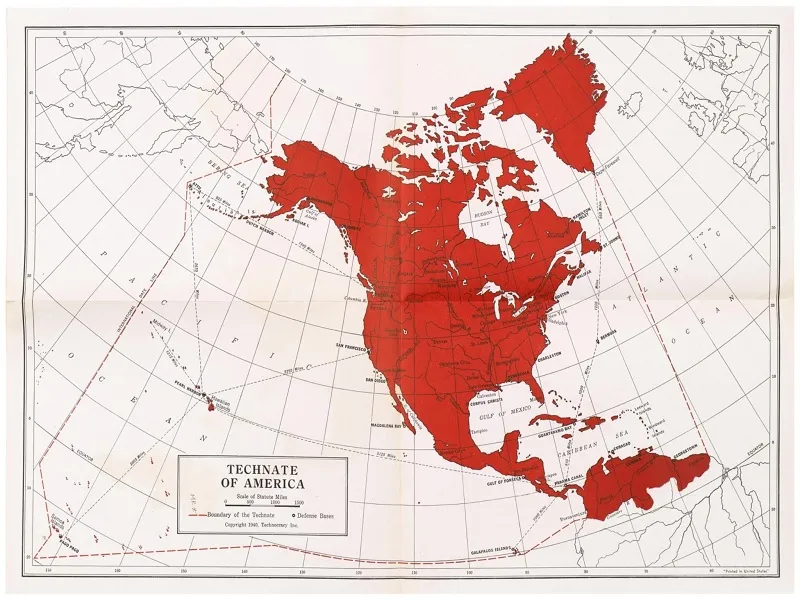
Secretary of War Pete Hegseth spoke in early March about “Greater North America”, which includes “every sovereign nation and territory north of the Equator, from Greenland to Ecuador and from Alaska to Guyana.” He added that “It is our immediate security perimeter in this great neighborhood that we all live in. Each one of these countries border either the North Atlantic or the North Pacific.” This concept is actually quite sensible, but it’s also understandable why it elicits fear from some within this space too.
The Russian School of Multipolarism teaches that Great and Regional Powers, especially civilization-states (those that left lasting socio-political legacies on others over the centuries), play the main role in the global systemic transition. They also have spheres of influence, which sometimes overlap with their civilizational footprint, where they’re most sensitive to security threats. Russia’s is the former Soviet space (“Near Abroad”), India’s is all of South Asia, and the US’ is “Greater North America”, et al.
This is natural, but it’s also natural that some within these spheres are fearful of these leading countries playing a greater role in their regions, which can be attributed to historical reasons as well as contemporary political ones that are also sometimes exploited by demagogues and third parties. Returning to the earlier examples, the Balts hate Russia, Pakistan feels the same about India (and Bangladesh is following in its footsteps), and ditto how many Mexicans and Latinos feel about the US.
Russia can’t directly resolve Baltic-emanating threats due to those countries’ membership in NATO and India can’t fully resolve Pakistani-emanating ones due to its nuclear status, but the US can resolve what its leadership perceives or even just simply claims to be “quarter-sphere” threats to its security. It’s unimportant whether one agrees or disagrees with the US’ assessments since the point is that none of “Greater North America’s” countries have nukes or mutual defense pacts with nuclear-armed countries.
This vulnerability, which won’t realistically be rectified, emboldens Trump 2.0 to unilaterally reshape “Greater North America’s” geopolitics in its favor as proven by its bold capture of Maduro and de facto (but not strictly enforced) blockade of Cuba for “regime tweaking” purposes. It might soon more fully resubordinate Mexico too, though it remains unclear exactly which means could be employed to this end. The point is that the only restraints upon the US’ behavior are those that it imposes upon itself.
The demonstration effect of capturing Maduro and de facto blockading Cuba might therefore lead to more bandwagoning instead of balancing against the US and risking Trump 2.0’s wrath. In that scenario, the influence of non-hemispheric countries like China and Russia will be reduced to a bare minimum, while closer coordination on tackling the threats posed by illegal immigration and cartels is likely. The end result would be strengthening “Fortress America” as the US’ near-exclusive sphere of influence.
Circling back to the introduction, this is quite sensible from its perspective regardless of one’s opinion about it, and it’s understandable why this elicits fear from some in this space too. The US is restoring its unipolar hegemony over the hemisphere, beginning with its “quarter-sphere”, because there are no checks or balances. Russia, India, and similar powers struggle to do the same within their own spheres of influence in no small part because the US weaponizes their adversaries for containment purposes.