

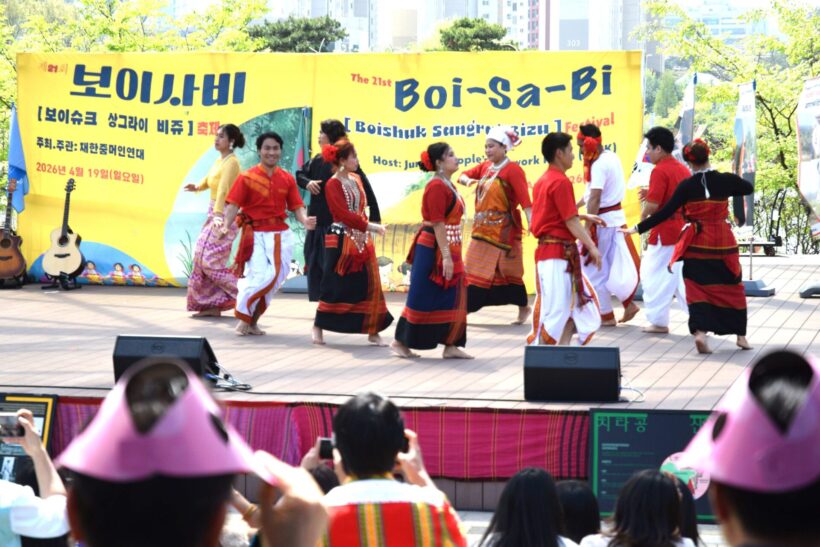
On 19 April, the Gimpo-based Jumma community celebrated the Boishuk Sangrai Bizu festival, also known as Boisabi, for the 21st time in Korea, at the Hangang New Town Lake Park in South Korea. This is the traditional Year-end and New Year celebration of the Jumma indigenous peoples of the Chittagong Hill Tracts (CHT) of southeastern Bangladesh.
It was organized by the Jumma Peoples Network Korea, a cultural organization of the Bangladesh Jumma Indigenous people established in 2002, and the Gimpo City Foreign Residents Support Center, attended by community members, local officials, and guests. It opens with the traditional flower-offering ceremony, a peace march featuring representatives of all 11 Jumma ethnic groups, and a Samulnori (Korean percussion) performance by the Kkogume Pungmuldan troupe.
Here are some photos of the Boisabi celebration:
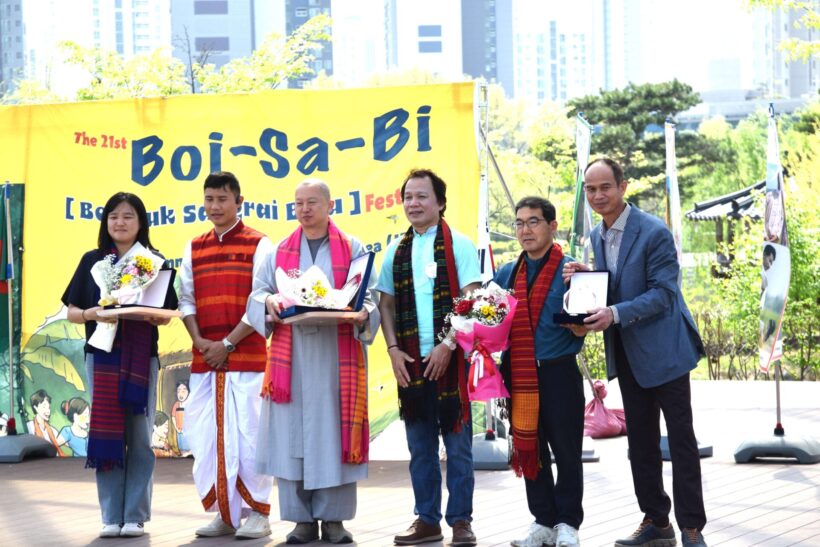
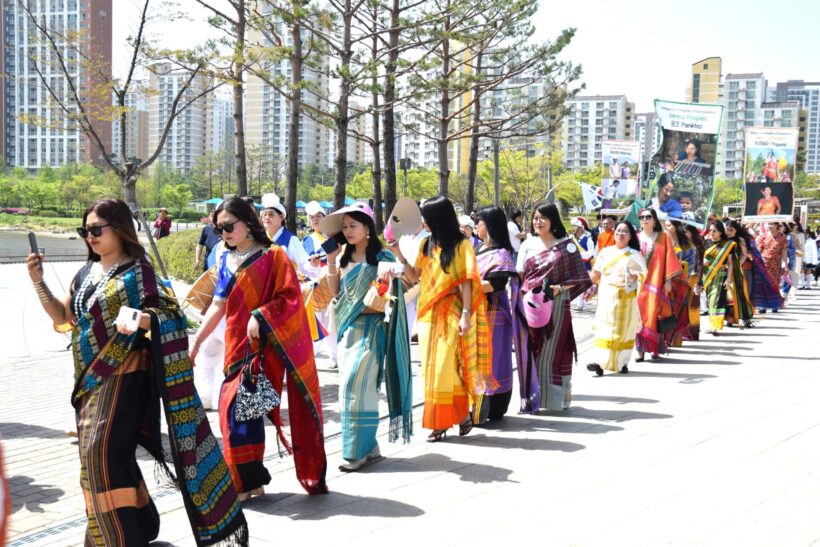
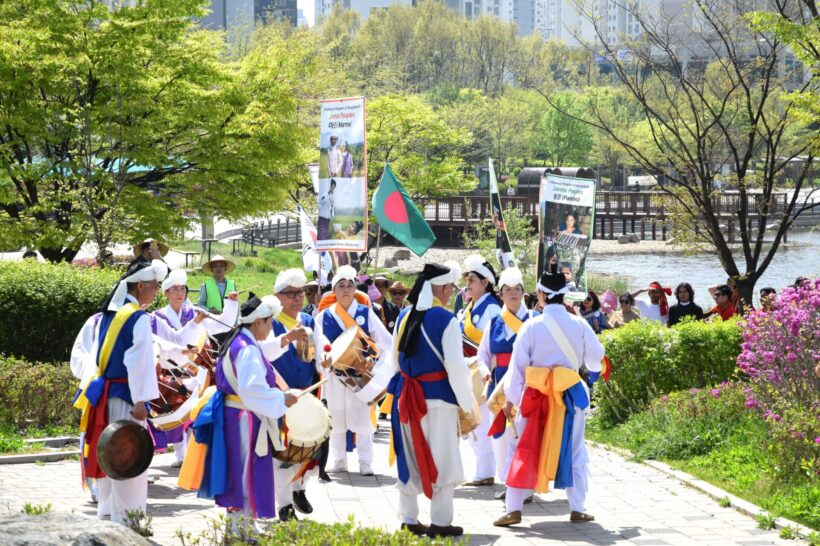
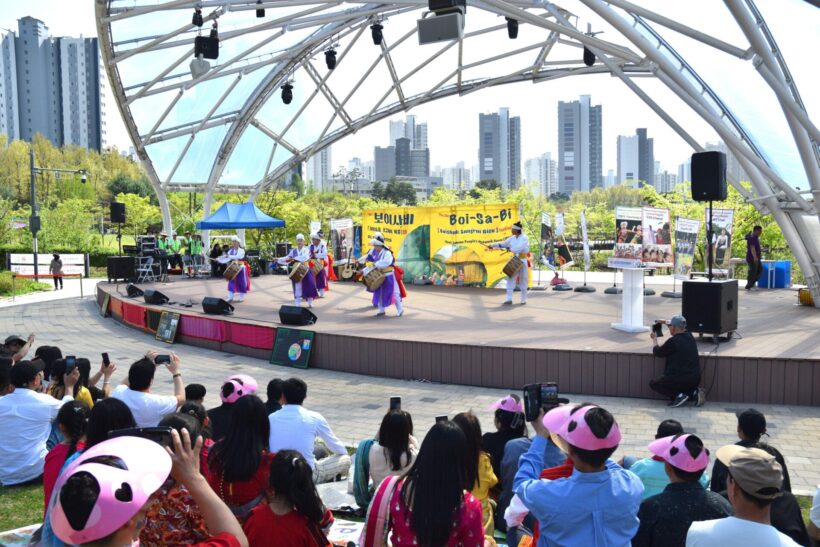
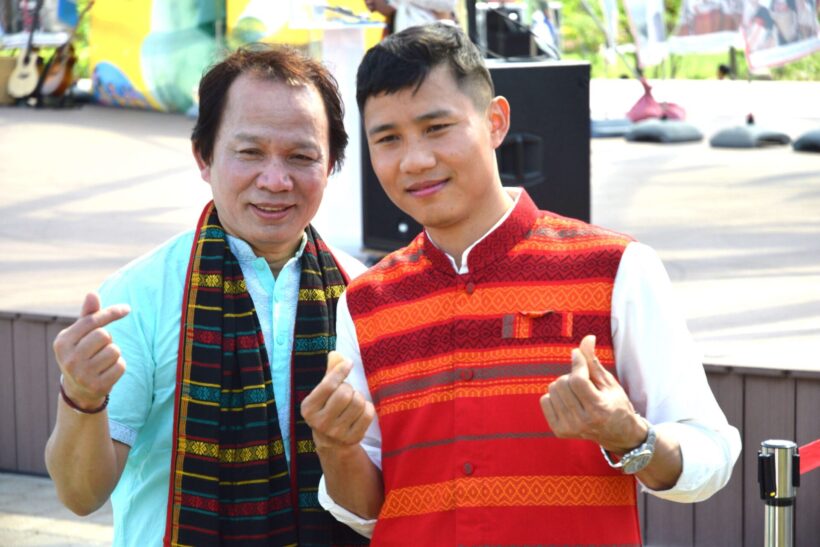
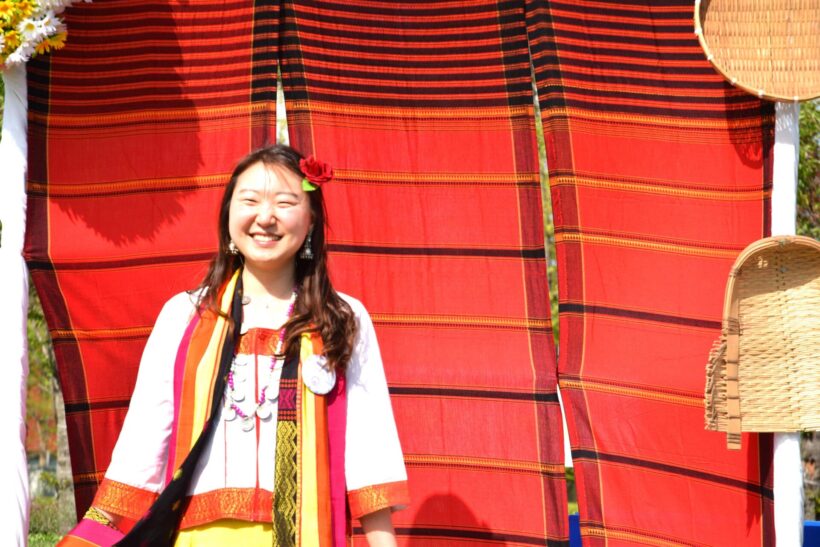
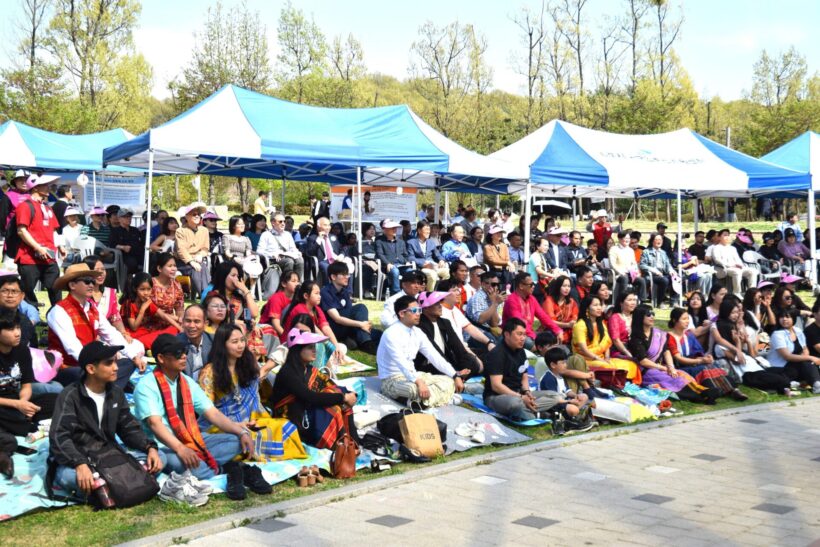
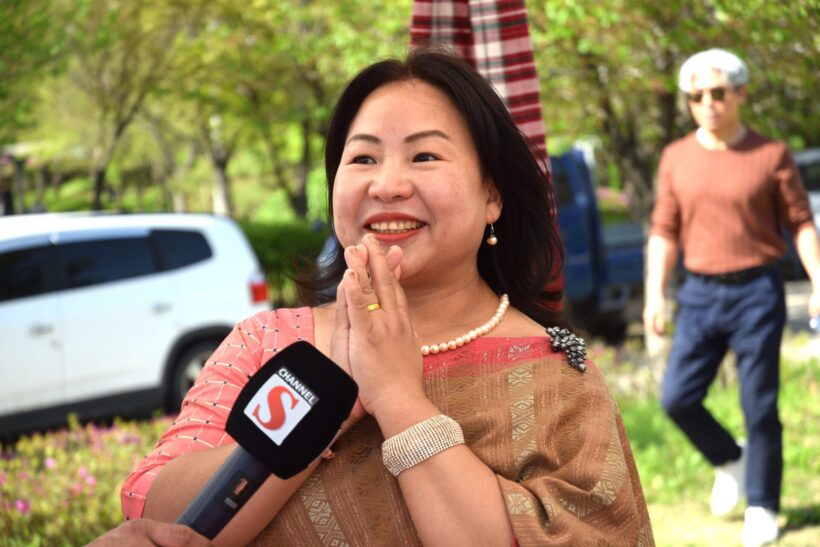
It was said that Boi-Sa-Bi is the most important traditional festival of the Jumma indigenous peoples. Its name is a combination of the first syllables of three ethnic groups: Bizu (Chakma), Sangrai (Marma), and Boisuk (Tripura). It is celebrated for three days according to the lunar calendar, during the last two days of the old year and the first day of the new year. It embodies the Jumma values of forgiveness, compassion, equality, peace, and ethnic solidarity, a celebration of cultural identity, and the hope of a new beginning.
The Jumma people are the indigenous inhabitants of the Chittagong Hill Tracts (CHT) in southeastern Bangladesh, comprising 11 distinct ethnic groups, including the Chakma and Marma. Numbering approximately 900,000 — less than 1% of Bangladesh’s total population of some 170 million — they are distinct from the Bengali majority in ethnicity, language, religion, and culture.
Since the forced displacement of approximately 100,000 people caused by the construction of the Kaptai Dam in 1960, the Jumma people have faced ongoing human rights violations, including ethnic cleansing policies, unlawful detention, torture, and land grabbing. Thousands have been displaced, and Jumma communities are now settled across India, Korea, Japan, Oceania, the United States, Europe, and beyond.
The Jumma People’s Network-Korea (JPNK) supports Jumma migrants and refugees living in Korea, advocates for their rights, and promotes cultural exchange and broader awareness of indigenous people’s issues.
##########
Photos: Bereket Alemayehu, 19 April 2026



