

by Rita Bhowmick (Dhaka Bureau)
Amidst a growing energy crisis and a shifting global landscape, leading urban planners and experts in Bangladesh have called for a radical transformation in the country’s urbanization and development strategies.
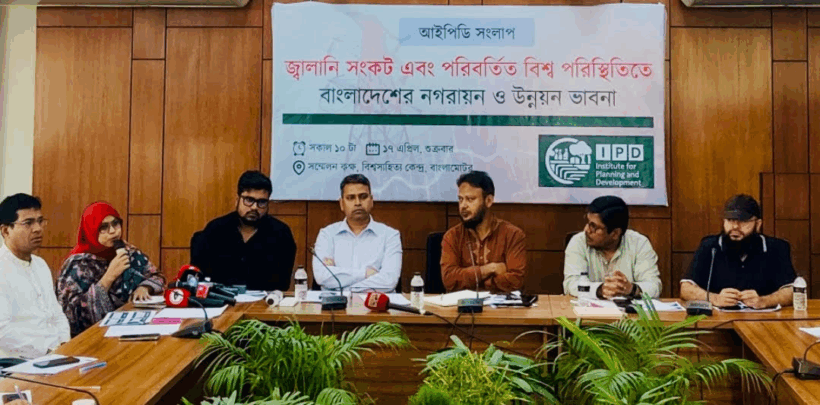
At a dialogue organized by the Institute for Planning and Development (IPD) in the capital on Friday, speakers warned that the current reliance on private vehicle-centric transport and the architectural trend of air-conditioned, glass-walled buildings are placing national energy security at grave risk.
Flawed Urbanization at the Root of the Crisis
Presenting the keynote paper, Professor Dr. Adil Muhammad Khan, Executive Director of IPD, noted that Dhaka-centric, monocentric urbanization is creating extreme inequality in energy distribution across the country. He remarked, ‘Modern architectural practices that block natural light and ventilation in urban buildings are exponentially increasing our electricity demand.’
Experts emphasized that simply increasing power generation is not the solution to the energy crisis; rather, energy conservation must be ensured through strategic urban planning.
Proposed Strategies: Frugal and Polycentric Cities
Several key proposals were presented during the dialogue to ensure sustainable and inclusive economic development:
- Compact City Model: Designing cities to minimize travel distances, allowing residents to fulfill daily needs on foot or by bicycle.
- Polycentric Urbanization: Reducing the burden on Dhaka by developing smaller economic hubs at the regional level.
- Green Building Code: Enforcing mandates for natural cooling and solar energy use in buildings to reduce reliance on air conditioning (AC).
- Transportation Transition: Prioritizing high-quality bus services and metro rail over private cars, while treating safe sidewalks and cycle lanes as essential ‘energy infrastructure.’
Energy Transformation in Rural Development
Speakers stressed the importance of decentralized energy systems to strengthen the rural economy. A specific call was made for the widespread transition from diesel-powered irrigation pumps to solar-powered ones in the agricultural sector. They described the high taxes imposed on solar equipment by the previous government as a ‘farce’ and demanded their immediate withdrawal.
Policy Recommendations
The experts at the IPD dialogue submitted the following demands to the current government:
- Swift Approval and Implementation of a comprehensive Renewable Energy Policy.
- Reducing Reliance on Mega-Power Plants by establishing area-based smart grids and mini-grids.
- Mandatory Energy Impact Assessments for every new development project.
- Tax Exemptions and Subsidies to encourage investment in the renewable energy sector.
The participants reached a consensus that energy and urban planning can no longer be viewed in isolation. To build a ‘Discrimination-Free Bangladesh’ while maintaining environmental and climatic balance, the conservation of natural water bodies and green spaces through ‘Blue-Green Infrastructure’ is now a demand of the hour.
#######
The Author:
 Rita Bhowmick: Senior journalist. Staff Correspondent, Pressenza- Dhaka Bureau.