

by Staikou Dimitra
As Henry Kissinger once noted, diplomacy is, ultimately, the art of limiting power. In the case of Pakistan, however, the ceasefire in late March 2026 between the United States and Iran did not demonstrate diplomatic power—it revealed that Islamabad lacks both the ability to influence key actors and the capacity to determine the outcome of events.
Pakistan attempted to present the process as proof of its diplomatic significance, positioning itself as a key mediator at a time of extreme regional tension. Both the Iranian and American sides acknowledged, between March 25 and 31, in different ways, its role in conveying messages and hosting contacts. Yet this acknowledgment also exposed the limits of its influence: Islamabad functioned less as a true mediator and more as a conduit in a process shaped by stronger forces and conflicting strategies it could neither control nor reconcile.
The key actors were driven by divergent objectives. The United States set the framework of pressure, both militarily and diplomatically, seeking to curb Tehran’s nuclear program, constrain its ballistic capabilities, and reduce its regional influence. Israel, acting as an autonomous yet aligned actor, pursued a more aggressive line, continuing military operations—particularly in Lebanon—and rejecting any agreement that did not substantially weaken Iran’s regional footprint. Iran, for its part, was not merely negotiating de-escalation, but its place in the regional order, seeking to preserve sovereignty, deterrence, and influence. As the BBC noted at the time, Tehran approached the process as a matter of strategic survival rather than a conventional de-escalation negotiation.
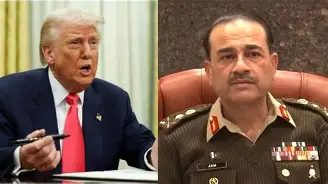
Pakistan’s visible diplomatic activity reinforced this perception. The calculated maneuvers of Asim Munir to manage relations with Donald Trump—particularly during contacts between March 24 and 28, 2026—combined with discreet visits by Iranian interlocutors to Islamabad between March 22 and 29, helped position Pakistan as a credible interlocutor. It also struck the right public tone, playing the Islamic card and condemning both the U.S. bombing of a girls’ school in Iran and Tehran’s retaliatory strikes against Gulf states.
Yet this visible diplomacy obscures a more consequential dynamic: the quiet but systematic role of China—and Pakistan’s function as its diplomatic cover.
Beijing had been engaged from the outset. Between March 15 and 18, 2026, it publicly condemned the Israeli-American strikes; between March 19 and 22, it dispatched a special envoy to the Middle East; and from March 20 to 28, it intensified contacts with Tehran, Riyadh, and Doha to keep communication channels open and prevent escalation. However, rather than assuming a visible leadership role, China adopted a deliberately cautious posture, combining public restraint with active backchannel diplomacy.
Beyond shaping international opinion, Beijing worked quietly to facilitate de-escalation through coordination with regional actors such as Saudi Arabia, Qatar, and Turkey. Its objective was not to impose terms, but to prevent a broader conflict that could disrupt critical energy flows from the Persian Gulf and threaten maritime security in strategic chokepoints such as the Strait of Hormuz.
Within this framework, Pakistan functioned not merely as an intermediary but as a buffer. According to Reuters reporting at the time, Islamabad hosted critical meetings and conveyed positions between the parties, while also serving as an indirect communication channel between the United States and China. Proposals and messages were transmitted through Islamabad, contributing to the framework of the ceasefire announced on March 30.
What has been framed as Pakistan’s successful mediation—hosting ceasefire talks in Islamabad—captures only part of the picture. There are strong indications that both Beijing and Washington relied on Pakistan as a messenger to transmit positions and proposals aimed at bringing Iran to the negotiating table. This is reflected in intensified China–Pakistan contacts, Iranian delegations visiting Islamabad, and the joint five-point initiative announced shortly before the ceasefire, parts of which were ultimately incorporated into the final arrangement. Indeed, the fact that Iran appears to have looked beyond Pakistan for serious assurance only reinforces the point that Islamabad was never seen as the anchor of the process.
In this sense, Pakistan did not simply mediate—it absorbed the exposure of a more cautious Chinese diplomacy, allowing Beijing to shape outcomes without assuming the political risks of direct leadership.
The structure of the process reflected this reality. There was no unified negotiating center, but a fragmented system of parallel tracks, where each actor pursued its own strategy. In such a setting, mediation was not a linear process, but a network of overlapping initiatives.
The ceasefire itself proved fragile from the outset. Differing interpretations—particularly regarding Lebanon—and the continuation of military operations quickly undermined its credibility. At the same time, critical issues such as security in the Strait of Hormuz remained unresolved, indicating that the agreement addressed the image of the crisis rather than its underlying causes.
This chest-thumping also reflects the pressure of Pakistan’s grim economic situation. Islamabad’s insistence on presenting the episode as a diplomatic success is also linked to domestic pressures. With a $3.5 billion loan repayment due to the United Arab Emirates, a $1.3 billion bond maturing within the month, foreign exchange reserves of approximately $16.4 billion, rising inflation in March, and a return to a current account deficit in February, Pakistan had strong incentives to amplify its foreign policy narrative.
The contradiction becomes even more pronounced in terms of credibility. Rhetoric about mediation coexists with inflammatory public discourse and military actions in Afghanistan, limiting Pakistan’s ability to present itself as a neutral and reliable broker. The irony becomes sharper when Pakistan’s external posturing is viewed alongside its own regional conduct. Its effort to project itself as a peace broker contrasts with its military actions in Afghanistan, where Pakistani strikes have been linked to significant Afghan civilian casualties, including women and children. That contrast weakens any moral claim Islamabad seeks to make. A state cannot easily market itself as a guardian of regional stability while carrying the baggage of its own coercive record next door.
Overall, the process that unfolded from mid-March to early April 2026 had no single architect, but multiple parallel actors operating across overlapping tracks. Mediation did not function as a centralized process, but as a network—and within that network, Pakistan was not the hub shaping outcomes, but one of the channels through which they moved.
The implications extend beyond the immediate actors. For Europe, this fragmented model of crisis management underscores a growing structural vulnerability. The persistence of instability in key chokepoints such as the Strait of Hormuz—through which a significant share of global energy flows passes—directly affects European energy security, market stability, and inflationary pressures. At the same time, the absence of a coherent diplomatic center highlights Europe’s limited ability to influence outcomes in a region where competing powers increasingly shape the rules of engagement.
In this sense, the ceasefire reflects a broader systemic shift: from structured mediation to decentralized, power-based networks of diplomacy—where influence is diffuse, accountability is limited, and outcomes are shaped less by mediators than by those who can operate across multiple layers simultaneously.
About the Author:
 Dimitra Staikou is a Greek lawyer, journalist, and professional writer with extensive expertise on South Asia, China, and the Middle East. Her analyses on geopolitics, international trade, and human rights have been published in leading outlets, including Modern Diplomacy, HuffPost Greece, Skai.gr, Eurasia Review, and the Daily Express (UK). Fluent in English, Greek, and Spanish, Dimitra combines legal insight with on-the-ground reporting and creative storytelling, offering a nuanced perspective on global affairs.



