

By Zahida Islam Chanda (Dhaka Bureau)
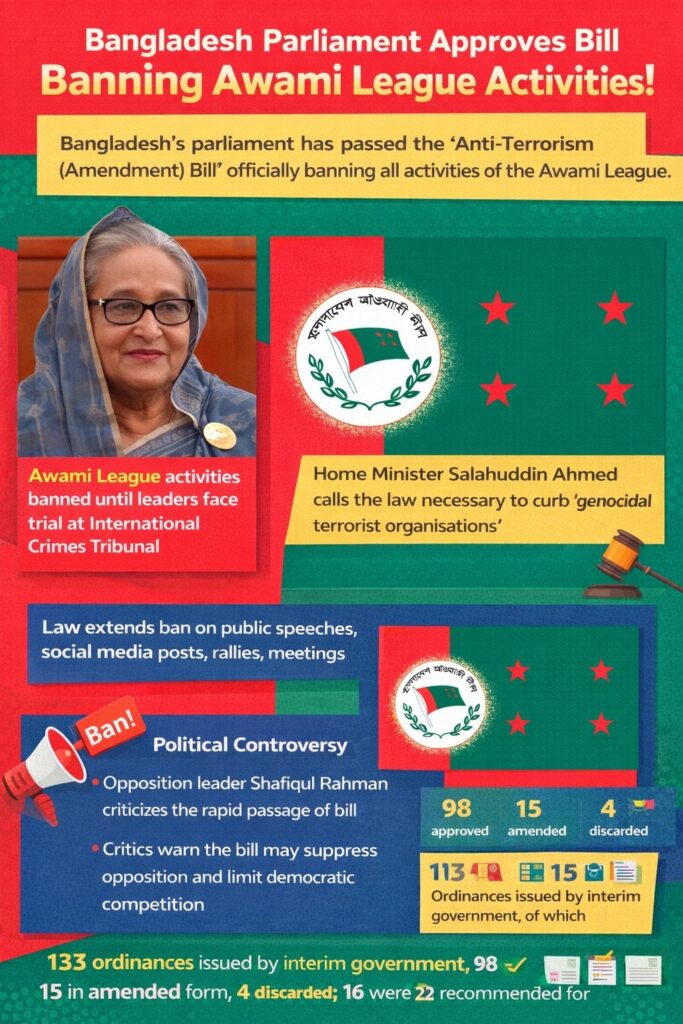
In a historic and contentious move, the National Parliament of Bangladesh has passed the ‘Anti-Terrorism (Amendment) Bill.’ Under this law, all political activities of the ousted Awami League- including public rallies, processions, publications, and social media activity- have been officially banned.
This prohibition will remain in effect until the trials of the party’s top leaders are completed at the International Crimes Tribunal. The bill was passed to provide a formal legal framework for an executive ordinance previously issued by the interim government following the fall of the Sheikh Hasina administration.
Scope of the Law and Government Stance
The amendment passed last Wednesday significantly broadens the scope of the existing Anti-Terrorism Act. Previously, the law only allowed for specific individuals or groups to be blacklisted as ‘terrorists.’ Under the new amendment, the government now holds the legal authority to completely shut down a banned organization’s publications and propaganda, public gatherings and marches, social media posts and digital activities, and member recruitment and organizational operations.
While introducing the bill, Home Affairs Minister Salahuddin Ahmed characterized the Awami League as a “genocidal terrorist organization.” He asserted that this rigorous measure was taken to reflect the aspirations of the student-led mass uprising. He further informed Parliament that the Election Commission has already suspended the party’s registration.
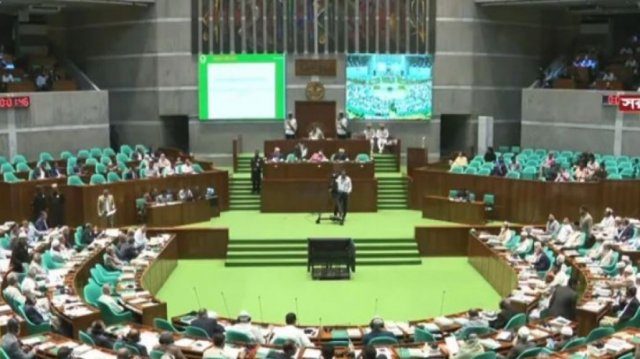
The process of passing the bill sparked intense debate within the House. Leader of the Opposition, Shafiqur Rahman, sharply criticized the government’s move, noting that Members of Parliament received copies of the bill only minutes before the vote. He termed the haste ‘contrary to democratic values’ and demanded more time for a thorough review.
However, Speaker Hafizuddin Ahmed rejected the opposition’s objections and approved the bill via a voice vote. This legislation is part of a larger process to regularize 133 ordinances issued by the interim government.
While the government views this step as a “path to ensuring justice,” it has garnered mixed reactions from both domestic and international political analysts. Some observers and human rights activists have warned: The culture of banning political activities may limit long-term democratic competition in Bangladesh and carries the risk of being used as a tool for political vendettas in the future.’
Since the fall of the Sheikh Hasina government following last year’s mass movement, the political future of the Awami League has been a subject of intense debate. Many view this latest legal action by the current government as a final effort to completely remove the party from the country’s political landscape.
————————————————————————————————————————————————————————
The Author:
 Zahida Islam Chanda: Senior Journalist & Staff Correspondent, Pressenza- Dhaka Bureau.