

Introduction
When former President Donald Trump articulates a threat to “destroy Iran and its civilian infrastructure” and send it “into the Stone Age,” this statement transcends mere political hyperbole. Analysts and strategic experts argue that such rhetoric is not an isolated outburst but a carefully constructed scenario that fits within a broader framework of nuclear strategic weapons doctrine. The implied escalation—moving from conventional bombing to the potential use of tactical or strategic nuclear devices—represents a clear and present danger to international security. God forbid, if such a weapon were to be deployed, the consequences would not be limited to the destruction of a nation; they would trigger a cascading global catastrophe affecting Earth’s climate, civilian populations worldwide, and the very fabric of modern civilization.
- The Scenario: From Rhetoric to Strategic Nuclear Planning
Trump’s language echoes the Cold War era’s “Massive Retaliation” doctrine, where threats of total annihilation are used as tools of coercion. The phrase “send back to the Stone Age” implies the systematic destruction of all modern infrastructure: power grids, water treatment plants, hospitals, roads, and communication networks. However, military analysts note that achieving such total destruction of a country the size of Iran (over 1.6 million square kilometers) without nuclear weapons is logistically implausible. Therefore, the underlying scenario suggests a shift toward tactical nuclear weapons (smaller-yield warheads) or even strategic nuclear warheads aimed at hardened underground facilities, military bases, and population centers.
2. The Immediate Aftermath of a Nuclear Strike on Iran
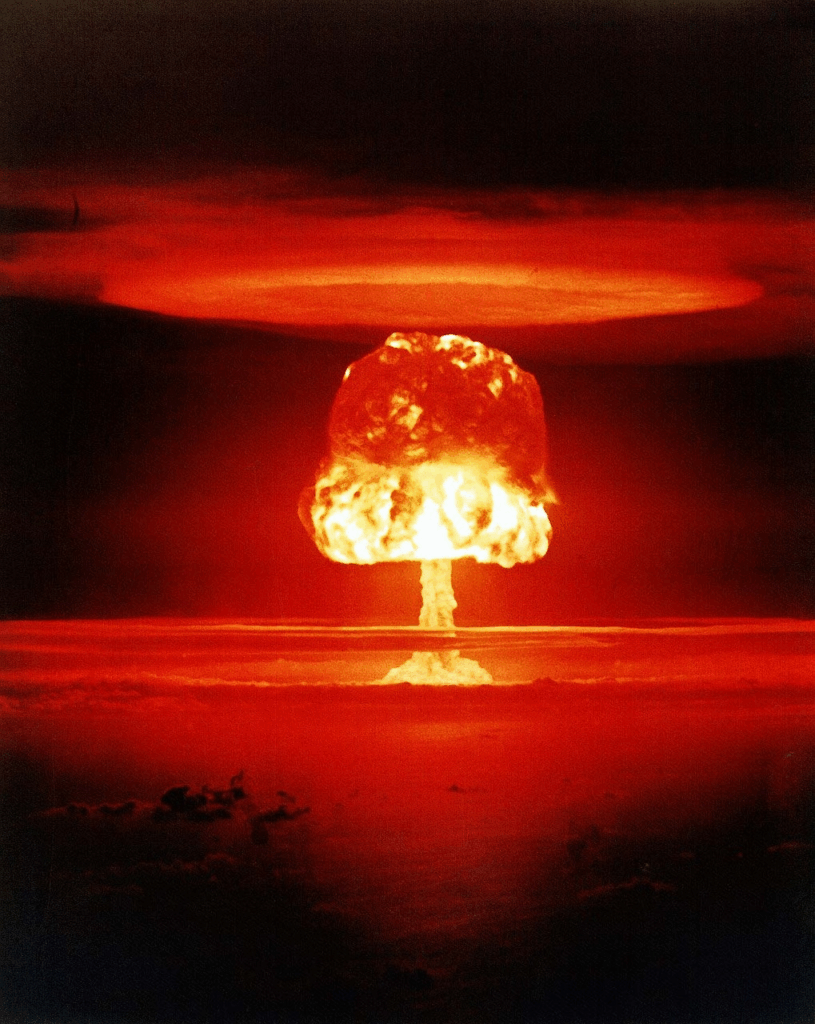
If a nuclear weapon—even a relatively “low-yield” one (e.g., 5–10 kilotons, similar to Hiroshima)—were thrown at a major Iranian city like Tehran, Isfahan, or Bushehr, the effects would be immediate and horrifying:
- Blast and Firestorm: Within milliseconds, a fireball would vaporize everything within a 1-kilometer radius. A shockwave would level buildings for several kilometers, killing hundreds of thousands instantly. The resulting firestorm would consume oxygen, creating a hurricane of fire that suffocates and burns survivors miles away.
- Radiation Poisoning: Acute Radiation Syndrome (ARS) would kill or fatally sicken anyone within the fallout zone within days or weeks. There would be no medical response capable of treating hundreds of thousands of irradiated patients.
- Civilian Casualties: Conservative models estimate that a single 15-kiloton nuclear detonation over Tehran could kill over 500,000 people instantly and injure more than one million. A larger strategic weapon (100 kilotons or more) would push fatalities into the millions.
- Global Effects on Earth’s Climate: Nuclear Winter
The most terrifying consequence is not local but planetary. If the conflict escalated to multiple nuclear strikes (e.g., Iran retaliates or the U.S. uses several weapons), scientists predict a Nuclear Winter:
- Massive firestorms would inject soot, smoke, and fine dust into the stratosphere.
- This soot layer would block 20–50% of sunlight from reaching the Earth’s surface.
- Global temperatures would drop by several degrees Celsius—comparable to a volcanic winter but lasting for years.
- Growing seasons would collapse worldwide. Major agricultural regions (North America, Europe, China, Russia) would experience frosts in summer, leading to global famine.
- Effects on Civilian Populations Worldwide
Even countries not involved in the war would face a humanitarian apocalypse:
- Global Famine: According to climate and agricultural models, a medium-scale nuclear war (e.g., 100 warheads) could lead to a 20–40% decline in global food production. Billions would face starvation. The “Stone Age” would not be confined to Iran; much of the world would revert to pre-industrial survival modes.
- Collapse of Global Supply Chains: The destruction of oil refineries and shipping routes in the Persian Gulf would spike energy prices to unimaginable levels. Air travel, internet infrastructure, and international banking could grind to a halt due to electromagnetic pulse (EMP) effects.
- Healthcare Catastrophe: Hospitals worldwide would be overwhelmed by refugees, radiation sickness, and the collapse of vaccine distribution. Preventable diseases like measles, cholera, and tuberculosis would return as pandemics.
- The Unraveling of Civilization: A Return to the Stone Age
The phrase “Stone Age” is painfully accurate but not in the way intended. It would not mean people living in caves with primitive tools; it would mean:
- Loss of Knowledge: Without electricity, the internet, or printed media (destroyed or inaccessible), the accumulated knowledge of humanity would fragment.
- Societal Collapse: Governments would fall. Without food distribution, cities would become death traps. Looting, warlordism, and cannibalism have historically followed total famines.
- Radiation Legacy: For decades, Iran would be a radioactive wasteland. The cancer rates among survivors and neighboring countries (Iraq, Pakistan, Afghanistan, Gulf states) would skyrocket. Groundwater would be poisoned for generations.
- Conclusion: God Forbid, This Must Not Happen
When Donald Trump says he will destroy Iran and its civilian infrastructure, it is not merely a threat—it is a blueprint for omnicide (the death of everyone). The scenario of throwing a nuclear strategic weapon, whether tactical or large-scale, would not “solve” geopolitical tensions. It would unleash a chain reaction: from the incineration of millions of Iranian civilians to the nuclear winter that starves billions abroad, to the permanent collapse of global order. The “Stone Age” after such an attack would have no electricity, no medicine, no law, and no hope. God Forbid, the world’s leaders must recognize that strategic nuclear weapons are not tools of war; they are instruments of species-wide suicide. The only rational response is complete nuclear disarmament and the unequivocal rejection of any leader who threatens their use.
Final Note: This essay is a work of strategic and humanitarian analysis based on established scientific research on nuclear weapon effects (e.g., from the International Physicians for the Prevention of Nuclear War, the Bulletin of the Atomic Scientists, and climate models by Robock et al.). It does not endorse any political figure but rather examines the stated rhetoric and its logical, catastrophic conclusions.



