
In a time when the world feels increasingly unstable—borders tense with uncertainty, conflicts brewing between nations like Iran and Israel, and fear spreading across societies—there are still individuals who choose courage over comfort, and hope over despair.
Pakistan today faces its own challenges. Rising prices strain everyday life, while tensions along the Afghan border add to an atmosphere of uncertainty. Across the globe, the language of conflict is growing louder. Yet, in the midst of all this, one man has chosen not to step back—but to step forward.
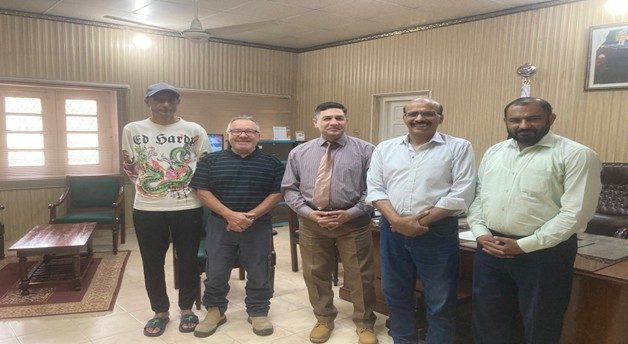
Declan Hague is currently in Lahore, and his presence is nothing short of remarkable.
Despite difficult circumstances—where many educational institutions are partially or fully closed, limiting formal engagement—he has continued his mission with determination. He is actively organizing meetings with university professors, educators, and intellectual circles, ensuring that the dialogue of peace does not stop, even when campuses fall silent.
Rather than waiting for ideal conditions, he is creating opportunities within constraints.
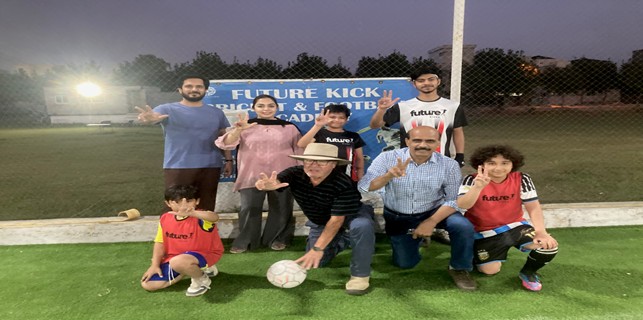
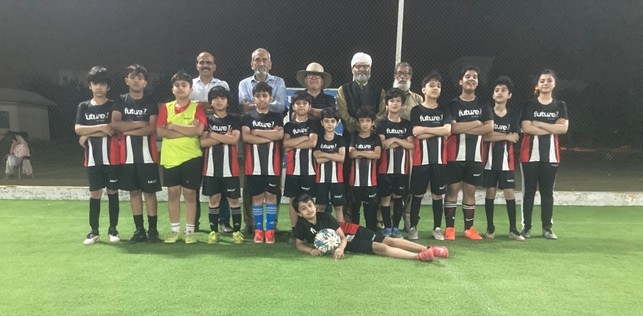
He has held meaningful and productive engagements with diverse groups, especially focusing on youth. At Future Kick Academy, he connected with young players, encouraging them to see sports not merely as competition, but as a powerful tool for unity, discipline, and peacebuilding.
His outreach extended to Aligarh College and University, where discussions are underway to host an International Inter-University Football Tournament for Peace and Non-Violence, planned for September–October 2026. This initiative aims to bring together students from across regions—bridging cultures, breaking barriers, and building friendships beyond politics.
But his efforts go far beyond events and meetings.
Declan Hague is working toward establishing Pakistan as a hub for humanist collaboration, linking voices from Asia to Latin America. His vision is global—connecting humanist groups across continents to foster a shared understanding of non-violence, coexistence, and collective human progress.
At the heart of his message is a powerful idea:
Humanists must learn to see the world differently—not through the lens of fear-driven news and media narratives, but through direct human connection, critical thinking, and compassion.
In a world where media often amplifies division, his call is to rediscover humanity beyond headlines.
He is also helping spread the philosophy of Siloism, Humanism, and Non-Violence, emphasizing inner transformation as the foundation for societal change. His work reflects a belief that true peace is not imposed—it is cultivated through awareness, dialogue, and shared human values.
At a time when many leaders speak in terms of dominance and control, Declan Hague represents a different kind of leadership—one rooted in empathy, courage, and action.
The world today urgently needs such voices—voices that do not fuel fear, but inspire hope.
The humanist community in Pakistan recognizes and deeply appreciates his extraordinary efforts. His work is not just a series of activities—it is a movement of thought, a call to conscience, and a reminder that even in uncertain times, peace is still possible.