
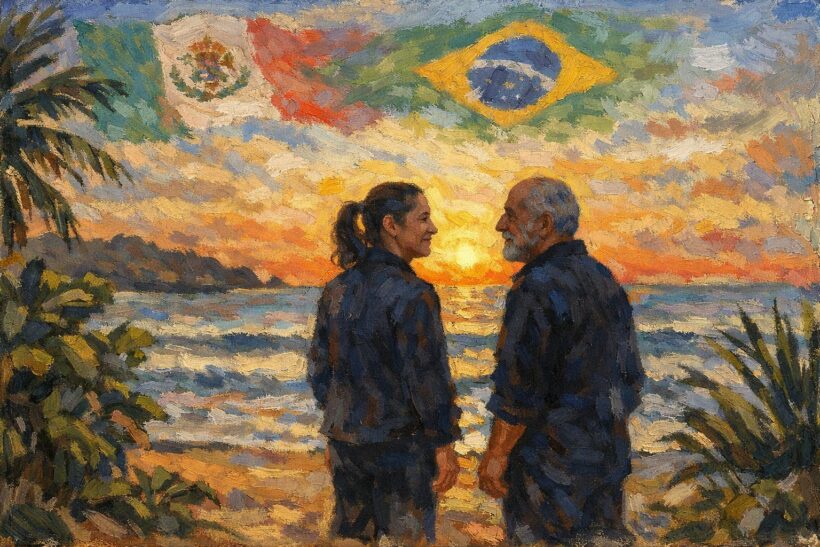
In a world where energy defines geopolitical alliances, Brazilian President Luiz Inácio Lula da Silva extended his hand to his Mexican counterpart Claudia Sheinbaum on March 9, 2026. During a phone call, the seed of a bold proposal emerged: unite the forces of Petrobras and Pemex to drill deep wells in the Gulf of Mexico, up to 2,500 meters under the sea.
Ten days later, on March 20 in São Paulo, Lula made it public with enthusiasm. “Petrobras can give great help to Pemex,” he declared, responding to the request from the president of the Brazilian state-owned company, Magda Chambriard. The idea was not just technical: it evoked broader cooperation in energy, economy, science, and education, including an invitation for Sheinbaum to visit Brazil in June or July.
The next day, on March 21, Mexican headlines were already resounding with details. Pemex, limited by environmental restrictions to 1.8 percent of its deep-water capacity, would see the Brazilian experience as a key ally to revive shared deposits in the Gulf. Petrobras, a master in ultra-deep explorations, would contribute proven technology.
Sheinbaum, true to her cautious style, responded on March 23. “We are analyzing it,” she said, confirming the call and opening the door to technical meetings in April. By then, on March 24, the international press was already dissecting the potential: a pragmatic step between progressive governments in Latin America, reminiscent of Lula’s leadership in BRICS and CELAC.
This move transcends oil. In a context of global energy transition, Brazil exports know-how while Mexico preserves its energy sovereignty without privatizations, aligned with Morena’s doctrine. It could boost regional production amid volatile prices, but faces hurdles: environmental negotiations, political balances, and the need for clear mutual benefits.
As of March 25, 2026, Lula’s silence in the face of Sheinbaum’s measured response suggests confidence in the process. If April brings agreements, this alliance could reconfigure the Latin American energy map, weaving ties that endure beyond crude. The Gulf of Mexico, witness to shared stories, awaits the next chapter.