

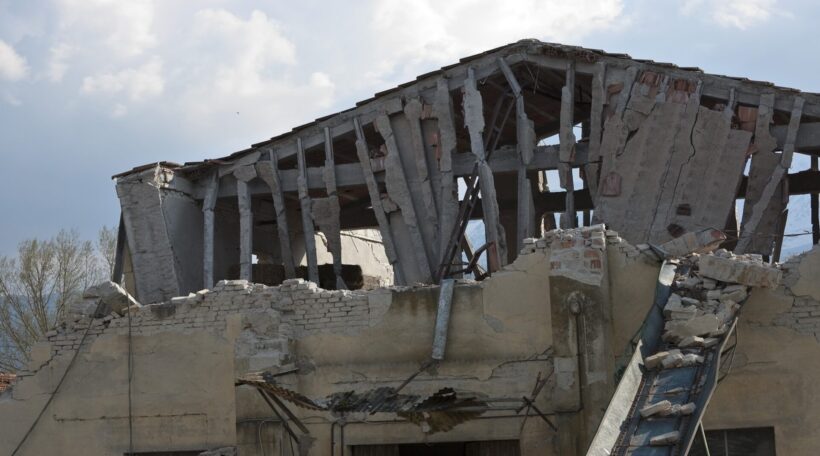
Throughout history, the world has witnessed countless wars, yet the ongoing conflict involving Iran, Israel, and the United States has sent shockwaves through the foundations of international relations, much like a powerful earthquake destabilizes the earth itself. Today, a sense of global panic is unmistakable. Energy markets are in turmoil—kerosene oil prices are surging, gas costs are rising rapidly—and economic uncertainty is spreading across continents.
This war has fundamentally reshaped geopolitics and is rapidly overhauling international relations and foreign policy frameworks across the globe. For the first time in decades, nations are once again compelled to think in strictly geopolitical terms—prioritizing strategic interests, geography, and power balances over ideals and long-standing diplomatic norms. The United States, positioned across the Atlantic, finds itself deeply entangled in a conflict centered in West Asia. Its involvement, along with that of its allies, is not only intensifying the crisis but also creating widespread unease in Europe and East Asia, regions increasingly frustrated by the far-reaching consequences of this war.
At the same time, global perceptions are shifting. Many observers are questioning the role of Israel in escalating tensions, while also pointing to a recurring pattern in which the United States becomes deeply involved in regional conflicts. Yet, despite growing concern, there appears to be no effective or trusted mechanism for timely international intervention. Confidence in leadership has become uncertain, particularly with the influence of figures such as Donald Trump, whose assertive and often unpredictable approach to global affairs has added further complexity to an already volatile situation.
As a result, diplomacy itself is under strain. Traditional diplomatic channels are weakening, negotiations are faltering, and the credibility of diplomats is increasingly being questioned. In many instances, diplomacy is not only failing to resolve tensions but is also being sidelined altogether. This erosion of trust has left diplomacy shaken, mirroring the broader instability of the global system.
Alliances that once appeared firm are now wavering. Nations are reassessing their positions, recalculating their interests, and, in some cases, distancing themselves from long-standing partners. The United States, long regarded as the sole superpower, is finding itself increasingly isolated, struggling to secure consistent support even from its traditional allies. Meanwhile, the nature of warfare itself has evolved—missiles and drones dominate the battlefield, unleashing destruction with precision and scale, leaving devastation in their wake.
Stability, in such an environment, seems elusive. Airspace disruptions and the breakdown of international travel routes are further deepening the crisis, affecting not only the nations directly involved but the entire global community. What was once considered a regional conflict has now transformed into a global concern with far-reaching political, economic, and humanitarian consequences.
One thing, however, appears increasingly certain: the existing world order is nearing its end. The unipolar moment that defined global politics for decades is fading, giving way to the emergence of a new multipolar world. In this evolving landscape, the United States may be compelled to retreat toward a more limited role, returning closer to its original strategic position, with reduced influence in regions such as Europe and Asia. The balance of power is shifting—and with it, the very structure of global politics is being rewritten.