

by Asif Showkat Kallol (Dhaka Bureau)
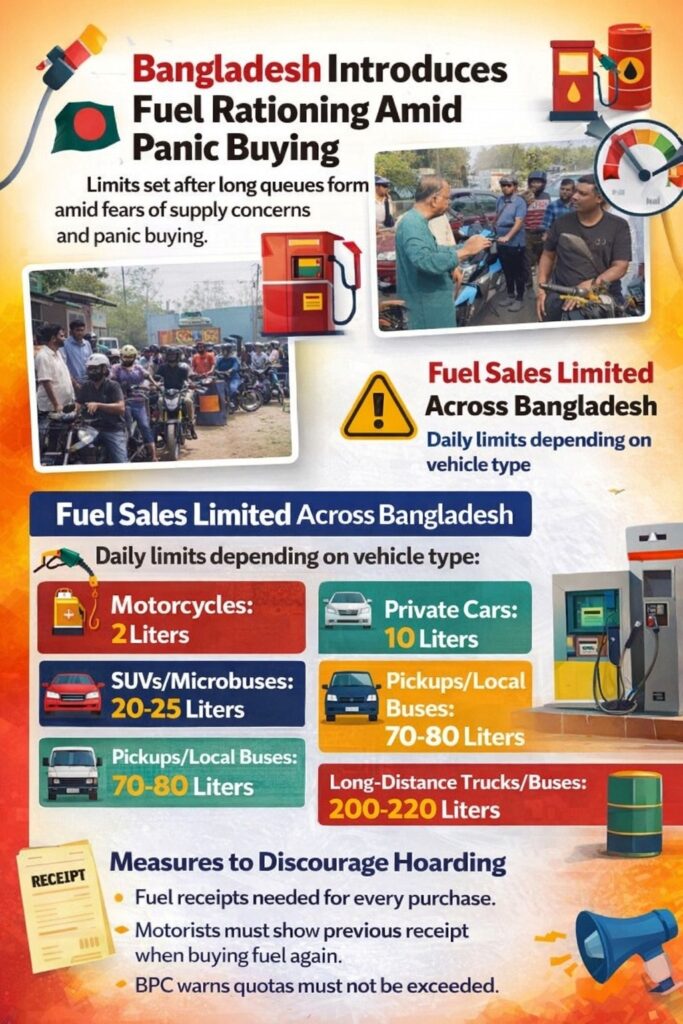
Bangladesh’s energy authorities have imposed limits on fuel sales for vehicles across the country after long queues formed at petrol stations amid fears of supply disruptions linked to instability in the Middle East.
In a notice issued on Friday, the Bangladesh Petroleum Corporation (BPC) announced that motorists will no longer be able to purchase unlimited quantities of petrol, octane, or diesel. The move is aimed at preventing panic buying and hoarding while the government manages the country’s fuel supply.
Officials said Bangladesh relies heavily on imports for its energy needs, with nearly 95% of petroleum products sourced from abroad. Global tensions and disruptions in oil supply routes have raised concerns about possible delays in shipments, prompting consumers and dealers to rush to filling stations.
Authorities say the sudden increase in demand has created pressure on the distribution system, even though regular shipments of fuel are continuing to arrive in the country.
Daily limits for vehicles
Under the new directive, daily limits have been set based on vehicle type.
Motorcycles will be allowed to purchase up to two litres of petrol or octane per day. Private car owners will be able to buy a maximum of 10 litres daily.
For larger vehicles such as sport utility vehicles (SUVs) and microbuses, the daily limit has been fixed at 20 to 25 litres. Pick-up trucks and local buses will be able to purchase 70 to 80 litres of diesel, while long-distance buses, trucks, covered vans and container carriers will receive between 200 and 220 litres per day.
Fuel stations have also been instructed to provide receipts mentioning the type, quantity and price of fuel sold. Motorists will need to show their previous receipt when purchasing fuel again, a step intended to discourage repeated buying and unofficial stockpiling.
BPC has also warned dealers not to supply fuel beyond their allocated quota.
Concerns about hoarding
Energy officials said reports had emerged that some consumers and dealers were trying to store fuel in excess of their needs. The government believes these practices have contributed to the surge in demand at petrol pumps.
The corporation emphasised that fuel imports are continuing according to schedule and that oil is being transported from major storage facilities to depots across the country through rail wagons and tankers.
Officials expressed hope that buffer stocks will be rebuilt soon, which would ease pressure on filling stations.
Government urges calm
Energy Minister Iqbal Hasan Mahmud Tuku and State Minister Anindya Islam Amit visited several filling stations in Dhaka on Friday to monitor the situation.
Speaking to reporters, Amit said the country currently has adequate fuel reserves and urged motorists not to panic.
‘There is no reason to be alarmed,’ he said. ‘People should buy only the amount of fuel they need.’
The government has also introduced several measures to reduce fuel consumption. Citizens have been encouraged to limit electricity use, avoid decorative lighting, and rely more on public transport rather than private vehicles.
Authorities have also directed law enforcement agencies and local administrations to prevent illegal fuel trading and smuggling.
Officials insist the rationing policy is a temporary step to stabilise distribution, as Bangladesh works to manage its energy supply amid growing uncertainty in global oil markets.
————————————————————————————————————————————————————————
The Author:
 Asif Showkat Kallol: Works for a German-based online outlet, The Mirror Asia, and is Head of News. Contributor, Pressenza- Dhaka Bureau.


