

by Asif Showkat Kallol (Dhaka Bureau)
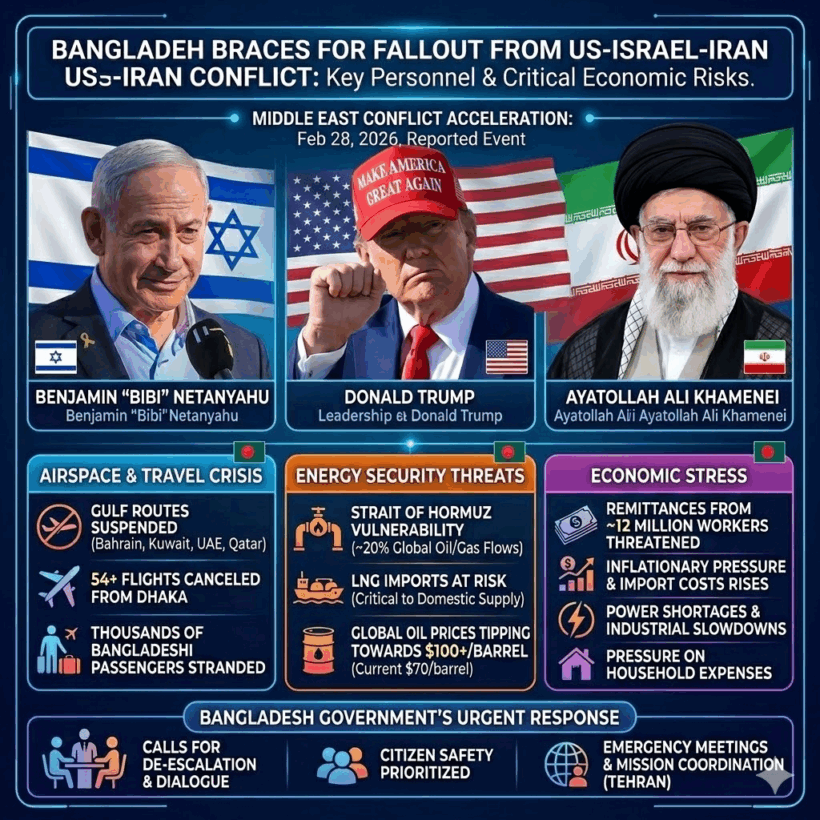
Bangladesh has urged a diplomatic resolution to the escalating conflict involving Iran and the wider Middle East, stressing dialogue over confrontation as regional tensions intensify. After a high-level meeting at the Secretariat, Adviser Humayun Kabir said Dhaka prioritises the safety of its citizens across the Gulf and continues close coordination with foreign missions in host countries. Millions of Bangladeshi workers depend on stability in the region, and any prolonged conflict carries direct economic consequences at home.
Following joint US-Israel strikes on Iran and Tehran’s retaliatory missile and drone attacks across the region, the government convened an emergency meeting at the Foreign Ministry. Senior officials, including Foreign Minister Khalilur Rahman and Foreign Secretary Asad Alam Siam, reviewed security developments and contacted the Bangladesh mission in Tehran. Dhaka reiterated its call for restraint, respect for sovereignty, and intensified diplomatic engagement under international law.
While officials expressed cautious confidence over immediate fuel supplies, energy vulnerability remains a central concern. Bangladesh currently produces around 1,714 million cubic feet of gas per day from domestic fields, supplemented by 850 to 1,000 million cubic feet from imported LNG. Domestic output once approached 2,800 million cubic feet per day, but declining reserves have steadily reduced supply, increasing dependence on imports since 2018.
Under long-term agreements, Bangladesh sources LNG primarily from Qatar, alongside additional shipments from Oman and spot market purchases. Almost every cargo transits through the Strait of Hormuz, one of the world’s most sensitive maritime chokepoints. Any disruption to shipping lanes in Hormuz could delay or suspend deliveries, intensifying pressure on power generation, fertiliser production and industrial operations already strained by chronic gas shortages.
Energy analysts warn that even without physical disruption, global prices could surge sharply. Oil prices hovering near $70 per barrel could spike toward $130 if instability spreads. Such escalation would inflate Bangladesh’s import bill and strain foreign exchange reserves, which policymakers rebuilt after last year’s political turbulence. Higher energy costs would ripple through electricity tariffs, transport expenses and agricultural production, deepening inflationary pressures.
The chairman of Bangladesh Petroleum Corporation, Rezanur Rahman, confirmed that six-month fuel oil contracts remain secured until June, with over 20 days of stock available and additional cargoes en route. Imports from China, Malaysia, Singapore and Indonesia face limited direct exposure to Gulf tensions. However, crude supplies from Saudi Arabia and the United Arab Emirates could encounter logistical risks if maritime instability worsens.
Airspace closures across the Gulf already disrupted travel. Authorities in Bahrain, Kuwait, the United Arab Emirates, and Qatar imposed temporary restrictions following missile exchanges. From Saturday afternoon to Sunday morning, 54 flights from Hazrat Shahjalal International Airport to Middle Eastern destinations faced cancellation. Airlines, including Biman Bangladesh Airlines and US-Bangla Airlines, suspended selected routes citing security concerns.
Thousands of passengers found themselves stranded, including national cricketer Mushfiqur Rahim, whose return flight from Jeddah turned back amid escalating risks. Temporary closures disrupted labour migration flows, pilgrimage travel and cargo operations, underscoring Bangladesh’s exposure to regional turbulence.
Beyond aviation and fuel markets, remittance vulnerability looms large. Roughly 12 million Bangladeshi expatriates work across the Middle East. Remittances represent a critical pillar of Bangladesh’s balance of payments and rural household income. Any sustained conflict that affects labour markets, work permits or air connectivity could slow remittance inflows and weaken domestic consumption.
Economists argue that structural dependence on imported LNG reflects years of underinvestment in domestic exploration. Offshore and onshore drilling progressed slowly, while policymakers relied on imported energy to bridge supply gaps. That strategy leaves Bangladesh vulnerable to geopolitical shocks unfolding thousands of kilometres away.
Industrial exporters also face indirect risks. Rising freight costs, insurance premiums, and energy expenses could erode competitiveness in global markets. Garment manufacturers, fertiliser producers, and small enterprises rely heavily on a stable gas supply and affordable fuel. Supply disruptions or price surges would amplify production costs and squeeze margins.
Despite these challenges, officials project guarded stability. The Power, Energy and Mineral Resources Ministry maintained fuel prices for March 2026 under revised automatic pricing guidelines, aiming to shield transport and agriculture from sudden shocks. Gas Transmission Company executives continue to closely monitor global developments and contingency planning.
But the broader picture remains uncertain. Iran’s internal political transition following reported strikes against senior leadership adds another layer of unpredictability. Analysts suggest that while immediate systemic collapse appears unlikely, prolonged instability could trigger wider regional escalation, drawing in additional actors and further destabilising energy corridors.
Bangladesh’s policymakers now confront a complex equation: protect expatriate citizens, secure energy supplies, stabilise foreign exchange reserves and sustain post-crisis economic recovery. Each variable connects closely to developments in the Gulf.
For ordinary households, the stakes extend beyond geopolitics. Energy prices influence transport fares, food costs and electricity bills. Remittance flows sustain rural construction, education and small business investment. A distant conflict carries tangible consequences in village markets and urban factories alike.
Diplomacy, therefore, remains central to Dhaka’s approach. Officials continue appeals for restraint, dialogue, and adherence to international law. Contingency measures intensify quietly across ministries as authorities prepare for potential spillover effects.
Events unfolding nearly 4,000 kilometres away now shape Bangladesh’s economic horizon. Stability in the Gulf supports domestic growth; escalation threatens renewed fiscal and external strain. Policymakers project calm vigilance, yet underlying vulnerability demands careful management in the weeks ahead.
————————————————————————————————————————————————————————
The Author:
 Asif Showkat Kallol: Works for a German-based online outlet, The Mirror Asia, and as Head of News. Contributor, Pressenza- Dhaka Bureau.


