

The ancient Greeks famously defined man as a “social animal.” It was a profound observation, yet incomplete. Man is not merely a social being; he is also a potential beast within society. Civilization has not erased brutality — it has only refined, organized, and sometimes disguised it.
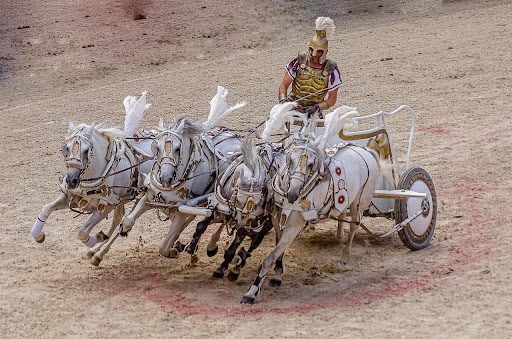
The Romans understood spectacle better than morality. In the grand arenas of Rome, gladiators slaughtered one another while crowds roared in delight. Bloodshed was not a tragedy; it was entertainment. Brutality became performance, and killing became skill. The spectators, intoxicated by loyalty to their chosen fighter, cheered as if witnessing a festival. The beast was not only in the arena; it was in the stands.
Centuries later, the French Revolution sought to dethrone kings in the name of liberty. Revolutionaries believed that by removing the monarch — regarded as God’s representative — they were ending oppression. Yet in replacing divine authority with human absolutism, they failed to foresee a deeper danger. When man installs himself as the ultimate authority, unchecked by higher moral accountability, he risks becoming more tyrannical than the throne he overthrows. The revolution planted seeds of democracy and social contract theory, yet history has shown that political structures alone cannot restrain moral chaos.
Religions, in their essence, emerged to discipline the inner beast — to teach service, compassion, restraint, and responsibility. However, over time, interpreters and power-seekers reshaped sacred messages for personal and institutional gain. The gospel of morality was replaced by the gospel of profit. The line between good and evil blurred, not because truth vanished, but because it became inconvenient.
Fyodor Dostoevsky powerfully dramatized this moral crisis. In The Brothers Karamazov, a haunting question is raised: “If there is no God, is everything permitted?” The implication is terrifying. If there is no ultimate moral reference point, then killing, oppression, and injustice can be rationalized as personal choice or political necessity. Today, we see this logic unfolding before us. International institutions exist — the United Nations, the Security Council, declarations of human rights — yet power often dictates morality. Narratives are manufactured by the strong, and violence is justified as a strategy.
Nations are no longer fighting merely for survival. The modern world is abundant in resources compared to previous centuries. A lion hunts when hungry and rests when satisfied. Man, however, often begins hunting after his hunger is satisfied. Wealth does not end ambition; it multiplies it. The poor may fight for survival or dignity. The powerful frequently fight for ego, expansion, and dominance.
An ancient teaching — found in both the Old Testament and Islamic tradition — warns that if a man is given one valley of gold, he will desire another; if given two, he will desire three; and nothing will fill his eyes except dust. It is a timeless diagnosis of human greed. The problem is not scarcity; it is insatiable desire.
This is why ethics — from Socrates to modern moral philosophers — has remained central to civilization. Ethics is not an academic luxury; it is a necessary chain upon unbridled desire. Without moral restraint, technological advancement only sharpens the claws of the beast.
The tragedy is not confined to battlefields or political chambers. It lives among us. One does not need to visit ancient Rome to witness spectators of cruelty. Today, when people fight in the streets, many others record videos, laugh, and upload them for entertainment. Even violence becomes content. Their posture is not different from Roman spectators cheering in the Colosseum. We have simply replaced the arena with screens.
Civilization cannot survive on law alone. Institutions cannot replace conscience. Democracy cannot substitute for moral discipline. If ethics continues to gather dust on bookshelves while greed and ego dominate human behavior, we may once again witness the beast ruling the earth — this time armed with technology and justified by narrative.
The Greeks were right: man is social. But he is also solitary before his conscience. The question is not whether God sits on the throne, nor whether institutions govern the world. The question is whether man can look at the beast within and refuse to let it rule.
If he cannot, the arena will remain — and we will continue to applaud.



