
Hardly any quarter of time goes by without news of death caused by contaminated water getting the highlight in the media, but who cares? Even after eight decades of India’s independence, why are our own rulers failing to provide sufficient and potable water? Why is the water quality being compromised? Should this be ignored as the fate of the deceased? Media reports reveal that contaminated tap water has been making urban India sick across metros, state capitals, and smaller cities alike. Reports divulge that between January 2025 and January 7, 2026, across 22 states and Union territories, at least 5,500 people fell ill in 26 cities, including 16 state capitals, after consuming sewage-contaminated piped drinking water, and at least 34 people reportedly lost their lives. These figures are only of the reported and major incidents; the rural areas, if added, may give the figures a jump. But here we are mentioning only two recent incidents that occurred in the Indore and Palwal districts of Haryana.
In December 2025, Madhya Pradesh’s Indore witnessed a major water contamination crisis, which reportedly led to the death of 20 people and caused hundreds of people to fall ill. According to the media reports, the contamination in the city occurred due to a leakage in a pipeline, which caused sewage to enter the drinking water line. Indore is not the only city facing such a crisis.
In the latest happening in the series, as per media reports, reportedly 15 deaths within just 15 days, including six innocent children, are said to have occurred in village of Chayansa in Haryana’s Palwal district, which sparked concerns about water contamination. Hindustan Times quoted on February 16, 2026, that the health officials said that the deaths between late January and mid-February were linked to severe liver-related complications. Preliminary findings pointed to viral hepatitis and possible water contamination.
Showing concern, the former union minister and an MP from Haryana, Kumari Selja alleges that the Chhainsa (Palwal) tragedy exposes the government’s failure to provide clean drinking water. She adds that contaminated water has caused havoc, hepatitis in some places, cancer in others, and public health is being compromised.
In a statement dated 18th of February to the media, Kumari Selja said that the deaths and outbreak of disease caused by contaminated water in Chhainsa village of Palwal district have shaken the entire state. She stated that this is not merely a tragedy of one village but a grim reflection of the crumbling drinking water system across the state.
Kumari Selja said that 15 deaths within just 15 days, including six innocent children, represent the height of administrative negligence. She said that water was supplied to households without proper chlorination or purification, leading to life-threatening illnesses. Out of 107 water samples tested, 23 failed quality checks, and the presence of coliform bacteria in several samples clearly indicates that contaminated water was supplied to residents.
Kumari Selja said that even after screening more than 1,500 people, conducting over 800 OPD examinations, and collecting hundreds of blood samples, the government failed to act with urgency. Villagers continued to suffer from fever, jaundice, vomiting, and stomach pain while the responsible departments remained passive spectators.
Kumari Selja said the issue is not limited to Palwal alone. From Sirsa to Palwal, several parts of Haryana are facing an acute shortage of clean drinking water and serious quality concerns. In some places, hepatitis is spreading, while in others, cancer cases are rising. This is nothing short of playing with the health of the people,” she said. Kumari Selja questioned how the government can claim progress in the so-called “Amrit Kaal” when even the clean water is not reaching people’s taps. If water itself turns into poison, how can the life of a common citizen be secure?” She further questioned whether the lives of poor and farming communities are being treated as expendable. Kumari Selja demanded a high-level and time-bound investigation into the Chhainsa incident, strict action against those found guilty, adequate compensation for affected families, and a statewide special drive to test drinking water quality to ensure that such a tragedy is not repeated in the future.
Key Causes of Water Contamination
Water contamination stems from diverse human and natural activities, with untreated sewage, industrial waste, and agricultural runoff being the primary contributors. These sources introduce pathogens, heavy metals, toxic chemicals, and nutrients into water bodies, severely impacting ecosystems and human health.
Household sewage and blackwater from improperly managed septic systems release bacteria, viruses, and parasites into water, causing diseases like cholera and jaundice.
Factories discharge heavy metals, toxic chemicals, and non-biodegradable substances into waterways, creating oxygen-depleted “dead zones”.
Agricultural Runoff: Pesticides, herbicides, and chemical fertilizers from farming wash into rivers and lakes, creating nutrient pollution (nitrates and phosphates).
Improper disposal of trash, including plastics and electronic waste, often leads to contamination in oceans and rivers.
Issue Raised in Lok Sabha
GHAGGAR-1-PHOTO-JMT.
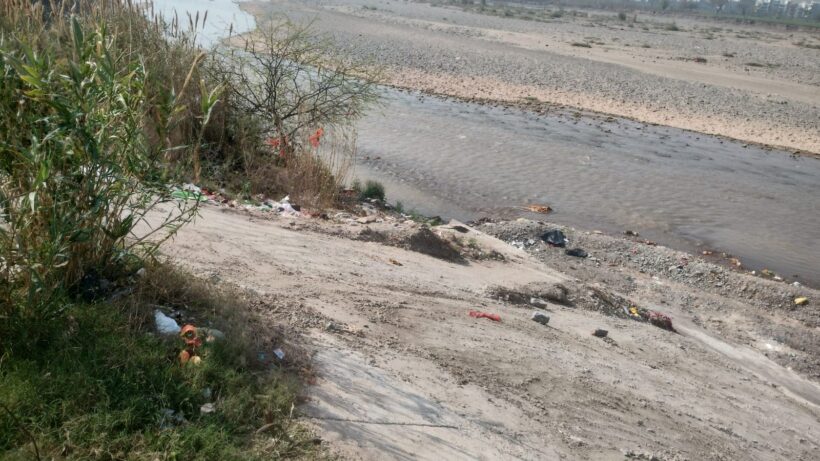
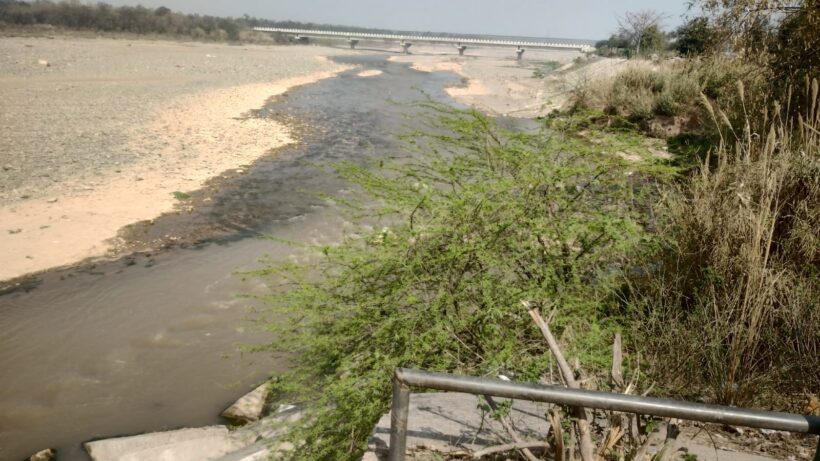
Terming Ghaggar as the most contamination spreading river, Kumari Selja, in a press release of 21st February, raises the issue demanding all sewage and dirty drains flowing into the Ghaggar must be stopped immediately, states that villages located along the Ghaggar are facing serious livelihood challenges, agriculture is being adversely affected, and fears of cancer and other serious diseases are growing among residents. In several areas, people are still deprived of safe drinking water, while river water is increasingly becoming unsuitable, even for irrigation. Kumari Selja said that since the government has admitted that polluted water is being discharged into the river from multiple sources, it is its responsibility to take decisive steps to stop it.
Kumari Selja demanded the immediate implementation of a concrete and actionable plan within a fixed timeline to ensure visible improvement. She further called for the immediate closure of all sewage outlets and dirty drains flowing into the Ghaggar. Where closure is not feasible, she said, wastewater must be released into the river only after complete treatment through Sewage Treatment Plants (STPs) in accordance with prescribed standards. She also stressed the need for strict and transparent monitoring of the functioning and capacity of existing STPs to prevent untreated discharge under any circumstances.
MP Selja demanded priority supply of safe and clean drinking water to villages situated along the river and called for comprehensive water quality testing and health surveys in pollution-affected areas to assess the actual impact and provide necessary relief.
She said the issue concerns the health, environment, agriculture, and livelihoods of lakhs of people connected with the Ghaggar belt and therefore deserves the highest priority. The government, she added, must take swift, decisive and result-oriented measures to ensure that the river is genuinely freed from pollution.
GHAGGAR-2-PHOTO -JMT.
Confirming that the polluted water is flowing through the River Ghaggar, Bhupender Yadav, union Minister of environment, forest and climate change, in reply to the question raised by Kumari Selja in Zero Hour in the Lok Sabha on 05.12.2025, “Regarding pollution in Ghaggar River in Sirsa, Haryana”, vide his letter dated 19th February,2026, stated, “The matter was examined by the Ministry in consultation with the Haryana State Pollution Control Board (HSPCB). In this regard, I would like to inform you that the River Ghaggar receives effluent discharge from the States of Haryana, Punjab, Himachal Pradesh, and the Union Territory of Chandigarh through various drains, as the river originates in Himachal Pradesh and passes through these States. The response, submitted by Haryana Pollution Control Board, on the steps taken to control pollution in the River Ghaggar is enclosed for your kind information”.
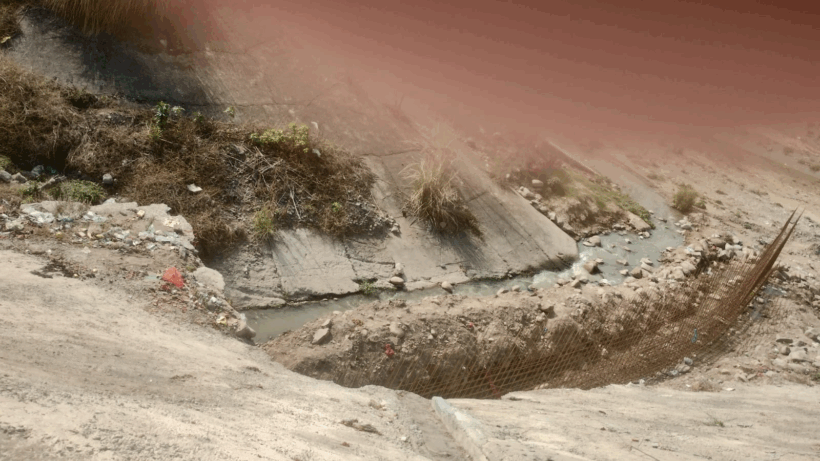
As per official information provided to Kumari Selja, there are 12 major drains of Haryana discharging treated/ untreated effluent in the River Ghaggar from 27 towns of Haryana in the catchment of the River Ghaggar.
Whose Failure Causes Water Contamination?
Kumari Selja alleges that such tragedies expose the government’s failure to provide clean drinking water. She adds that contaminated water has caused havoc, hepatitis in some places, cancer in others, and public health is being compromised.
Public health experts say the recurrence of such incidents highlights the need for stricter monitoring of water storage systems, regular chlorination, keeping an eagle eye on sewage systems, and faster response mechanisms to prevent outbreaks of waterborne diseases.
Such incidents clearly show the failure of ‘Water Quality Monitoring and Surveillance’. So, the administration, along with the officials responsible for the supply of potable water to the public and maintenance of the sewage system, should be penalised strictly for any lapse. Laxity in fixing responsibility to the particular officers always leads to such situations. It is said— ‘Every Body’s responsibility is No Body’s responsibility.’ Will the governments pay heed to these lacunae or let the contaminated water run, damaging the health of the people as it is?