

The victory of the Bangladesh Nationalist Party reshapes a key country in the Bay of Bengal. From the Chinese perspective, the core axis is stability and strategic continuity. From the West and the UN, the main benchmark will be democratic governance and protection of rights. Between these poles, Dhaka seeks to balance without becoming an arena of open dispute.
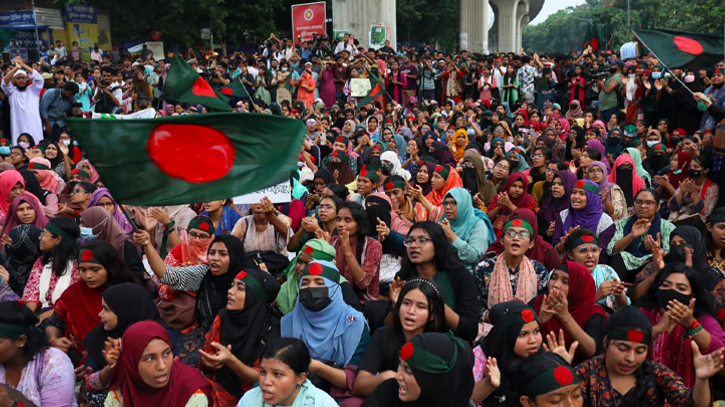
The victory of the Bangladesh Nationalist Party (BNP) in the February 2026 elections is not a simple partisan handover. It is the result of a profound political rupture that began with the 2024 crisis, when student mobilization and institutional erosion forced a transition. With a broad parliamentary majority, the new government arrives with a strong mandate, but also under intense international scrutiny.
Bangladesh is not a peripheral actor. It is a country of more than 170 million inhabitants, with a textile sector supplying Western markets, a strategic location in the Bay of Bengal, and a growing role in the architecture of the Indo-Pacific. Geopolitically, it functions as a hinge between India, China, and Southeast Asia. That condition turns it into a space of silent competition.
Priority reading from Beijing
From the Chinese point of view, the central variable is not ideological but structural: stability and continuity of cooperation. China maintains with Bangladesh a “comprehensive strategic cooperative partnership” and integrates it into the Belt and Road Initiative. The official reaction after the election emphasized precisely continuity, deepening economic cooperation, and regional stability.
Beijing observes three factors.
First, stability as an asset. After the cycle of political crisis, a government with a clear majority reduces contractual and financial uncertainty. For China, institutional predictability is key to sustaining infrastructure, financing, and trade.
Second, Dhaka’s strategic autonomy. The BNP has historically been less aligned with India than the Awami League. From Beijing, this does not necessarily mean confrontation with New Delhi, but rather greater room for Bangladesh to diversify partners without depending exclusively on the Indian axis.
Third, regional balance. China does not need to turn Bangladesh into a military ally to obtain strategic value. It is sufficient that Dhaka maintain economic space open to Chinese capital and not fully integrate into containment architectures designed by the West.
Western counterpoint and UN framework
The West tends to prioritize two dimensions: democratic standards and strategic alignment.
On the democratic front, the focus will be on press freedom, judicial independence, protection of the opposition, and treatment of religious minorities. The BNP’s record is not unequivocally liberal. During its previous governments there were accusations of political repression and tolerance toward Islamist sectors. Therefore, the narrative of “democratic restoration” will have to be tested through concrete decisions.
On the strategic front, India is the key variable. New Delhi is a central partner of the West in the Indo-Pacific. Any signal of drastic cooling between Dhaka and Delhi raises concern. Bangladesh shares an extensive border with India and is involved in sensitive dynamics of water, migration, and security.
The UN, for its part, will pay particular attention to three areas: protection of religious minorities, freedom of expression, and the situation of Rohingya refugees from Myanmar. Bangladesh hosts one of the largest refugee contingents in the world. Humanitarian treatment and international cooperation on this front will be indicators of commitment to international law.
Pragmatic analysis of the balance
The most realistic hypothesis is not absolute alignment with China nor a rupture with India and the West. It is a strategy of balance.
The new government has already sent diplomatic signals by inviting multiple powers to its inauguration. That gesture suggests a foreign policy of diversification, not exclusion. Bangladesh depends on trade with the West and on Chinese financing and infrastructure. It cannot afford to close either lane.
From the Chinese perspective, the best scenario is a stable Bangladesh, autonomous vis-à-vis India and open to the BRI, without provoking military or diplomatic escalations in the neighborhood.
From the Western perspective, the desirable scenario is an institutionally solid Bangladesh, respectful of human rights and not strategically absorbed by Beijing.
Scenario map for 6–12 months
Scenario 1. Consolidated pragmatic balance
The BNP government maintains continuity in Chinese projects while strengthening economic cooperation with India and the West. It does not reverse multilateral commitments and avoids anti-India rhetoric. It introduces moderate reforms in press legislation and reduces internal tensions.
Indicators: contractual continuity in the BRI without controversial expansions; active dialogue with New Delhi; positive signals toward UN mechanisms on human rights; reduction of political violence.
Scenario 2. Competitive nationalism with strategic bias
The BNP adopts a more assertive discourse toward India and deepens cooperation with China as a counterweight. The West increases diplomatic pressure on human rights. Relations with New Delhi become tense, but without formal rupture.
Indicators: review of bilateral agreements with India; visible expansion of Chinese-financed infrastructure; stronger criticism from international organizations regarding civil liberties; internal polarization.
Scenario 3. Internal instability and forced realignments
If the transition fails to stabilize the political system, protests or institutional fractures may reemerge. In that context, the government could harden security measures. International pressure would increase and geopolitical competition would intensify.
Indicators: expansive use of digital security laws; restrictions on press and opposition; deterioration of relations with one or more regional partners; greater diplomatic involvement of external powers.
Strategic conclusion
Bangladesh is not a passive theater. It is an actor capable of capitalizing on its hinge position to maximize economic and political benefits. From Beijing, the objective is stability and strategic continuity without escalation. From the West and the UN, the demand will be that such stability not be built at the expense of rights and pluralism.
The real definition will not be discursive but operational. In the coming months it will become clear whether Dhaka turns its new majority into balanced governance or into concentration of power. For China, what matters most is predictability. For the West, democratic legitimacy. For the UN, effective protection of human rights.
The intersection of these three agendas will define Bangladesh’s new place in the Indo-Pacific.