

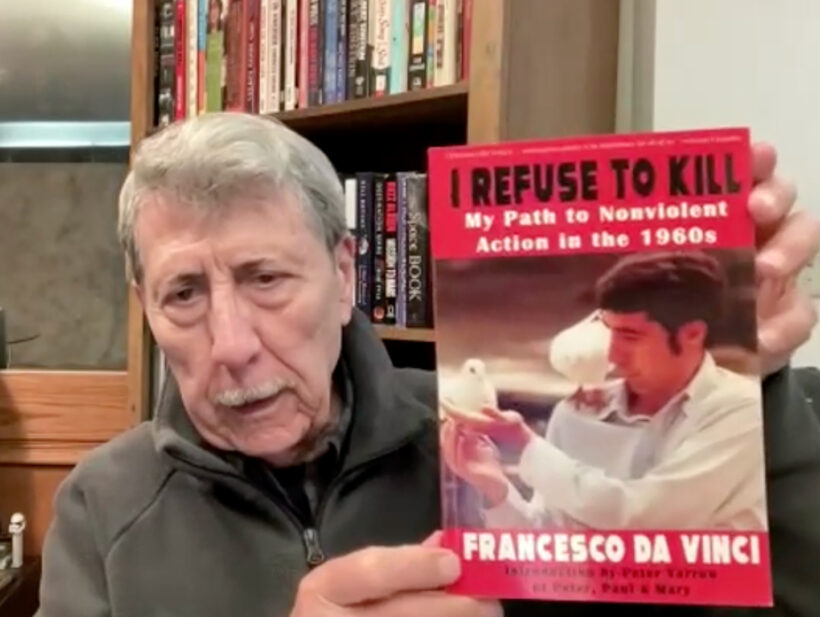
In this interview, Francesco Da Vinci reflects on his journey as a conscientious objector during the Vietnam War era and his lifelong commitment to nonviolent action. Coming from a privileged background, he describes the moral awakening that led him to challenge the draft system through principled nonviolence rather than compliance or evasion.
Francesco recounts how his resistance resulted in a landmark legal case that expanded the recognition of conscientious objection beyond formal religious belief, setting an important precedent in U.S. law. He also shares the story of founding a nonviolent action group in San Diego in 1970, which grew from a handful of people into a movement of nearly 300, supporting draft resisters, farm workers, and peace initiatives. Their activities included organizing benefit concerts, community campaigns, and a citywide vote opposing the bombing of the USS Constellation.
Drawing from more than a decade of personal journals (1960–1971), later published as a book, Francesco situates his experience within the broader social transformations of the 1960s—civil rights, antiwar resistance, and the power of collective moral action. He reflects on the contrasts between that period and today, emphasizing that meaningful social change still begins with individual responsibility, courage, and kindness.
In dialogue with David Andersson, the conversation explores the enduring relevance of nonviolence as a practical and ethical response to systemic injustice, and the need to rebuild a shared moral direction in uncertain times.
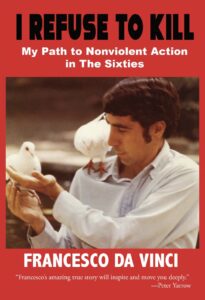 In his memoir, I Refuse to Kill: My Path to Nonviolent Action in the 1960s, he chronicles his struggle to be recognized as a sincere conscientious objector to the Vietnam War, at the risk of a five-year prison term.



