

Civil Society Urges New Chair to Enforce Greater Transparency, Inclusivity
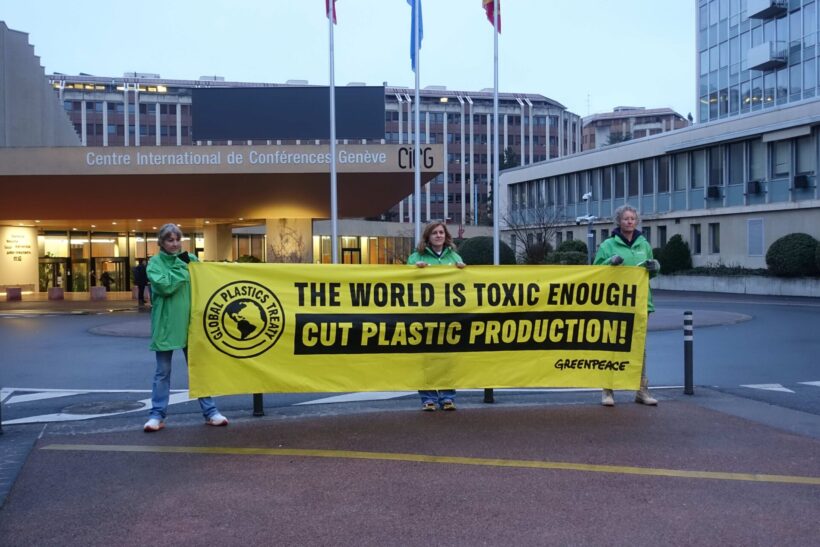
Geneva, Switzerland – Member States convened in Geneva, Switzerland, on the 7th of February for INC-5.3 to elect a new Chair of the plastics treaty negotiations. Today, they formally elected Julio Cordano, diplomat and Director of Environment, Climate Change, and Oceans at the Ministry of Foreign Affairs of Chile.
The previous Chair, Ambassador Luis Vayas Valdivieso of Ecuador, formally announced his resignation as Chair late last year, creating a leadership vacuum during a pivotal moment in the treaty process. Under his watch, the negotiations were frequently criticized for a lack of transparency, breaking down the already fragile trust countries and observers had in the process. The Chair consistently catered to the lowest common denominator, despite growing ambition amongst a majority of countries.
As Mr. Cordano takes the helm of the treaty process, GAIA members are urging him to chart a different course from his predecessor and restore trust by reestablishing transparency, promoting neutrality, enabling effective decision-making, and ensuring that civil society has appropriate access and representation in the talks. Most critically, he must uphold the ambition Member States committed to at the outset of this process: to deliver the world a treaty that addresses the full life cycle of plastics, from extraction to disposal, prioritising independent science, human rights, and Global South leadership over corporate and petro-state interests.
Jam Lorenzo, BAN Toxics, Philippines: “The election of the new Chair is an important step towards progress, but a treaty that addresses the full lifecycle of plastics can only be achieved if Member States cease to protect the interests of plastic polluters. The impacts of plastic throughout its lifecycle are undeniable, and Member States need to be united in the central goal of protecting human health and the environment if we want an effective global plastics treaty.”
Shahriar Hossain, ESDO, Bangladesh: “At this stage in the negotiations, ambition, not evidence, is the missing ingredient. The science is settled, impacts are undeniable, and the moment now calls for collective political will. A credible, legally binding treaty must address plastic pollution at its source while safeguarding equity and human health.”
Robert Kitumaini Chikwanine, SOPRODE DRC: “Civil society brings the voices of affected communities, independent expertise, and the vigilance necessary for a credible treaty. The Chair must guarantee our access and ensure a transparent and inclusive process.”
Kwame Ofori, Ako Foundation, Ghana: “To millions of people who experience the impact of plastic pollution on a daily basis, this leadership is what will decide whether science, justice, and livelihoods are secured or delayed.”
Larisa de Orbe, Acción Ecológica México: “The Global South has historically been one of the regions most affected by the plastic life cycle, which is why it has taken the lead in setting the most ambitious targets. The new Presidency must recognise the region’s leadership and ensure that its voice is heard.”
Cecilia Bianco, Taller Ecologista, Argentina: “The Chair must ensure compliance with Resolution 5/14 on the life cycle of plastics, from raw material extraction to final disposal. It is essential that the treaty address the reduction of plastic production with binding global targets.”
Frankie Orona, Society of Native Nations: “Indigenous Peoples and frontline communities are living with the impacts of plastic pollution every day. Indigenous Peoples participation is essential to ensure that lived realities, the rights, and knowledge of Indigenous Peoples are not sidelined in favor of polluter interests.
Press contact:
Claire Arkin | claire@no-burn.org | +1 973 444 4869



