

I approach the question of the ongoing insurrection in Balochistan not as a strategist or policymaker, but as someone whose understanding has been shaped through lived experience. As a Punjabi who has traveled extensively across Balochistan—from Panjgur to Turbat, from Loralai to Sibi—and who has worked at the grassroots as a development practitioner and educationist, I have encountered the province not as an abstraction but as a lifeworld. In Khuzdar, Noshki, universities, classrooms, and even football fields, I have engaged with young Baloch whose political consciousness is today at the center of conflict. What follows is not a claim to absolute truth, but a phenomenological description—an attempt, in Husserl’s sense, to understand how the world appears to them.
Husserl reminds us that human action cannot be understood without grasping intentionality: consciousness is always consciousness of something. The political consciousness of many Baloch youth is intentionally directed toward grievance, loss, and opposition. Their world is structured by a narrative in which identity precedes experience and conclusions are reached before inquiry begins. Within this intentional horizon, the figure of the “Punjabi” emerges not merely as an ethnic other but as a constituted enemy, an object around which resentment, history, and meaning are organized.
This constitution of the enemy does not arise from direct experience alone but from what Husserl would call the sedimentation of meaning—layers of inherited narratives, selective histories, and repeated stories that harden over time into unquestioned truths. In this sedimented consciousness, Baloch identity is simultaneously idealized and frozen. Youth are taught to see themselves as members of a great and noble nation, historically destined for prosperity by virtue of mineral wealth, without the mediating labor of institutions, education, or engagement with global realities. What appears as pride often masks a suspension of agency, where the future is imagined as inevitable rather than constructed.
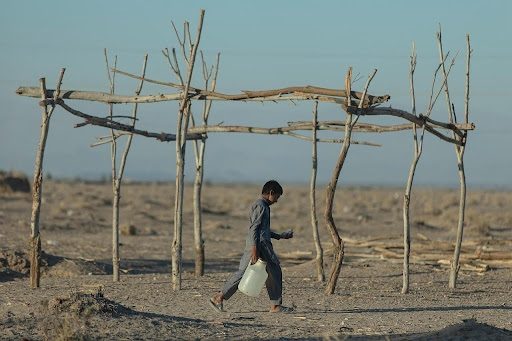
Balochistan’s material and geographical conditions further shape this consciousness. Many regions remain remote, scattered, and economically stagnant, producing a lifeworld temporally out of sync with the rapid transformations of the global order. Husserl warned of societies living within a crisis of meaning when scientific, technological, and political systems advance without corresponding shifts in lived understanding. Here, digital narratives of resistance circulate through smartphones, while everyday life remains structured by pre-industrial relations. The result is a fractured consciousness—simultaneously modern in symbols and archaic in social organization.
Within this fractured lifeworld, political awareness flourishes, but often without critical reflexivity. Long hours spent in informal spaces generate intense discussion, yet these discussions frequently recycle data and interpretations that confirm prior beliefs. Husserl’s call for epoché—the suspension of presuppositions—is largely absent. Instead of questioning how meanings are formed, youth inherit ready-made conclusions. This makes their consciousness vulnerable to external manipulation, as new information is absorbed only insofar as it reinforces existing intentional structures.
Equally significant is the failure to apprehend the changing nature of power. The contemporary international system no longer operates solely through territorial domination or armed struggle. Power today is exercised through finance, technology, narratives, and alliances. When resistance remains framed exclusively in romantic or historical terms, it becomes disconnected from the realities of global politics. This disconnect deepens the crisis Husserl described: a gap between lived meaning and objective structures, where action persists but understanding lags behind.
Crucially, this phenomenological analysis must also turn inward. The anger and idealism of Baloch youth are not merely spontaneous expressions of historical injustice; they are actively shaped and redirected by entrenched local power structures. Feudal elites and tribal sardars, who dominate the internal social order, present themselves as guardians of Baloch identity while preserving their own privileges. Through subtle pedagogies of honor and loyalty, youth consciousness is steered away from questioning internal inequalities and toward a symbolic external enemy. The “Punjabi” thus becomes a phenomenological substitute, absorbing blame and sustaining a conflict that leaves traditional hierarchies intact.
Husserl believed that crises are not resolved through force, but through a renewal of reason grounded in lived experience. If the cycle of violence in Balochistan is to be broken, what is required is not merely development funds or military strategies, but a reconstitution of the lifeworld itself—through critical education, genuine dialogue, and the cultivation of reflexive consciousness. Only when youth are enabled to interrogate how meanings are formed, inherited, and manipulated can they move from a politics of resentment to a politics of responsibility.
Without this phenomenological awakening, the insurrection will continue to reproduce itself, not as an act of liberation, but as a tragic repetition of misunderstood intentions.



