
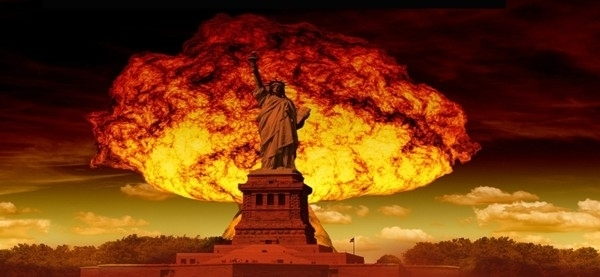
The contemporary international system appears to be drifting toward a dangerous paradox: unprecedented technological sophistication alongside growing political irrationality. Economic instability, political polarization, and cultural confusion are no longer isolated phenomena; they have merged into a single global condition of anxiety. The world today increasingly resembles what Thomas Hobbes once described as a “state of nature,” where rules weaken, institutions erode, and power—rather than principle—determines outcomes.
Nowhere is this disorder more visible than in global geopolitics. In the Gulf region, the deployment of United States forces and the escalating pressure around Iran have created an atmosphere of fear that extends far beyond national borders. Neighboring states live under constant uncertainty, aware that even a limited confrontation could trigger regional chaos with global repercussions. This militarization of diplomacy reinforces the perception that coercion has replaced negotiation, and that deterrence is once again being prioritized over stability.
Simultaneously, the global economic order is showing clear signs of strain. The US dollar, long regarded as the backbone of the international financial system, is gradually losing its uncontested dominance. While this shift may appear evolutionary, its consequences are disruptive. Markets react nervously, developing economies face currency shocks, and trade relationships become more fragile. Economic confidence—like political trust—depends on predictability, and predictability is increasingly absent.
A third, transformative force is reshaping the world even faster: artificial intelligence. AI is not merely a technological advancement; it is creating a parallel reality governed by speed, efficiency, and automation. While it promises productivity and innovation, it also generates fear—fear of job displacement, ethical ambiguity, and loss of human agency. Societies are struggling to adapt culturally and institutionally to a transformation that outpaces regulation and moral consensus.
As fear multiplies, global institutions meant to safeguard stability appear weakened. The United Nations, once envisioned as the guardian of collective security and international law, is increasingly perceived as irrelevant—unable to prevent wars, enforce resolutions, or mediate power politics. Europe, historically aligned with the United States, is reassessing its strategic direction, cautiously engaging with China amid doubts about American reliability. The unipolar moment is fading, yet no stable multipolar order has emerged to replace it.
In this climate, the behavior of great powers resembles an Aesopian fable. Consider The Elephant and the Ant: the elephant moves with overwhelming force, often unaware—or unconcerned—that its steps crush smaller creatures beneath it. The ant, though industrious and lawful, survives only by avoiding the elephant’s path. Today’s international system reflects this imbalance. Major powers pursue their interests with little regard for smaller states, whose sovereignty becomes collateral damage in strategic competition.
Another fable, The Wolf and the Lamb, offers an even darker warning. The wolf invents accusations to justify devouring the lamb, illustrating how power can manipulate narratives to legitimize injustice. In modern politics, similar justifications—security, stability, national interest—are often invoked to override international norms, leaving weaker nations defenseless in a system that claims to uphold law but practices expediency.
Humanity now stands at a critical juncture. A world governed solely by “might is right” is not sustainable. Fear, uncertainty, and panic may temporarily strengthen power, but they ultimately weaken civilization. Without shared rules, trusted institutions, and ethical restraint—especially in the age of AI—global order risks collapsing into permanent instability.
Aesop’s wisdom reminds us that strength without wisdom leads to ruin. If the elephant continues to trample indiscriminately, and if the wolf continues to rewrite morality to suit power, the forest itself will perish. The question before humanity is not whether power will exist, but whether it will be restrained by responsibility. The survival of global order—and perhaps of human dignity itself—depends on that choice.
“One can almost hear the copper heart of Liberty break.
Her torch still burns, yet its light trembles in the wind,
as the land beneath her hardens its fists.
Once she welcomed the tired and the nameless;
now she watches borders turn into wounds
and fear dressed up as strength parade as law.
In the shadow of Donald Trump’s reign,
freedom is bent, not broken loudly but crushed slowly—
pressed under the weight of spectacle, anger, and pride.
Liberty is disciplined like a disobedient child,
pain turned into policy, exclusion into applause.
The statue does not fall, but she weeps—
green tears of history running down her face,
mourning a nation that taught the world to dream,
and now teaches it how easily a dream can be bruised.”