

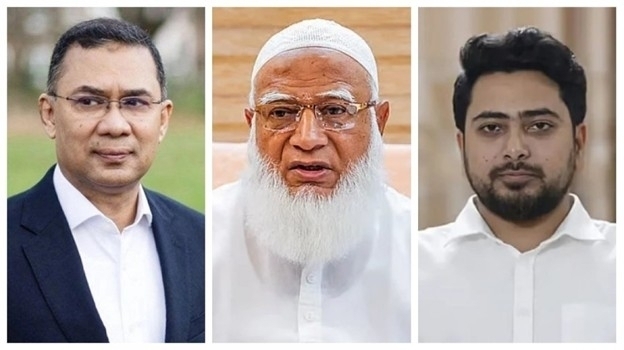
After more than a decade, the electoral landscape in Bangladesh has become vibrant as the nation prepares for a highly competitive election. Against the backdrop of a transformed political reality following the 2024 mass uprising, the upcoming 13th National Parliamentary Election, scheduled for February 12, 2026, has created a blend of festivity and anxiety across the country. On one hand, candidates are flooding voters with grand promises; on the other, street violence and the strategic use of religious rhetoric have pushed Bangladeshi electoral politics into a complex equation.
Two years ago, the turbulent mass uprising on the streets of Bangladesh had one ultimate goal: a free and fair election. As the campaigning for the 2026 polls enters its second week, the world’s eyes are on Dhaka. The burning question remains- can Bangladesh break free from years of political stagnation toward a stable democratic future, or is it sliding back into the old cycle of violence and polarization?
Just one week into the campaign, reports of minor and major clashes have emerged from at least 20 districts, including the capital, Dhaka. A face-off between activists of the Bangladesh Nationalist Party (BNP) and Bangladesh Jamaat-e-Islami has been particularly noted in the northern and southern regions as they vie for local dominance. Local sources report that posters of independent candidates are being torn down and election camps are being set up. According to Police Headquarters, over a hundred people have been injured in election-related violence in the past 24 hours.
Political analysts observe that while the post-2024 era brought a change in government, the political culture remains largely unchanged. The violence spreading across the country indicates that “muscle power” is still being used as a primary tool to secure electoral victory. This struggle for dominance among parties that have long been out of power is being viewed as an ominous sign for democracy.
Religion has once again emerged as a strategic tool in Bangladeshi politics. Analysts point out that those candidates are displaying populist behavior alongside a sharp increase in the use of the ‘religious card.’ Some candidates are indirectly using mosque sermons and religious gatherings (Waz Mahfils) as campaign platforms. Slogans based on ‘Defending the Faith’ and ‘Aqidah’ are being used to sway rural voters. Right-wing parties and independent candidates are framing the vote as an ‘Imani’ (faith-based) duty; a move that international observers believe is fueling further political polarization.
Dr. Sabbir Ahmed, Professor at the University of Dhaka, told Pressenza, ‘The strategic use of religion in electioneering is the most concerning issue. When candidates attempt to secure votes by appealing to religious sentiments or fear of the afterlife rather than public service or policy, the core objective of the election- the public mandate- is compromised. This undermines Bangladesh’s global image as a secular and liberal nation and risks fueling long-term radicalization.’
In their manifestos, political parties have prioritized good governance, employment, and economic reform. Bangladesh Nationalist Party has promised to create 10 million jobs for the youth. Bangladesh Jamaat-e-Islami, along with its allies, is pledging a `justice-based’ social system and an end to the culture of impunity. National Citizen Party (NCP), emerging from the 2024 revolution and contesting in alignment with the spirit of the uprising, the NCP is campaigning with the slogan of `System Change,’ which has resonated deeply with young voters.
The Asian Network for Free Elections (ANFREL) and the United Nations (UNDP) has called for an inclusive and peaceful environment. Their primary concerns include the safety of journalists and the spread of disinformation in the digital space. With 89% of journalists fearing physical assault, independent journalism is facing a significant challenge.
Tauhidul Islam, a faculty member of the Department of Peace and Conflict Studies at the University of Dhaka, believes- ‘This election is not just an internal matter for Bangladesh; it is a major testing ground for South Asian geopolitics. A stable and democratic Bangladesh is essential for regional security. The Election Commission and the interim framework must ensure that no specific ideology or group can hijack the voters’ will through muscle power.’
He added that this election is an `acid test’ for how much the aspirations of the 2024 uprising will be realized. Failure to control violence and religious polarization could have long-term implications for the geopolitical stability of South Asia.