

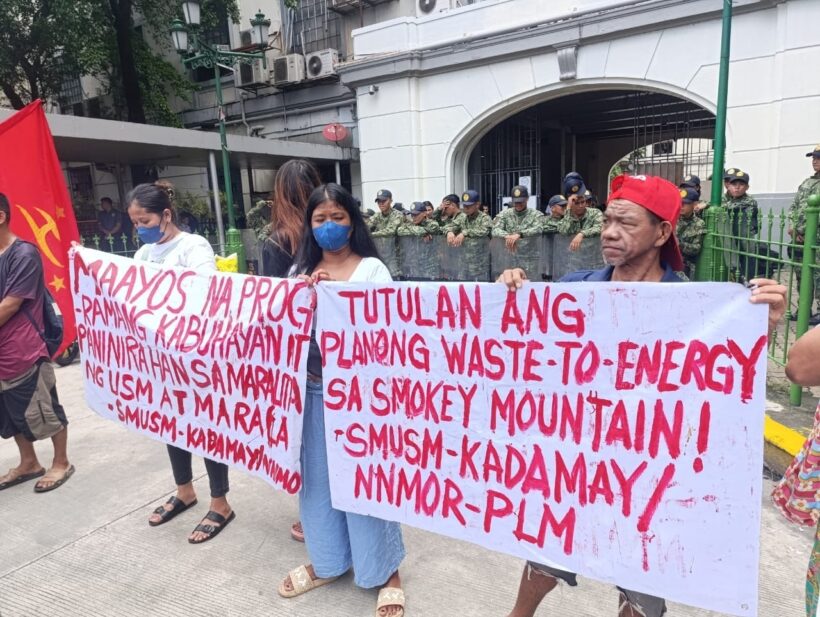
The Manila Anti-Incinerator Alliance (MAIA) said Manila City’s latest attempt to justify Ordinance No. 9151 fails to address its fundamental legal and policy defects. In responding to public criticism, the city framed the ordinance as cost-based and lawful. However, environmental advocates stressed that legality is determined by compliance with clear standards under the Local Government Code, national environmental law, and the Constitution.
On its face, Ordinance No. 9151 does not meet the basic requirements for a valid regulatory fee. The Local Government Code requires that local fees be fair, reasonable, consistent with public policy, and within what people can realistically afford. It also limits garbage-related fees to the management of non-recyclable and special wastes. The ordinance, however, does not clearly identify what types of waste are being charged, nor does it explain how the fees were computed. Without these details, there is no way for the public to assess whether the charges are proportionate or justified.
Responding to the deluge of criticisms from Manila’s small and medium entrepreneurs, Isko Moreno explained in a video how affordable the fees are. One citizen commented on social media: “Yun explanation sobrang patawa, “may pera naman daw mga negosyante”, P10 per day daw per employee at araw araw daw yun garbage collection, pero yun ordnance per square meter yun computation at lagpas lagpas din sa P10 per day, tsaka yun singil ng garbage collector hindi naman per person kundi kada hakot, at araw araw din naman hinahakot basura in other cities pero hindi naman ganyan kagrabe yun singil.”*
MAIA said this lack of clarity mirrors the defect identified by the Supreme Court in Ferrer Jr. v. Quezon City. In that case, the Court ruled that garbage fees are invalid when they lack a clear basis and computation. The city’s argument that Ferrer applies only to households and not to businesses misses the point of the ruling.
“The Supreme Court was clear that what matters is not who pays, but whether the fee is directly tied to a specific regulatory service,” said Atty. Zelda Soriano, Founder and Executive Director, Community Legal Help and Public Interest Centre (C-HELP), legal counsel supporting the Manila Anti-Incinerator Alliance. “Any garbage fee, whether imposed on households or businesses, must correspond to an actual service rendered and cannot be used as a disguised tax or revenue-generating measure.”
This misalignment raises serious questions about compliance with Republic Act No. 9003, the Ecological Solid Waste Management Act. The law prioritizes waste reduction, reuse, recycling, and composting. It also bans incineration. MAiA warned that Manila’s continued reliance on hauling and its push for waste-to-energy incineration run counter to both the spirit and intent of the law.
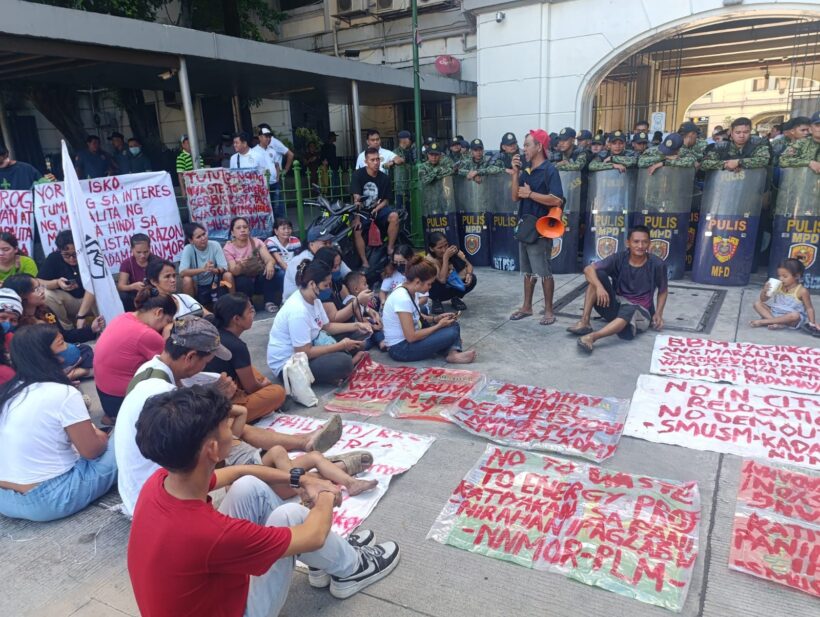
“This situation is a reflection of the city government’s failure to engage its constituents in policymaking, already missing in the WTE project in Smokey Mountain, and its disinterest in implementing the Ecological Solid Waste Management Act.
We challenge the Manila City Government to make public its computations for this grossly unjust and anti-Manileño garbage fee increase.” Brex Arevalo, Climate and Anti-Incineration Campaigner of the Global Alliance for Incinerator Alternatives (GAIA) Asia Pacific, co-convenor of MAIA.
Arevalo said the pronouncements of Mayor Moreno are inadequate and leave many basic questions unanswered: why the sudden increase; why were businesses not consulted; were computations verified; what specific services will this be used for? Relatedly, we fear that the added fees would be used for the proposed WTE incinerator in Smokey Mountain, an illegal and highly-polluting facility that would need hefty government subsidies to construct and operate
MAIA also warned that the City’s waste policies violate the constitutional right to a balanced and healthy ecology. By favoring hauling and waste-to-energy schemes that require a constant supply of garbage, the ordinance risks encouraging more waste generation and exposing communities to environmental and health harms.
“We are alarmed by the vague cost breakdown and the dangerous precedent this sets for future waste-to-energy projects that may further burden residents by paying for hauling to bring tonnes of waste for burning in the plants. Addressing waste management cannot be passed to communities alone; the state must ensure transparency, protect livelihoods, and strengthen systems for ecological sustainability,” said Niña Estelle, Coordinator of Panatang Luntian, co-convenor of MAIA.
“We urge Mayor Moreno to address the city’s waste crisis through full implementation of RA 9003 with strong public participation. Until the ordinance is aligned with law, public policy, and constitutional protections, green groups maintain that Ordinance No. 9151 remains legally vulnerable and harmful to Manila’s people and environment.”
__________________________________________________________________________________________________
OFFICIAL STATEMENT OF THE MANILA ANTI-INCINERATOR ALLIANCE
The Manila Anti-Incinerator Alliance (MAIA) maintains that Manila City Ordinance No. 9151 raises serious legal, policy, and constitutional concerns that remain unaddressed by the city government’s recent statements. The City’s consistent absence of genuine consultations on waste policy planning centered on hauling and Waste-to-Energy (WTE) incineration is now leading to economic and physical displacements, and soon, pollution and environmental crisis
Lack of adequate justification and clear computations
For Ordinance No. 9151 to be legally sound, it must comply with the requirements set by the Local Government Code (LGC). Local fees must be fair, reasonable, consistent with public policy, and considerate of what people and businesses can realistically afford. The LGC also limits the imposition of garbage-related fees to the management of non-recyclable and special wastes.
However, Ordinance No. 9151 fails to clearly specify what types of waste are being charged and how the fees are computed. This lack of detail makes it impossible for the public to assess whether the fees are proportionate, reasonable, or justified. This defect is not trivial. The Supreme Court itself highlighted this issue in Ferrer Jr. v. Quezon City, where it ruled that garbage fee ordinances must clearly define what is being charged and explain the basis for the computation.
Unclear connection with actual waste services
On the city’s attempt to distinguish Manila from Quezon City in relation to the Supreme Court ruling in Ferrer Jr. v. Quezon City, MAIA stresses that the Supreme Court’s ruling does not hinge on whether the payor is a household or a business. What is decisive is the legal principle that any regulatory fee imposed by a local government unit must be directly linked to a specific service rendered, inspection conducted, or regulatory activity performed, as required by the LGC.
The Court made clear that regulatory fees cannot be imposed as disguised taxes or as revenue-generating measures detached from the actual cost of regulation or service delivery. This legal standard applies regardless of the class of payor. Whether the fee is imposed on households or businesses, the requirement remains the same. There must be a clear and direct connection between the amount collected and the specific service provided. Any ordinance that departs from this principle is vulnerable to challenge for being arbitrary, excessive, or beyond the powers of the local government.
Inconsistency with law and public policy
MAIA finds that Ordinance No. 9151 is misaligned with both national law and Manila’s own policy commitments. The city’s 10-year solid waste management plan for 2025 to 2034 emphasizes reducing waste sent to landfills and waterways. The city’s Action Plan for Plastic Circularity also commits to achieving zero waste leakage into Philippine waters by 2040. This is particularly important given that plastics make up a significant portion of Manila’s waste. Yet, the ordinance prioritizes fee collection for hauling and disposal, without demonstrating how it will meaningfully reduce waste generation. This approach runs counter to the core objective of Republic Act No. 9003, the Ecological Solid Waste Management Act of 2000, which prioritizes waste reduction at source, reuse, recycling, and composting. A system focused mainly on collecting fees and moving waste does not address the root of the problem.
The city’s continued push for waste-to-energy incineration further undermines these goals. Waste-to-energy facilities require a constant supply of garbage to operate, which can discourage waste reduction and lock the city into a disposal-dependent system. These facilities also raise serious health and environmental concerns, especially for nearby communities.
Constitutional implications
MAIA warns that Ordinance No. 9151 may undermine the constitutional right to a balanced and healthful ecology under Section 16, Article II of the 1987 Philippine Constitution. By prioritizing revenue generation from hauling and transporting unclassified wastes and favoring waste-to-energy incineration, which may encourage increased waste generation, the ordinance risks exposing residents to environmental and health harms.
This emphasis on revenue over genuine ecological protection weakens the intent of Republic Act No. 9003 and calls into question the ordinance’s compliance with both constitutional and statutory mandates.
MAIA reiterates that sustainable waste management in Manila can only be achieved through public participation and full implementation of RA 9003. Fee impositions must be transparent, proportionate, and clearly tied to real waste reduction and diversion programs, including reusing, recycling, and the establishment of other non-incineration resource recovery activities. Anything less undermines the law, public trust, and the right of Manileños to a safe and healthy environment.
# “That explanation is so ridiculous, “businessmen have money,” they say, P10 per day per employee and that garbage collection is daily, but that ordnance is calculated per square meter and it’s well beyond P10 per day, and the garbage collector’s fee is not per person but per haul, and garbage is also hauled daily in other cities but the fee is not that high.”
__________
About MAIA
The Manila Anti-Incinerator Alliance (MAIA) is an alliance of community organizations and advocates opposing incineration and false solutions, and advancing zero waste, environmental justice, and the rights of urban poor communities.
Click this link for the community petition: https://c.org/NsrxPwFJmG
Media contact
Robi Kate Miranda, Global Alliance for Incinerator Alternatives (GAIA) Asia Pacific Communications Officer, robi@no-burn.org



