

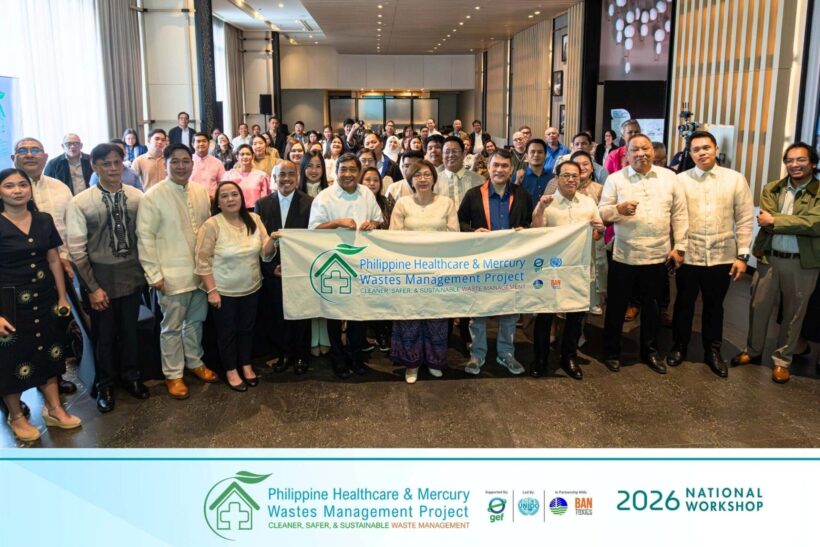
Quezon City, Philippines – The Philippine Healthcare and Mercury Wastes Management Project (HCWM Project) concluded a three-day national workshop today, stepping up efforts for toxics-free, zero-waste hospitals. Held from January 13–15, 2026, the workshop brought together over 100 participants, including representatives from partner hospitals, national and local government agencies, and civil society organizations.
Launched in December 2023, the HCWM Project aims to improve healthcare waste management in the Philippines. It focuses on reducing the release and emissions of unintentionally produced persistent organic pollutants (uPOPs), such as dioxins and furans, during the treatment of healthcare wastes, and will also ensure the safe handling and disposal of mercury stockpiles in healthcare facilities.
The five-year project is being implemented by the United Nations Industrial Development Organization (UNIDO) and the Department of Environment and Natural Resources – Environmental Management Bureau (DENR-EMB), funded by the Global Environment Facility (GEF), and executed in partnership with civil society organization BAN Toxics.
Toxics-Free Hospitals
At a press conference during the workshop, the project launched its Toxics-Free Hospitals Campaign. It introduces key project interventions such as improved waste segregation, reduction of single-use plastics, promotion of reusable face masks and other PPE, adoption of low- or zero-emission waste treatment technologies, and capacity-building on environmentally sound management of infectious and other healthcare wastes.
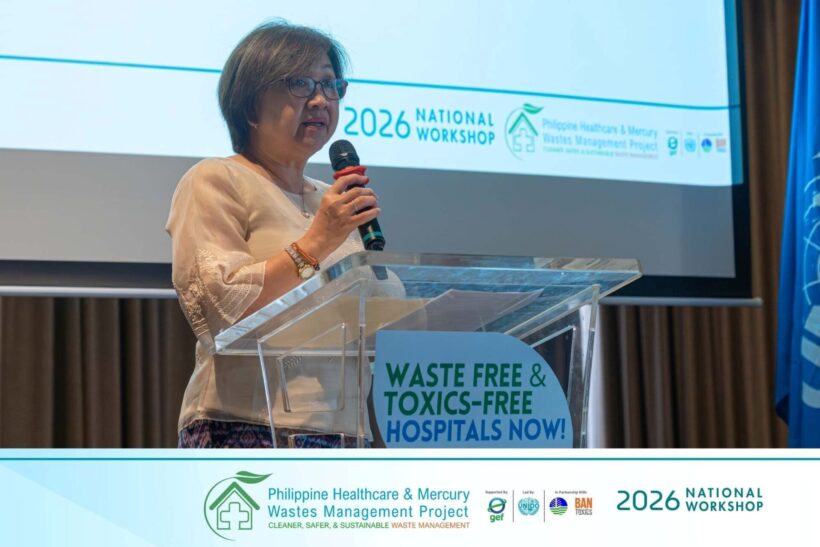
The launch coincided with the celebration of International Zero Waste Month and the 25th anniversary of Republic Act No. 9003, or the Ecological Solid Waste Management Act, enacted on January 26, 2001, which provides the national framework for integrated solid waste management based on resource conservation and recovery. OIC Assistant Secretary for Environment and EMB Director, Jacqueline A. Caancan, highlighted the importance of building systems that prevent waste generation and embed circularity across sectors.
“Promoting toxics‐free and proper waste initiatives in healthcare facilities and beyond supports sustainable practices, encourages responsible production and consumption, and requires collaboration across government, industry, and communities to protect public health and the environment,” Asec. Caancan said.
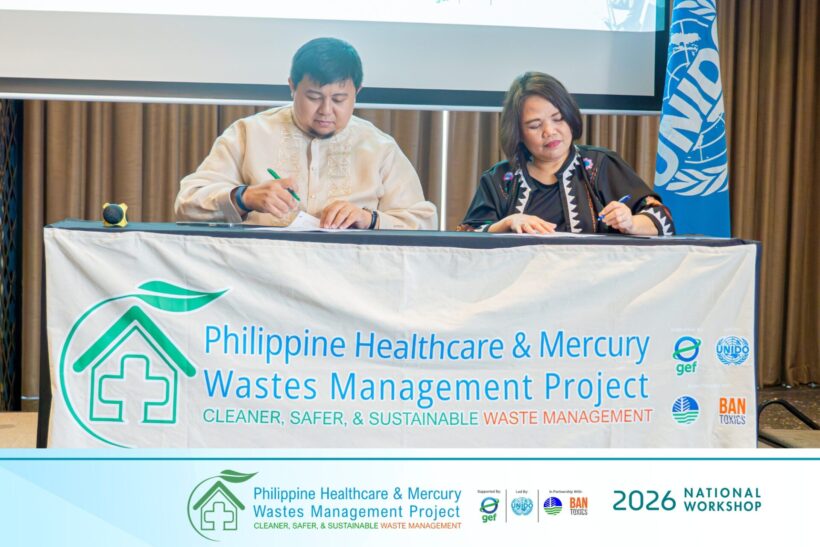
A highlight of the press conference was the signing of a memorandum of agreement between the DENR-EMB, represented by Asec. Caancan, and the Department of Health–Health Facility Development Bureau (DOH-HFDB), represented by its Director, Dr. Melissa Sena. The agreement formalizes inter-agency collaboration in the implementation of the project.
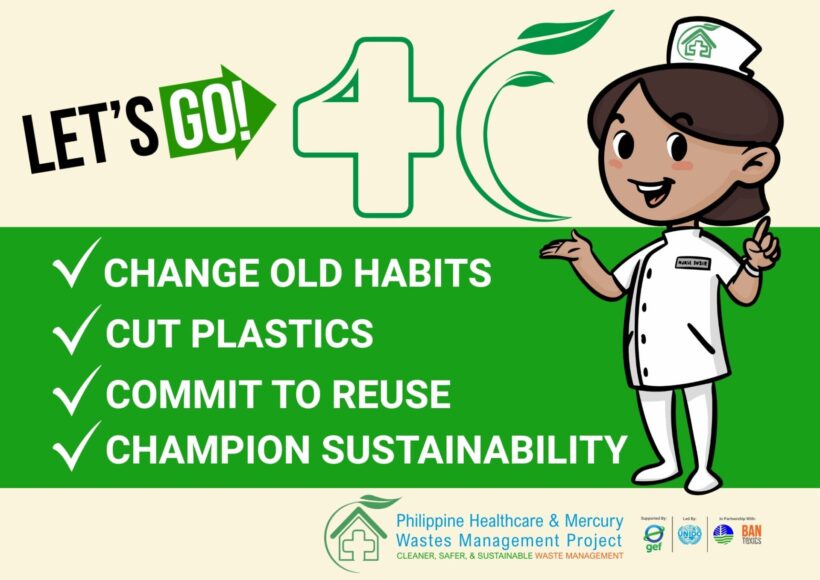
As part of the Toxics-Free Hospitals campaign, the project unveiled “Nurse Susie,” a character promoting environmental sustainability in healthcare. She encourages saying no to single-use plastics, adopting reusables, and raising awareness of toxic chemicals in healthcare waste. Nurse Susie serves as a friendly guide for promoting the campaign’s 4Cs framework—Change old habits, Cut plastics, Commit to reuse, and Champion sustainability.
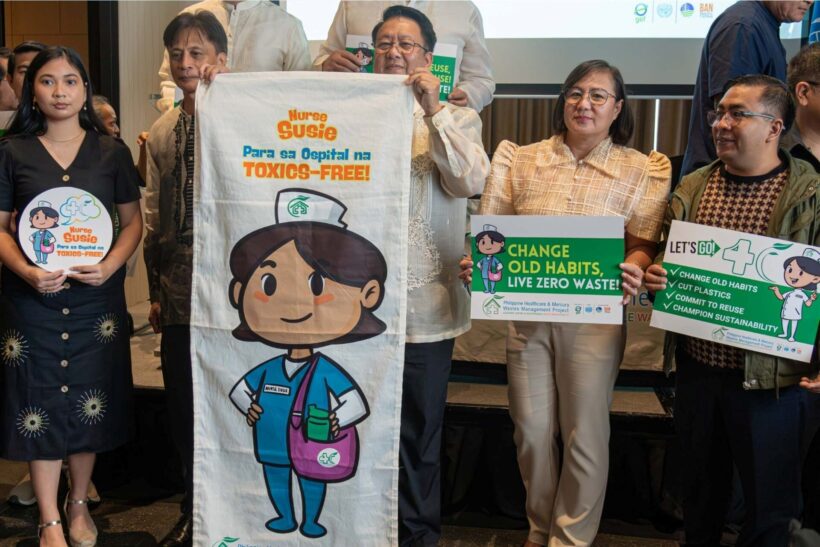
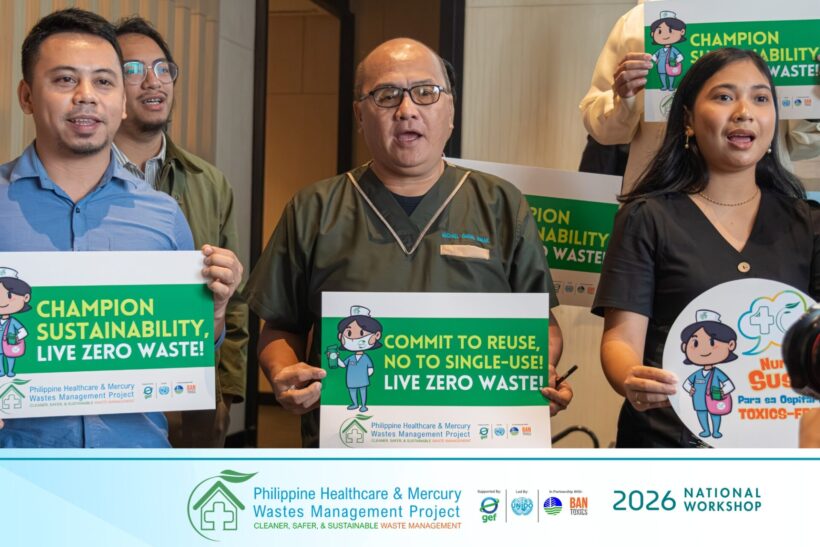
According to Jam Lorenzo, BAN Toxics Deputy Executive Director and the HCWM Project’s manager, cutting plastic use, including single-use plastics, is one of the key interventions to reduce potential sources of toxic chemical emissions from healthcare waste
“Plastic wastes contain a wide range of chemicals, which, if mismanaged, can leach into air, water, and soil. When burned, they may generate unintentional persistent organic pollutants (uPOPs), such as dioxins and furans, due to their chlorine content,” Lorenzo added.
The World Health Organization notes that dioxins and furans are highly toxic, persistent pollutants that bioaccumulate in organisms and biomagnify up the food chain, posing long-term risks to human health and the environment. These uPOPs can be formed during the burning or improper treatment of chlorine-containing wastes, including chlorinated plastics and residues from chlorine-based disinfectants used in healthcare settings.
Reuse vs Single-Use
A waste audit report presented during the workshop showed that plastics accounted for over 70 percent of the total waste composition in three partner hospitals of the project. Conducted last year in partnership with Healthcare Without Harm (HCWH) SoutheastAsia, the audit covered Cagayan Valley Medical Center, Eastern Visayas Medical Center, and Quirino Memorial Medical Center as part of efforts to develop a healthcare waste generation calculation tool.
Specifically, plastics made up 77% of total waste at CVMC, 78% at EVMC, and 84% at QMMC. Most of this comes from patient-care and daily-use disposables. Sanitary products, infectious materials like cotton and gauze, and medical textiles such as aprons, masks, and gloves make up over half of total plastic waste. Non-medical items, including foodware and bottles, also add significantly, highlighting how hospital clients, visitors, and the general public contribute to overall plastic waste in healthcare facilities.
“There is a pressing need to explore alternative materials and reusable systems that maintain infection control standards while reducing waste volume. The introduction of reusable PPE, washable medical textiles, and durable patient linens could significantly minimize the dependency on single-use plastics in hospitals,“ the HCWH report recommends.
Driving Change
In addition to the waste audit, the workshop presented two technical assessments. The first, led by policy expert Atty. Josiah David Quising, reviewed existing policies and regulations on healthcare waste management, identifying gaps and recommending a sustainable, rights-based regulatory framework.
The second, conducted by waste management expert Engr. Gerardo Mogol, examined current waste handling, treatment, and disposal practices. This assessment provides a foundation for recommending environmentally sound technologies and non-burn treatment methods for healthcare waste, a key intervention of the project.
The workshop also welcomed three new partner hospitals from Mindanao—Caraga Regional Hospital, Northern Mindanao Medical Center, and Southern Philippines Medical Center—bringing the project’s total to six partner hospitals across six regions in the country.
“Moving forward, we are confident that with the previous year’s project outputs, we are well on our way to strengthening the country’s healthcare waste management systems, as intended by the project. It will be a clear demonstration of how efforts toward inclusive and sustainable industrial development can help value chains maximize the health-environment nexus and decouple environmental degradation from economic growth toward sustainable prosperity.” said UNIDO Country Representative Teddy Monroy.
Monroy underscored that the project strongly contributes to UNIDO’s Country Programme in the Philippines and advances the Sustainable Development Goals, particularly SDG 3 on good health and well-being, SDG 6 on clean water and sanitation, SDG 12 on responsible consumption and production, and SDG 9 on industry, innovation, and infrastructure.
“Through the continuing collaboration of government, the health sector, civil society, and communities, we will drive change toward cleaner, safer, and sustainable healthcare waste management systems.”
Media contact:
Thony Dizon, Advocacy and Campaign Officer
BAN Toxics



