

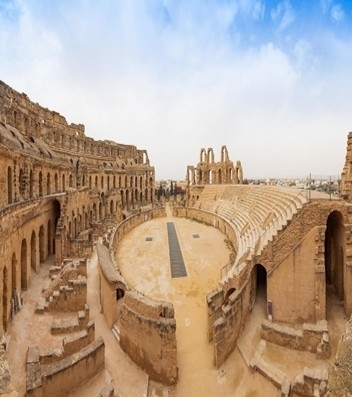
The post–Cold War dream of a stable unipolar world, dominated first by the United States, is coming to an uneasy end. The global order now resembles a multi-polar chessboard in which old superpowers are losing coherence, medium powers are seeking new alignments, and emerging regions are testing their strength. The collapse of unipolar authority is producing not only strategic uncertainty but also debris — political, economic, and military — that is injuring smaller states caught too close to the falling empire.
Asia, often described as the engine of the 21st century, illustrates both the promise and the peril of this transition. The region is rising economically and technologically, yet its states are simultaneously competing for status, influence, and territorial leverage. Cooperation remains fragile; mistrust remains deep. The contest to secure the “best seat in the new world order” has already triggered diplomatic skirmishes, naval standoffs, proxy competitions, and the re-militarization of societies that had once hoped the future belonged to trade, not tanks.
Meanwhile, the Western hemisphere is also entering a darker phase. Washington’s renewed interventionism — most recently symbolized by the dramatic seizure of oil assets abroad and the extrajudicial transfer of foreign leaders — suggests that the rhetoric of democracy, human rights, and international law has retreated to a locked storeroom. What remains is a candid struggle for resources and geopolitical reach. The United States no longer pretends to manage a liberal world order; instead, it openly fights to preserve primacy in whatever form still exists.
The United Nations, once expected to serve as the moral and diplomatic anchor of global politics, now fights for its institutional survival. Its paralysis in the face of major power rivalries recalls the final days of the League of Nations. The irony is profound: the UN was constructed by victorious superpowers to stabilize their dominance and perpetuate a controlled peace. Today, those same powers are undermining its authority, fragmenting its legitimacy, and diluting its capacity to prevent conflict. The guardians are dismantling their own gate.
Multipolarity is often romanticized as balance, diversity, or shared leadership. History tells a less comforting story. Multipolar systems have repeatedly produced insecurity spirals as rising and declining powers collide, test boundaries, assemble counter-alliances, and misread each other’s intentions. The First and Second World Wars were born in such conditions. The risk of a third global conflagration cannot be dismissed.
If it comes, Europe remains a plausible ignition point. Asia has already tested multiple crises — from border clashes to maritime disputes to proxy confrontations — yet has so far avoided an unrestrained regional war, whether through prudence, luck, or what might be called accidental wisdom. Europe, however, has re-militarized rapidly, and its unresolved wars, nationalist resentments, and frozen conflicts are once again positioned at the fault lines of great power competition.
Empires rarely die quietly. They go down like burning trees, casting sparks across the landscape, igniting fields that never asked to burn. Their capitals may crumble under the weight of their own ambitions, yet it is the borderlands that hear the first scream, and the small nations that taste the ash. Neighbors bleed not because they fought the empire, but because they lived close enough to feel its fall. History has no shortage of such tragedies — maps rewritten in panic, treaties drowned in ink and blood, and generations forced to rebuild under unfamiliar shadows. And once again the world finds itself standing at the edge of that old pattern, watching a giant sway, uncertain of how — and on whom — it will land.
The world is entering a period where diplomacy is weaker, institutions are uncertain, and nuclear thresholds are once again in motion. In such a moment, even a small miscalculation can produce consequences measured not in headlines but in continents.
To borrow and modify Karl Marx’s famous call: “Workers of the world unite,” is no longer sufficient. Today, the appeal must be broader and more urgent: “Workers, citizens, and defenders of peace and non-violence — unite before it is too late.”



