

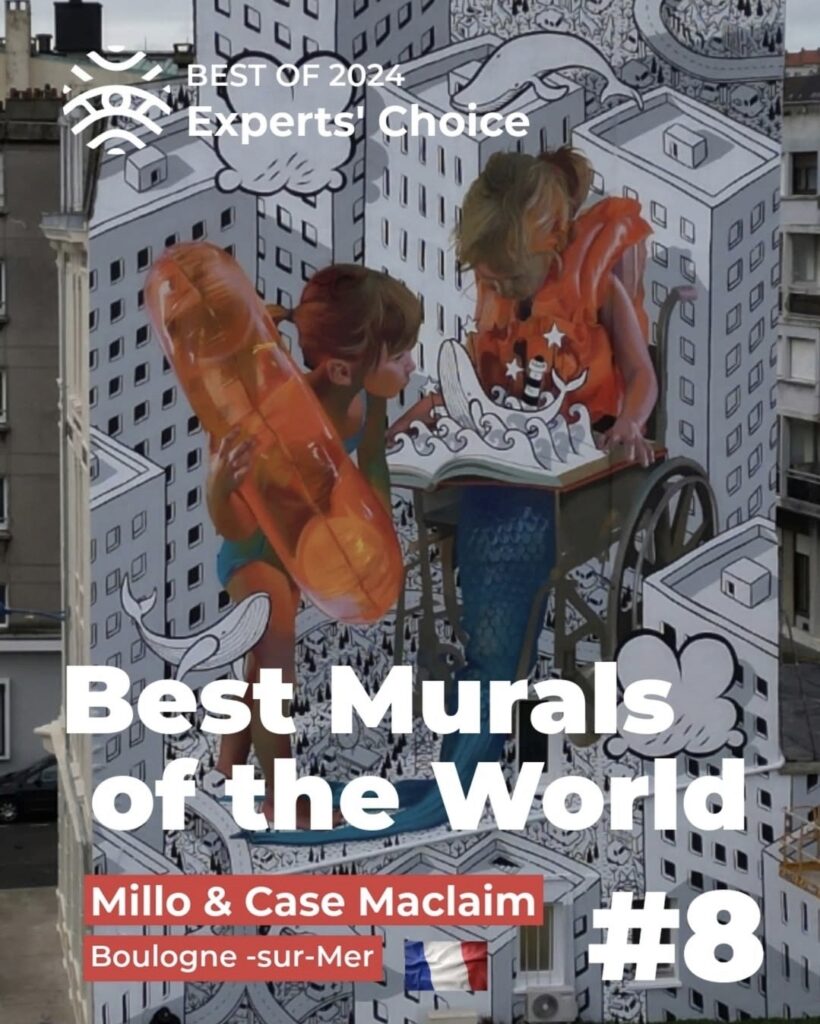
In the pulsating veins of sleeping cities, where concrete whispers forgotten stories, Street Art Cities emerges as a beacon of creative rebellion. Launched in 2019 by a collective of “urban hunters”—passionate explorers who travel the planet documenting murals—this annual contest transforms anonymous facades into epic canvases. It is no mere spectacle: it combines the expert gaze of a rotating jury of artists and curators with the democratic voice of millions on Instagram, voting monthly for the best of hundreds of works. Today, in its 2025 edition, Spain reigns with 15-16 nominees, but Latin America and Europe compete fiercely for the throne of “Best Mural of the World”.
Roots and Rituals: history and voting process
From its beginnings, Street Art Cities democratized street art, avoiding past frauds—like in 2024, when inflated votes were annulled, finally awarding Cristóbal Persona (Chile) with “Charanguista Andino” in Fene, Spain—. Each month, the Instagram community selects top 3; these 36 annual murals go to global voting on streetartcities.com/awards/2025/vote or the free app, open until late January 2026. The expert jury—figures like independent curators and invited artists—preselects for categories such as Artist Choice (pure creativity), Expert Spotlight (technical mastery) and World’s Best Street Art City, ensuring integrity with verified emails.
Stellar Finalists: places, artists, and their visual odes
Spain dominates with works that spring like Galician fountains: “Queen Bee” by Häcko Crâne in La Bañeza, a hyperrealistic hymn where a queen bee bursts with ecological ferocity, fusing surgical precision and planetary urgency—”a milestone that elevates towns to eternal galleries”—. In Linares, COSA.V. weaves emotional geometries that capture the Andalusian soul; Ponteareas hosts Eva Casais, whose human poetry intertwines bodies with Atlantic mists, evoking “deep emotion on a monumental scale”.
Argentina bursts in with Buenos Aires passion: David Petroni at AMIA (Buenos Aires) cries out for justice with raw realism; Martín Ron in San Nicolás unfolds mega-narratives of resistance, “visual testimonies of oppression that hypnotize like a river of history”. Uruguay shines in Trinidad; Colombia in Toche (Ibagué), where rural murals “transform the countryside into global voices of peasant identity, vibrant and resilient”.
Other key finalists: Tilburg (Netherlands), Ghent (Belgium), Palermo (Italy), Wangaratta (Australia), Alausi (Ecuador), with tops like Menen/Roeselare (Belgium), Madrid, and Belgrade (Serbia). Africa peeks subtly: Cairo (Egypt) in Expert Spotlight, fusing pharaohs with modern chaos; Cotonou (Benin) vibrates culturally, though without absolute tops.
Artistic Pen: whispers of genius in concrete
These murals are not ephemeral paint; they are portals. Imagine “Queen Bee”: translucent wings that pulse against industrial gray, symbolizing threatened pollination—a bee that not only reigns but prophesies collapse and rebirth, with strokes that deceive the eye like vital mirages. In Toche, saturated colors sprout from Tolima clay, telling peasant epics that shout “We are here!” in a world that forgets roots. The Argentines, like Ron, turn walls into living memorials: figures intertwined in struggle, where each brushstroke bleeds collective memory, inviting the passerby to pause, feel the pulse of injustice turned into untamed beauty.
Towards the Verdict: A call to the world
With voting in full swing—streetartcities.com/awards/2025/vote—, destiny hangs on global clicks. Street Art Cities does not crown kings; it awakens souls, democratizing art where anonymous genius rivals museums. In 2025, will the crown fall to Spanish ferocity, Latin passion, or an African outsider? The walls watch, expectant.



