

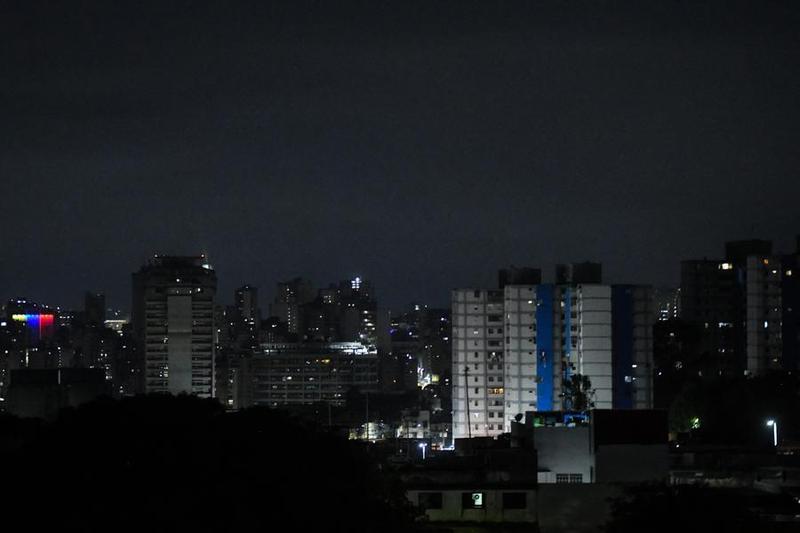
The early hours of January 3, 2026, are marking a dangerous turning point in the International Order. Explosions in Caracas and other regions of Venezuela, accompanied by aircraft overflights and attacks against military and strategic installations, have been denounced by the Venezuelan State as a bombing campaign executed by the United States on its sovereign territory. Beyond the usual euphemisms, what has occurred constitutes the direct use of armed force against a United Nations member state.
Let’s call things by their proper name. This is not about “surgical operations”, “interdiction actions,” or another chapter in the rhetoric of hemispheric security. These are bombings. Aerial attacks on a Sovereign territory, with material and symbolic effects that cannot be downplayed without gutting International Rule of Law of all meaning. When a powerful state decides to resort to force without a multilateral mandate or a verified situation of imminent self-defense, the United Nations Charter ceases to be a binding framework and becomes a worthless piece of paper.
International Law is unequivocal on this point. The use of force is prohibited except under strictly defined circumstances. There is no Security Council authorization for the attacks carried out by the United States, nor has any prior armed attack been established that would justify the invocation of self-defense. The conclusion is unavoidable: Venezuelan sovereignty has been violated, and with it, the very principle that has sustained coexistence among states since 1945.
Denying this reality through the sanitized language of official communication does not make it disappear. The violence exercised by one state against another for political ends, outside of international legal frameworks, has a precise name: state terrorism. Not because one government or another says so, but because that is how legal and political practice defines it when force is used to coerce, intimidate, or impose an outcome outside the law.
The impact of these bombings is not limited to Venezuela. It reverberates across Latin America and, ultimately, throughout the international system. If the United States can violate another state’s sovereignty without consequence, the precedent is clear and deeply corrosive: sovereignty becomes conditional depending on US moods or considerations, subject not to law but to power. Today it is Venezuela; tomorrow it could be any other country whose territory, resources, or political alignments stand in the way or are desired to bargained by the US intersts.
The lived reality of Venezuelan society is not what ultimately drives U.S. policy. What matters is control, access, and alignment within a region long treated as an U.S.’ sphere of influence (backyard – Monroe Doctrine). Forms of government are tolerated or rejected not on the basis of democratic principle, but on whether they accommodate U.S. strategic and economic interests.
An uncomfortable but inescapable argument is at stake here. Without a forceful collective response, a precedent is set. Silence, diplomatic ambiguity, or tepid condemnations are interpreted as permission. Permission for new unilateral actions, for more bombings, for an escalation where might replaces right, and the law of the jungle becomes normalized.
Historical responsibility now lies with the International Community. Multilateral organizations, regional bodies, and states that still uphold the value of law cannot look the other way. Condemning these bombings is not an ideological gesture; it is a legal and ethical obligation. Convening emergency sessions, demanding formal explanations, and activating the mechanisms designed to halt the illegal use of force is not radicalism; it is the defense of the minimum international order that prevents chaos.
History is unforgiving of moments of collective cowardice. Every time aggression goes unpunished, the next step becomes easier and more brutal. Either this drift is stopped now, or we accept that the world is entering a phase where sovereignties fall like dominoes and international law becomes a convenient fiction.
This bombing is not just an attack on Venezuela. It is an attack on the very idea that states, large or small, can coexist under common rules. If that principle falls, what follows is not security or stability, but a spiral of violence that no one will be able to control afterward.
Xinhua



