

by Sabrina Khan (Dhaka Bureau)
In view of the upcoming 13th National Parliamentary Election, security measures are being intensified across all land and air ports in Bangladesh. Necessary steps have already been initiated in this regard. Following the recommendations of the Bangladesh Election Commission, port authorities, in collaboration with the Bangladesh Police, will work collectively to bolster security. Sources indicate that these measures are being implemented to maintain political stability and adhere to international security protocols.
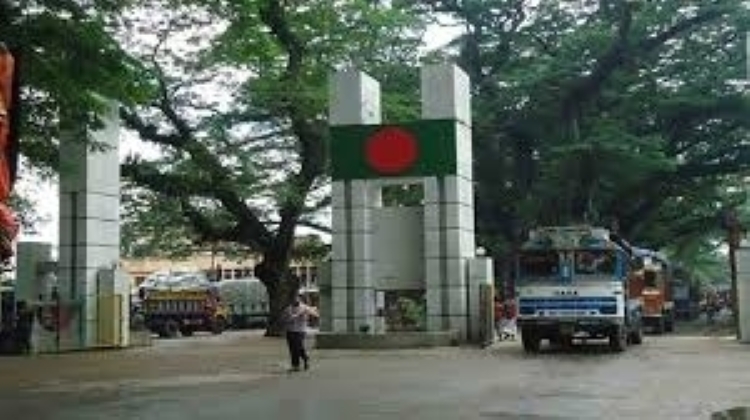
The main land port of Bangladesh- Benapole International Land Port.
According to sources, ahead of and following the national election, all land ports in the border areas- specifically those identified as high-risk are being brought under strict surveillance. This is to ensure that no domestic or foreign political vested interest groups can enter Bangladesh to incite untoward incidents. Furthermore, these measures aim to completely curb human trafficking and the smuggling of illegal arms through border regions.
It is noteworthy that the Bangladesh Land Port Authority, an agency under the Ministry of Shipping, oversees all land ports in the country. However, several specialized agencies under the Ministry of Home Affairs and the Bangladesh Police work jointly to ensure security. Bangladesh shares 24 land ports with its neighbors, India and Myanmar. There are 23 ports connecting five Indian states and one (Teknaf) with Myanmar. Trade and passenger movement are most significant through 16 ports bordering India, including Benapole (the country’s largest), Bhomra (Satkhira), Burimari (Lalmonirhat), Akhaura (Brahmanbaria), Sonamasjid (Chapainawabganj), Hili (Dinajpur), Banglabandha (Panchagarh), Tamabil (Sylhet), Bibirbazar (Cumilla), Sonahat (Kurigram), Nakugaon (Sherpur), Belonia (Feni), Sheola (Sylhet), Dhanua Kamalpur (Jamalpur), and Gobrakura-Koroitoli (Mymensingh). Teknaf (Cox’s Bazar) serves as the primary port for trade with Myanmar.
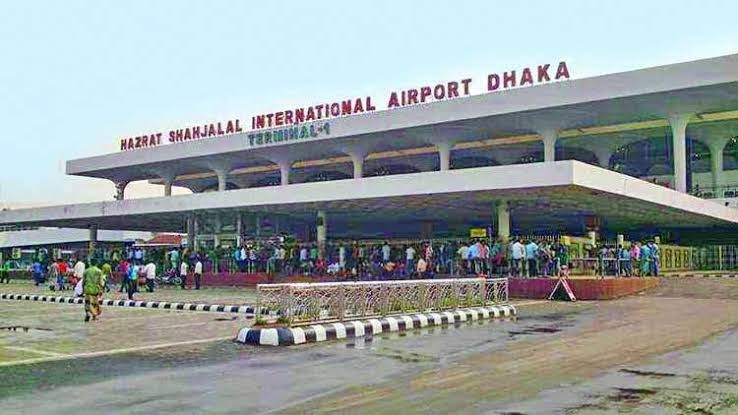
Meanwhile, stringent security measures are being enforced at the three international airports: Hazrat Shahjalal in Dhaka, Shah Amanat in Chattogram, and Osmani in Sylhet. The overall security of these airports is managed by the Civil Aviation Authority of Bangladesh (CAAB), specifically through its dedicated security wing, AVSEC. Multiple agencies work in coordination to ensure comprehensive safety.
Notably, following the homecoming of BNP Acting Chairman Tarique Rahman on December 24 and 25, the entire airport area was placed under multi-layered security. During that period, AVSEC, the Air Force, Army, Airport Armed Police Battalion (APBN), RAB, and the Dhaka Metropolitan Police (DMP) worked jointly to secure the perimeter from the main gates to the runways.
When contacted regarding post-election schedule security, an official from the office of the Director (Airworthiness and Engineering) of CAAB told the press agency Pressenza on condition of anonymity, ‘We have not received specific new instructions yet. However, considering the political context before and after the election, overall airport security has already been tightened.’ The official added that restrictions on the entry of visitors and greeters are being reconsidered to mitigate security risks. Additionally, drone flights in and around the airport have been strictly prohibited to ensure national security and uninterrupted flight operations. CCTV surveillance has been increased, with control rooms monitoring suspicious activities around the clock.
A field visit revealed several changes in the arrival and departure terminals aimed at reducing passenger harassment and maintaining order. Luggage belonging to both general passengers and VIP/VVIPs is now subject to rigorous scanning. Manual checks have been made mandatory for high-risk baggage. Furthermore, carrying firearms within the airport now requires prior permission and mandatory recording. To address long-standing complaints of luggage tampering and theft, modern technology has been introduced.
State-owned Biman Bangladesh Airlines has started using body-worn cameras for personnel involved in luggage handling for all international flights. This has brought transparency to the process and allows for the easy identification of irregularities. Increased immigration counters and staff redistribution have also significantly reduced the time passengers wait for their luggage.
Under the active supervision of an Executive Magistrate, regular mobile courts are being conducted to prevent the influence of middlemen (brokers), overpricing, and passenger harassment. A dedicated hotline and passenger service centers have also been launched for grievances and urgent information.
Group Captain S.M. Rakibul Samad, Executive Director of the airport, stated that the increase in immigration counters, installation of modern scanning machines, and personnel management have notably decreased passenger wait times. Furthermore, cleanliness and improved seating arrangements have made the terminals more environmentally friendly. He expressed optimism that these steps would further elevate the standard of passenger service at Hazrat Shahjalal International Airport.
Due to infrastructure development, technology-based management, and strict oversight, a radical transformation in passenger service has been observed. The acceleration of check-in and immigration processes, modernization of baggage handling, and the firm stance of mobile courts against irregularities have brought a sense of relief to general passengers and expatriates alike.
About the Author:

Sabrina Khan: Contributor, Pressenza- Dhaka Bureau.



