

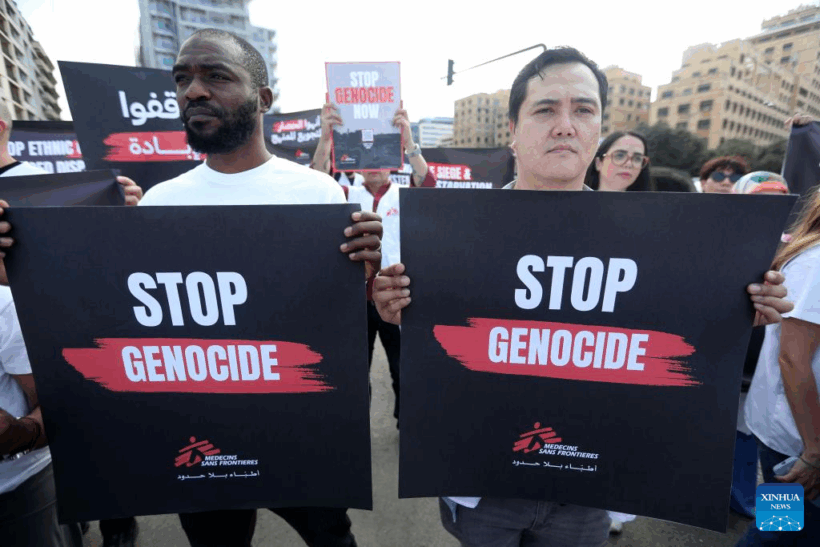
The humanitarian catastrophe in Gaza did not end with the ceasefire. The civilian population continues to die not only from direct violence, but also from the systematic destruction of all basic infrastructure, the sustained blockade of vital aid, and the violence of administrative policies imposed on international humanitarian assistance. In this context, Médecins Sans Frontières (MSF) warns that the new registration rules imposed by the Israeli authorities threaten to leave hundreds of thousands of people without medical care in 2026, deepening a humanitarian disaster that is already irreversible for many.
The humanitarian crisis in Gaza has entered a phase of silent devastation that threatens to erase any remaining guarantee of survival, even after the formal ceasefire of October 2025. For Médecins Sans Frontières (MSF), one of the most important medical organizations present in the Strip, the latest regulations imposed by the Israeli authorities on the registration of international non-governmental organizations pose a direct threat to access to vital medical care and basic humanitarian services that sustain hundreds of thousands of civilians. The new rules could lead to INGOs (international non-governmental organizations) losing their registration as of January 1, 2026, which in practical terms would mean the withdrawal of essential assistance, treatment, and support services that today constitute the main survival network for the Palestinian population in Gaza and the West Bank. MSF has stated that Gaza’s health system is “already destroyed”, and that the loss of access for independent and experienced humanitarian organizations “would be a disaster for the Palestinian population”.
Pascale Coissard, MSF emergency coordinator for Gaza, has stated clearly that “if we obtain registration, we plan to continue strengthening our activities in 2026”, stressing that “over the past year, our teams have treated hundreds of thousands of patients and distributed hundreds of millions of litres of water”. In 2025 alone, MSF carried out nearly 800,000 outpatient consultations, managed more than 100,000 trauma cases, performed 22,700 surgical interventions, assisted in more than 10,000 births, administered 45,000 vaccines, and provided mental health support to tens of thousands of people, in addition to distributing more than 700 million litres of water and producing nearly 100 million litres of potable water. Coissard emphasizes that if registration is lost for operations in 2026, a large part of Gaza’s population will lose access to critical medical care, water, and life-sustaining support, services that are not adequately available anywhere else in the Strip due to the collapse of the health system.
Since the beginning of the war in October 2023, Gaza’s Ministry of Health has reported that more than 70,600 Palestinians have been killed and more than 171,000 injured as a result of the offensive and its direct and indirect consequences, figures that include women, men, girls, and boys living in a densely populated territory with no safe zones. Even with the ceasefire that came into effect on October 11, 2025, ongoing violations of the cessation of hostilities have resulted in around 405 Palestinians being killed and more than 1,115 injured since that date, with 649 bodies recovered from the rubble, according to the same statistics collected by Palestinian health authorities.
Beyond the impacts strictly related to attacks, there is a humanitarian dimension that is costing lives indirectly, especially among children. As winter hits Gaza and shelters remain precarious or non-existent, deaths from hypothermia among children have become a tragic reality, resulting from the lack of adequate housing, sufficient warm clothing, and minimum survival conditions that would be expected in any peaceful, civilized area. Human rights organizations and independent media have documented cases in which babies and very young children have died from cold exposure in hospitals or improvised shelters, a phenomenon that should be unacceptable in any modern humanitarian context.
The destruction of civilian infrastructure in Gaza has been systematic since the beginning of the conflict: hospitals, schools, drinking water networks, sanitation systems, and homes have been left in ruins, and refugee camps, which once represented spaces of resistance and community solidarity, have been subjected to repeated attacks. This pattern of destruction not only takes lives, but also erases the conditions necessary for social and health recovery. The consequences of this destruction include not only direct deaths from violence, but also prolonged effects such as lack of access to basic treatments for common illnesses, preventable health complications, and the collapse of services that sustain daily life for the population.
In this context, MSF’s call is clear and urgent: Israeli authorities must ensure that international NGOs can maintain and continue their impartial and independent response in Gaza, because the humanitarian response —already severely restricted— cannot be further dismantled without fatal consequences for the civilian population. MSF’s warning is not abstract, but grounded in the daily operations of medical teams who have seen how every reduction in care capacity translates into preventable deaths. The organization continues to seek constructive negotiations with the competent authorities to ensure the continuity of services in 2026, but time is running out and the lives hanging on that negotiation are countless.
Gaza is not only a conflict measured in statistics: it is a social and human landscape where the absence of basic services kills as effectively as bullets, and where administrative obstacles —such as registration requirements for NGOs— can have effects as lethal as a direct attack. Palestinian figures on deaths since the ceasefire and overall mortality rates reveal not only the magnitude of the catastrophe, but also that the cycle of destruction, aid blockade, and institutional collapse continues to shape the fate of a population that keeps fighting to survive.



