

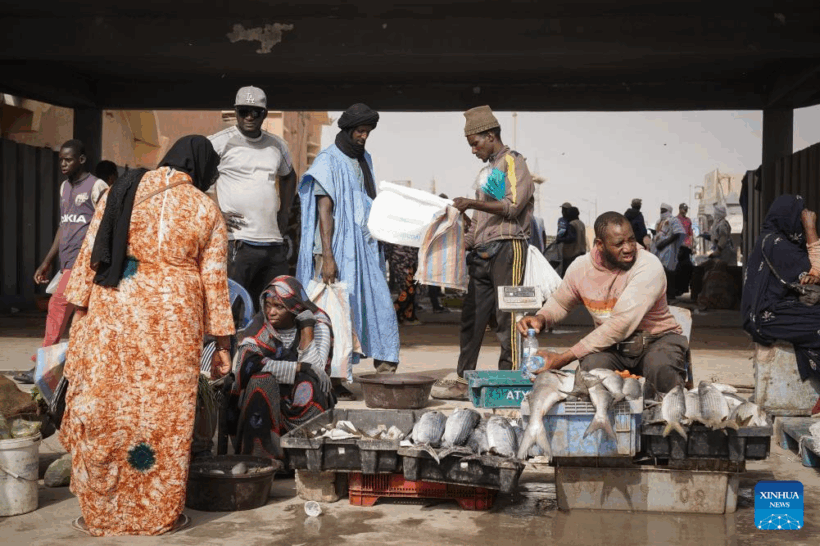
In a country that combines state-driven modernization with deeply rooted tribal structures, descent-based slavery remains a living institution. This study examines the endurance of a biracial caste system that interweaves lineage, religious prestige, colonial legacies and community-level coercion, showing how hereditary servitude continues to shape daily life in Mauritania despite legal abolition and international scrutiny.
Mauritania, a Sahelian country located between the Maghreb and sub-Saharan Africa, is one of the territories where descent-based slavery persists with a force that unsettles the international community. To the west it borders the Atlantic Ocean, to the south Senegal, to the east Mali and to the north Algeria and Western Sahara. Its capital, Nouakchott, is a coastal city founded in 1957 that today surpasses one million inhabitants; it is at once a modern urban center and a space traversed by profound inequalities. With a national population of roughly 4.8 million, governed through a semi-presidential system with authoritarian traits and sustained almost unanimously by Sunni Maliki Islam, Mauritania combines administrative modernization with social structures anchored in the past. This work explores the endurance of hereditary slavery, a phenomenon deeply embedded within a biracial caste order formed by bidan (Arab-Berber) groups and haratin identities (descendants of enslaved people), an order articulated through genealogies, religious prestige, tribal hierarchies and a dependent political economy. The analysis draws on historical anthropology, Bourdieusian sociology and African postcolonial studies, revealing how slavery persists not as a primitive residue but as a living institution, adapted to and reinforced by contemporary conditions.
The Persistence of Slavery in Mauritania
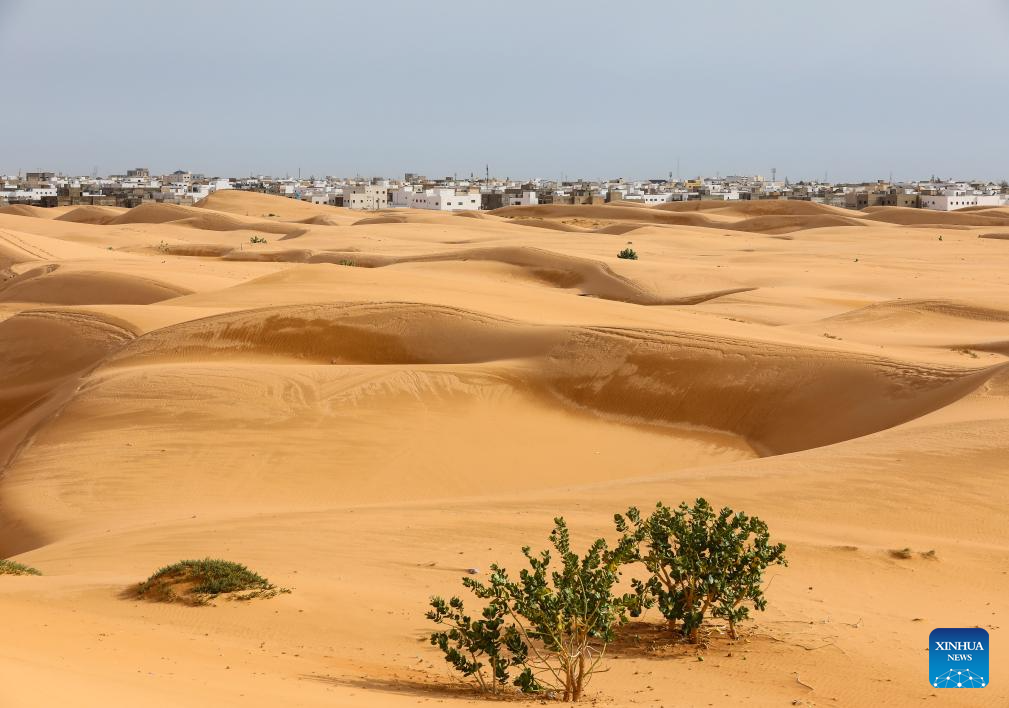
Introducing Mauritania requires first understanding its moral geography. It is a country where the desert is not a metaphor but a vital structure: more than 90% of the territory is pure Sahara, and yet life flourishes in coastal cities, markets, mosques, nomadic camps and scattered rural villages. The State operates with a modern face—administration, ministries, laws, elections—but coexists with tribal networks that organize reputation, access to land, marriage alliances and moral authority. There, the notion of tribe is not a romantic remnant but an active political unit: clans with real chieftaincies, memorized genealogies, protection pacts, mutual obligations and a symbolic capital that governs daily life.
Upon this foundation rests a biracial caste system that has shaped the country’s history. At the symbolic apex are the hassān, former bidan warrior groups; then the zwāya, religious lineages who hold Islamic prestige; below them the znaga, vassals with partial access to resources; and finally the haratin, historically enslaved groups whose category is defined not only by the labor they perform but by the servile stigma inherited at birth. Haratin identity, however, is not univocal: it is also an emerging political identity with its own movements, intellectual leaders and demands for structural justice.
This order was consolidated under French colonization. The colonial administration reinforced bidan groups by ruling through elites deemed “noble,” while freezing the mobility of haratin. Far from eradicating slavery, France tolerated it silently while organizing the territory through tribal authorities, thereby fixing hierarchies that remain alive today. Independence in 1960 inherited these structures intact, and the new State, far from dismantling them, integrated itself into them: the bureaucracy drew from the same networks of prestige, and justice—formally egalitarian—continued to be traversed by logics of lineage and loyalty.
Xinhua
Social Life
A village in the Adrar region reveals the intimate texture of the system. Adobe houses, goat corrals, and a central well where women and adolescents cross paths carrying water containers. In the main house lives a bidan family; within the same compound, but in more precarious dwellings, live haratin families. Daily labor is marked by caste: haratin women cook, sweep, milk animals, care for the dominant family’s children; haratin men cultivate small plots belonging to the master, repair corrals or tend herds. There are no whips, but there is a tacit order that determines who commands, who serves and who remains silent. Haratin are not regarded as fully autonomous: their domestic and parental authority is not considered “legitimate,” and their marriages with bidan are frowned upon or openly forbidden.
In Nouakchott the scene shifts, but the structure remains. In peripheral neighborhoods—vast stretches of sand, tin and improvised blocks—live thousands of haratin who migrated from rural areas. They work precarious jobs: bricklayers, domestic workers, street vendors. Many haratin girls enter bidan households under the label of “extended family members.” The expression, which seems protective, conceals domestic servitude: they sleep on the floor, eat at different times, do not attend school and carry out all household tasks. This practice is not exceptional; its normalcy renders it invisible and therefore irrefutable.
Here emerges the most unsettling contemporary mechanism: social liability. Persistent slavery is no longer upheld through physical chains but through community coercion. When a haratin person tries to leave, the bidan community does not need to pursue them with violence. It can isolate them: no one will hire them, no one will sell them food on credit, no imam will defend them in local disputes. If they have children, these may be “temporarily” retained by the dominant family, forcing the parent to return. Public humiliation—being accused of ingratitude, of breaking the moral order—acts as a brake. Freedom thus becomes a communal rupture that threatens material, emotional and symbolic survival.
Articulation Between Theory and Social Structure
The anthropology of slavery has described this phenomenon with conceptual precision. Orlando Patterson called it social death: the loss of full agency and the impossibility of existing as a morally autonomous subject within the community. But this concept acquires distinctive nuances in Mauritania: here, social death is hereditary, caste-bound, racialized and reinforced by a local Islam interpreted through historical hierarchies. Pierre Bourdieu allows the analysis to go further: symbolic domination is inscribed in the habitus, in the way one walks, speaks, nods and obeys; in the tacit belief that each person occupies the place they are “supposed” to occupy. What is decisive is not that people accept their servitude, but that they have been formed within a social architecture that naturalizes servile status.
Yet Mauritanian Islam cannot be reduced to a monolithic block that legitimizes slavery. Internal tensions abound: reformist imams denouncing descent-based slavery as bid‘a (deviant innovation), religious activists advocating egalitarian readings, and haratin leaders who reinterpret tradition from within. To claim that “religion” upholds slavery would be mistaken: what upholds it is the interested interpretation of bidan elites and the moral authority derived from their historical role as custodians of religious knowledge.
In parallel, postcolonial anthropology, from Fanon to Mamdani, helps illuminate the role of the State. The Mauritanian State behaves as a dual actor: it proclaims equality before the law, participates in United Nations mechanisms and criminalizes slavery in its legislation; yet it operates in practice with tribal logics that reproduce inequality. Officials, judges and police come predominantly from bidan lineages, rendering the enforcement of abolitionist laws selective. The state apparatus is trapped in a political equilibrium dependent on maintaining the stability of historical hierarchies.
Instagram #Mauritania
Sahelian Political Economy and Contemporary Reproduction
The Sahelian economy also fuels the persistence of the system. Iron mining in Zouérat, industrial fishing in Nouadhibou, extensive pastoralism and massive migration to Saudi Arabia and the United Arab Emirates generate new forms of dependency. In the absence of redistributive policies, haratin remain concentrated in precarious jobs that reinforce their subordination. Land, a critical element, is largely controlled by bidan families. Since property is a prerequisite for economic autonomy, landlessness condemns many haratin to continue serving former masters, often without receiving wages under the argument that “the family” provides shelter and food.
Internal social movements have challenged this order. The organization IRA-Mauritania, led by Biram Dah Abeid, has exposed cases of slavery and advocates egalitarian Islamic interpretations. The State, however, has responded with arrests, trials and media stigmatization. Despite this, haratin intellectuals, young jurists and clandestine women’s networks have produced a critical discourse that weaves together historical memory, collective identity and strategies of everyday resistance.
Comparative Ethics and Dismantling the System
The ethical debate is complex. The West tends to condemn Mauritanian slavery from a position of moral superiority that forgets its own racial structures and slave-owning history. Such Western abolitionism can become a geopolitical tool, especially in a country strategically significant for Europe due to its position between the Maghreb and the Sahel. But relativizing slavery under the argument that it is “cultural” would be a betrayal of human dignity. The challenge lies in avoiding both complacent relativism and imperial paternalism. The most legitimate path is to strengthen internal critical voices, accompany structural reforms and work from a position of local epistemic sovereignty.
Dismantling the system requires simultaneous actions: land redistribution to break material dependency; large-scale education for haratin girls; specialized courts capable of challenging tribal power; religious reinterpretation delegitimizing inherited servility; and real protection for those who report abuses. None of these routes is easy: all clash with deeply entrenched bidan interests and with state fears of destabilizing tribal alliances. Yet transformation is not impossible: cracks in the structure are visible, along with everyday acts of resistance, urban mobilization and a haratin discourse that challenges the supposed inevitability of status.
The persistence of slavery in Mauritania is not a primitive remnant but a complex architecture reinforced by history, economy, religious prestige and fear of community rupture. Understanding it requires looking beyond legal categories and entering the intimate texture where domination is reproduced. There, in the everyday breathing of the desert, the struggle for freedom, integrity and dignity unfolds.



