

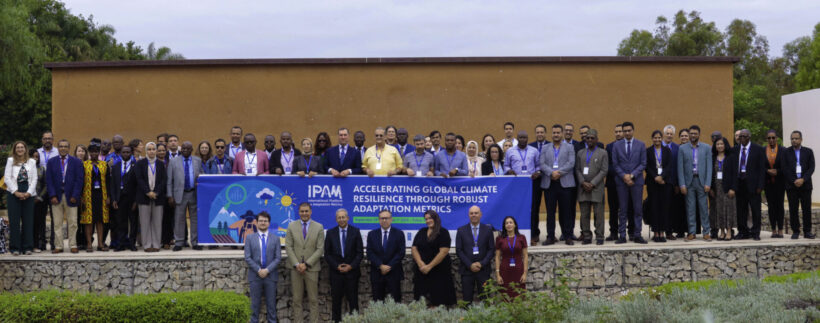
The AAA Initiative Foundation, acting as the host of the Secretariat for the International Platform on Adaptation Metrics (IPAM), officially launched the International Conference on Adaptation Metrics in Rabat, Morocco. The event, titled “Accelerating Global Climate Resilience through Robust Adaptation Metrics,” took place from September 29 to October 2, 2025, gathering more than 80 global experts to strengthen the way the world measures and tracks climate adaptation.
The high-level conference was organized in partnership with key national and international institutions and served as a major contribution to the EAU-Belém process—a multilateral effort to advance the Global Goal on Adaptation (GGA) in the lead-up to COP30 in Belém, Brazil.
The opening session featured remarks from several high-level figures and climate leaders:
- H.E. Mr. Ahmed El Bouari, Minister of Agriculture and President of the AAA Initiative Foundation
- H.E. Mr. Alexandre Guido Lopes Parola, Ambassador of Brazil to Morocco
- Abdelfattah Sahibi, Secretary General, Ministry of Equipment and Water
- Noëlla Richard, Deputy Resident Representative, UNDP Morocco
- Amal Benaissa, Director of Sustainability Advocacy, Bank of Africa
- Karl Schultz, Chair, IPAM
- Iskander Erzini Vernoit, Director, Imal Initiative for Climate & Development
A remote address was also delivered by Ms. Kulthoum Omari-Motsumi on behalf of the Africa Adaptation Initiative.
The session was moderated by Mr. Ayman Cherkaoui, Director of the Hassan II International Center for Environmental Training.

Structured Dialogue to Refine Adaptation Metrics
Over the three-day conference, participants engaged in thematic workshops designed to review and refine a draft reference paper on adaptation metrics. This paper, developed by IPAM, aims to identify key gaps, challenges, and solutions in adaptation measurement, and will be officially presented at COP30.
Each half-day session focused on one of the paper’s five chapters:
- Adaptation Metrics within Broader Global Goals
- Cross-Scale and Cross-Sector Dynamics
- Tools and Capacities for Effective Implementation
- Mapping Experiences, Key Lessons Learned, Best Practices, and Gaps
- Desired Global Adaptation Metrics Development
The format of each workshop included:
- Opening Presentation by a lead author
- Breakout Group Discussions exploring guiding questions
- Plenary Session for presenting group findings and collective discussion
In recent years, IPAM has been actively working to strengthen the adaptation metrics space through the formation of sectoral committees and targeted task groups. However, this conference marked the platform’s most inclusive effort yet to engage global stakeholders in shaping tools that are technically sound and practically useful.
“Adaptation metrics should not just sit on paper—they must serve the real needs of communities and decision-makers,” said Karl Schultz, Chair of IPAM.
The conference allowed participants to share experiences from a range of contexts—rural, urban, national, and regional—offering valuable insights to ensure the final IPAM paper reflects diverse perspectives and local realities.
An initial peer review of the reference paper was conducted between July and August 2025, and the feedback gathered during the Rabat conference will play a critical role in shaping the final document to be presented in Belém.
By convening experts across geographies and sectors, the Rabat conference positioned IPAM as a key contributor to the implementation of the Global Goal on Adaptation, advocating for country-driven, context-sensitive metrics that can guide climate-resilient development worldwide.
As countries gear up for critical negotiations at COP30, the conference’s outcomes underscore the urgency and importance of robust, inclusive, and actionable adaptation measurement systems to drive real-world progress.