

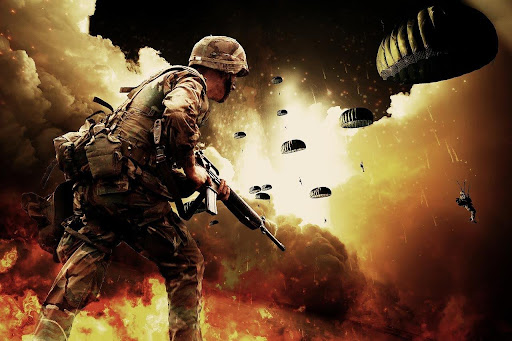
My story is not one of a warrior, but of a witness. It begins in the hushed, anxious darkness of a village courtyard, under a canopy of indifferent stars. I was in the fifth class, a child nestled amidst the fearful silence of my family. The static crackle of my father’s radio was the only sound that dared to challenge the night. It was 1979, and the Soviet bear had lumbered into Afghanistan. I could not comprehend the geopolitical tremors, but I felt the dread in the adults around me—a primal understanding that the world had shifted on a dangerous axis.
That night was the first thread in a tapestry of unending conflict I was destined to observe. As I grew, the war seeped into the fabric of my youth. I saw young men, their eyes burning with a fervor I did not share, leave our towns for the mountains of Afghanistan. In college, and later at university, the air was thick with the jargon of jihad. Slogans painted on walls, passionate debates in canteens, and the quiet, systematic recruitment of boys to fight in Kashmir and Afghanistan. I remained aloof, an observer by some unspoken instinct. It was, I would later understand, an unconscious adherence to a philosophical stance I had yet to read: Heidegger’s call to see things in their totality, not in isolated parts. While others saw only glory or religious duty, I felt the ominous weight of the whole—the cause, the consequence, and the chaos in between.
While I was immersed in my Master’s, dissecting the foreign policies of major powers, history delivered a thunderclap. Gorbachev announced the unthinkable: the dissolution of the USSR. A superpower had bled out in the Hindu Kush, and a new, hegemonic America stood triumphant. The Soviet forces retreated, leaving behind not peace, but a vacuum. Afghanistan descended into a brutal civil war, a cacophony of factions from which a new, austere force emerged—the Taliban. They crushed their rivals and imposed their version of Sharia, bringing a cruel, singular order to the chaos. Then, the regional balance shuddered again as Pakistan and India tested their atomic might, locking the subcontinent in a tense nuclear embrace.
The peace was fragile, illusory. Then came the day the towers fell in America. The world watched, and we, living in the storm’s perennial path, knew what was coming. American and allied forces poured into Afghanistan, and the bombardment began anew. The tempest, once contained, now spilled over our borders. The warriors we had once sent forth—the Taliban and their myriad associates—flowed back into the tribal areas of Pakistan. A hidden war, a shadowy power struggle, ignited on our soil.
“You are either with us or against us,” the world declared, placing Pakistan on a razor’s edge. Our government, in a half-hearted, agonized pact, joined the US allies. This decision was a turning point. The same jihadis we had once tacitly supported now turned their guns on our own forces. Since that fateful choice, my homeland has been baptized in fire. Khyber Pakhtunkhwa and Balochistan became the landscapes of a relentless insurgency, a punishment for our reluctant alliance.
The attack on the APS school in Peshawar was a national watershed, a horror so profound it finally galvanized a full-hearted response. Operation Zarb-e-Azb was launched, a fierce and determined campaign that cleared our territories, pushing the splinter groups back across the porous border into Afghanistan. For a moment, we breathed. But the wheel of fate kept turning. The allied forces, weary of the “graveyard of empires” too departed, leaving Afghanistan once more as a hub, now unified under the restored Emirate of the Taliban.
And so, the story refined itself, but did not end. The Taliban in Kabul now speak of two faces: the Afghan Taliban, who govern, and the Pakistani Taliban, who seek to overthrow our state. Despite our government’s pleas, reminders, and threats, the attacks on our forces continue, launched from sanctuaries beyond our control. The simmering tensions with our eastern neighbor finally boiled over in the war of 2025. In that conflict, our forces demonstrated a might that silenced doubters, proving our mettle as the premier military power in South Asia.
But humiliation demands revenge. India, stung by its defeat, has sharpened its oldest tool: the proxy war. They have cultivated their friendship with the Taliban government in Kabul, and through this axis, the attacks on our soldiers have intensified. The martyrdom of our officers and military personnel became a constant, painful refrain. There is a limit to endurance. The recent news reports of our forces striking back, attacking and occupying Afghan checkposts, feel like an inevitable, final chapter in a story that has been writing itself for decades.
I have now crossed fifty years of my life. The child who sat in that village courtyard is now a man, his hair streaked with grey. I look back and see not a series of disconnected events, but a single, unending narrative—the story of Afghanistan, a tempest that refuses to die. It is a story that has defined our region, consumed generations, and whose final page remains stubbornly unwritten. The echo of that first radio broadcast in the night still reverberates, a ghost in the wind that blows from the west, carrying with it the timeless scent of gunpowder and grief.