

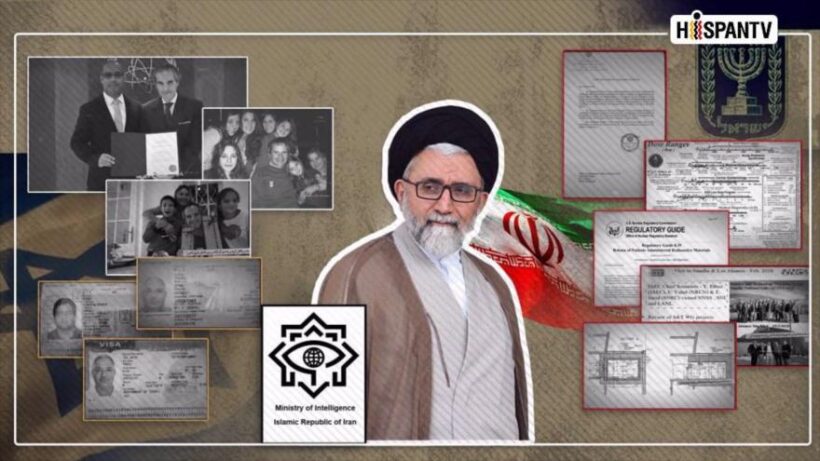
The international geopolitical landscape has shifted abruptly following the stunning leak of Iranian intelligence regarding Israel’s nuclear and military program. According to Iran’s Ministry of Intelligence, millions of documents, images, and video sequences—allegedly obtained through sophisticated operations—expose the most tightly guarded mechanisms of Israel’s military apparatus. Although independent verification is practically impossible due to the clandestine nature of these programs and their longstanding secrecy, a deep and rigorous analysis of the evidence presented is warranted, given the potentially grave international repercussions.
X-ray of Israel’s Nuclear Arsenal
For the first time, Israel’s legendary “nuclear secret” is described through internal materials reportedly leaked from the Dimona facility: images, technical drawings, videos, and detailed schematics reveal laboratories, storage systems, and routes for the transfer of atomic weaponry. With this, Israel—long adept at avoiding confirmation or denial of its nuclear arsenal—faces the most concrete and detailed public disclosure of its military infrastructure to date. The archive covers both historical configurations and active projects, encompassing the development, modernization, and operational logistics of Israel’s nuclear arsenal.
Human Network and International Collaboration
The leaks identify 189 Israeli scientists, technicians, and directors who currently work or have worked at the heart of the country’s nuclear weapons program. Alongside them appear foreign researchers, particularly from the United States and Europe, involved in technological development, innovation, and scientific cooperation. The documents include professional histories, addresses, administrative roles, and direct participation in joint projects on nuclear reprocessing and weapons modernization.
According to the revelations, the European countries involved include France, the United Kingdom, Germany, and Italy, alongside specific collaborations with technology firms and laboratories in these countries in areas of advanced research and specialized knowledge transfer. The United States emerges as the primary external partner, providing technical assistance, financial backing, and know-how on nuclear safety and control methods.
Espionage and Internal Vulnerabilities
The leak also encompasses documents on Israeli espionage operations aimed at the International Atomic Energy Agency and other multilateral bodies, showing systematic attempts to obtain inspection secrets and anticipate international audits. In addition, Iranian intelligence claims to hold evidence of internal infiltration and direct complicity by Israeli employees—scientists and technicians critical of their government—who, driven by economic incentives or political discontent, allegedly aided in accessing and transferring the classified information.
Images and Technical Access
Among the disclosed materials are videos and photographs taken by agents and collaborators inside the Dimona plant and other strategic facilities, capturing highly confidential processes, devices, and schematics. These visual proofs, though released only in fragments by Iranian state channels, represent the first filmed internal evidence of Israel’s nuclear capacity.
Geopolitical Implications
The gradual publication of these data ends the paradigm of strategic ambiguity long maintained by Israel, forcing a rethinking of diplomatic and military terms in the Middle East and triggering pressure from the international community. The involvement of the United States, France, the United Kingdom, Germany, and Italy in technology and knowledge transfer raises serious questions about the consistency of their non-proliferation policies and their role in global security.
Revealing the real infrastructure and the personnel responsible for Israel’s nuclear defense compels a review of protection standards, reopens debate on possible sanctions and monitoring, and highlights the double standards of international bodies regarding nuclear proliferation in the region.
Legal and Ethical Implications
The released dossier raises urgent debates on the protection of exposed individuals, international humanitarian law, and the duty to respect personal privacy in contexts of high security. Moreover, the role of the countries implicated in technical cooperation and the possible violation of international treaties such as the Nuclear Non-Proliferation Treaty put new legal questions on the agendas of bodies like the United Nations and the International Criminal Court.
What We Know So Far
Though presented gradually and still incomplete, the Iranian leak constitutes the largest public dossier to date on the real structure and international alliances of Israel’s nuclear and military program. The published data—names, positions, institutions, international collaborations, and visual evidence—mark a turning point in the global scrutiny of nuclear armaments. In this context, it is less relevant to wait for external confirmation than to undertake a rigorous, multidisciplinary, and in-depth process of analysis, investigation, and international debate.
The world thus enters a new era of forced transparency, where geopolitical balances and legal and ethical responsibilities will be redefined according to the international community’s capacity to respond seriously and effectively to the gravity of the information now available.



