

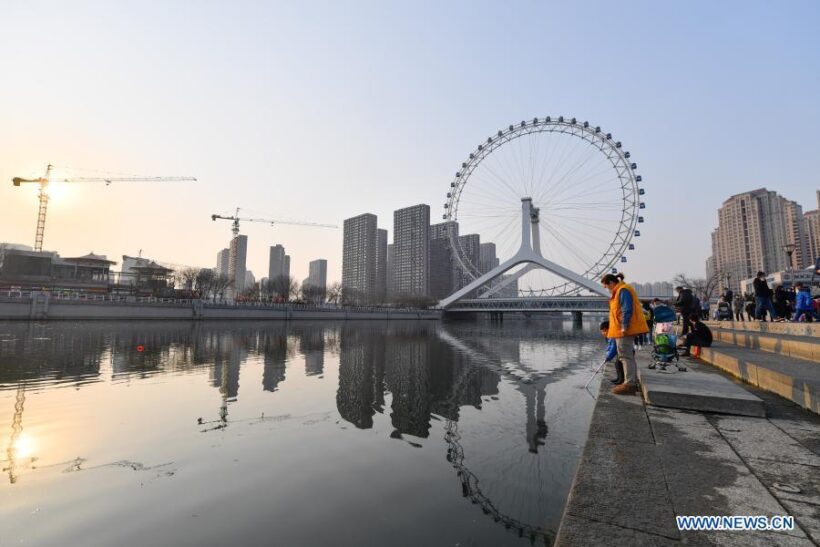
An ongoing development is the project announced in August 2025, where China took a significant step toward a paradigm shift in its urban and technological development by presenting a detailed strategic plan to transform its cities by 2035 into “cities for the people.” This ambitious project seeks to substantially improve quality of life through the integration of green technologies, smart housing, enhanced social services, and advanced environmental management.
President Xi Jinping, during the presentation of the plan, emphasized that “innovation is the soul of development and the well-being of the people is the supreme goal of our work.” The plan drives the construction of eco-friendly and highly automated homes, accessible and adapted for the elderly and children, focusing on facilitating active aging and quality healthcare close to the population. At the same time, the initiative promotes the creation of community green spaces, ecological corridors, and advanced recycling and emission reduction systems to face urban environmental challenges.
A fundamental pillar of the project is the application of the Internet of Things (IoT), the network of connected physical devices that collect and share data to improve urban management. In this context, sensors and smart devices are used to manage traffic with traffic lights that adjust in real time, optimizing timing and reducing congestion. Additionally, waste containers equipped with sensors indicate their fill level for efficient collection that reduces costs and emissions.
Smart public lighting regulates its intensity according to the presence of people, saving energy and improving safety. Security systems integrated with cameras and acoustic sensors allow real-time incident detection for rapid response. On the environmental level, sensors monitor air quality, temperature, and noise pollution, facilitating public policies for sustainability and health.
This approach reflects China’s transformation from a model based on accelerated growth to a more sustainable and human-centered one, emphasizing resilience, inclusion, and “technology for life.” According to Chinese experts, this strategy positions China as a world leader in innovation applied to improving social well-being, with huge investments in artificial intelligence, IoT, and clean energies aimed at making cities more livable, safe, and sustainable.
In the words of the Minister of Science and Technology, “by 2035, we aspire for our cities to be a global example of how technology can be combined with social policies to create environments where all citizens thrive.” This project opens a horizon of possibilities for millions of people, offering hope in a world facing unprecedented climatic and social challenges.



